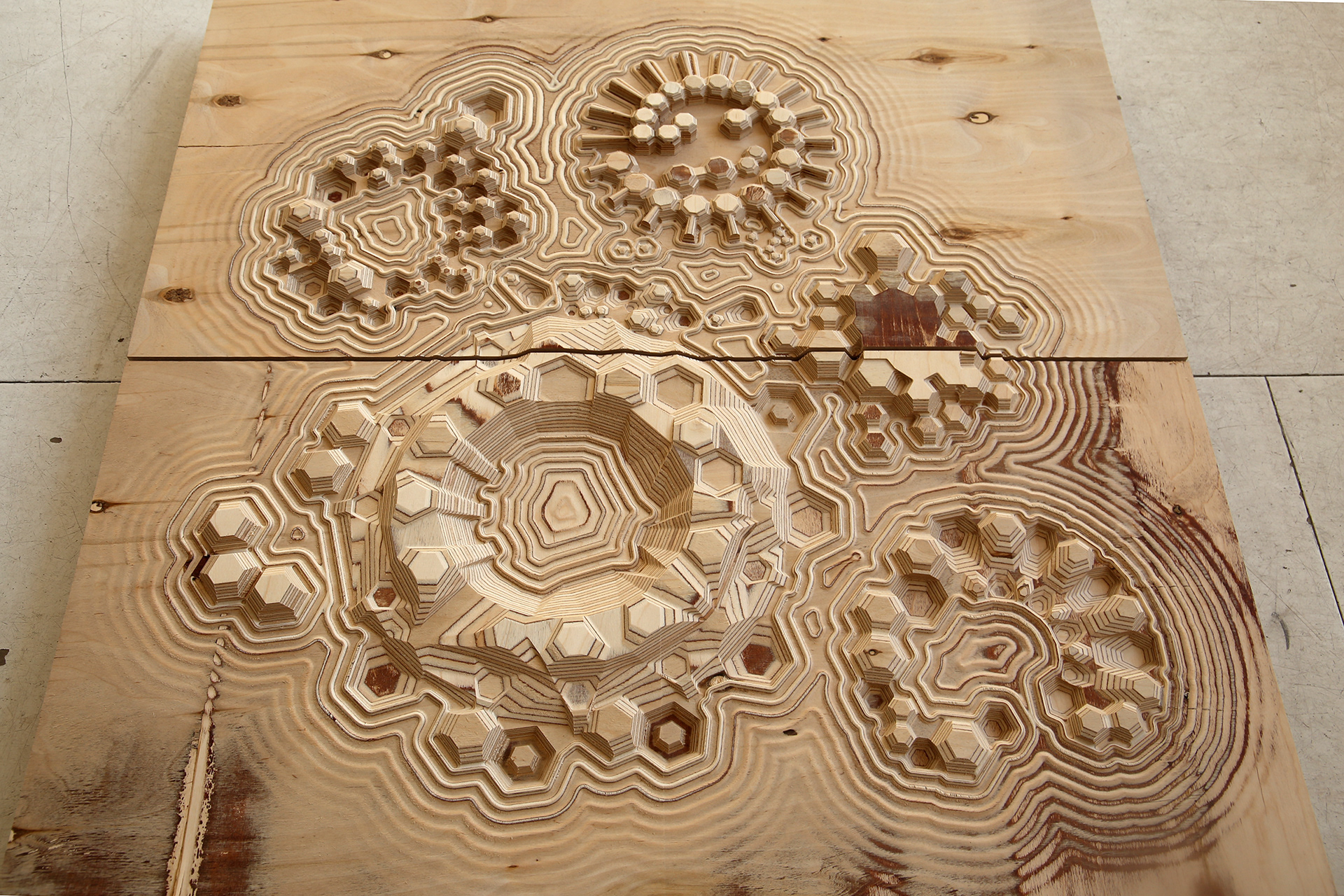
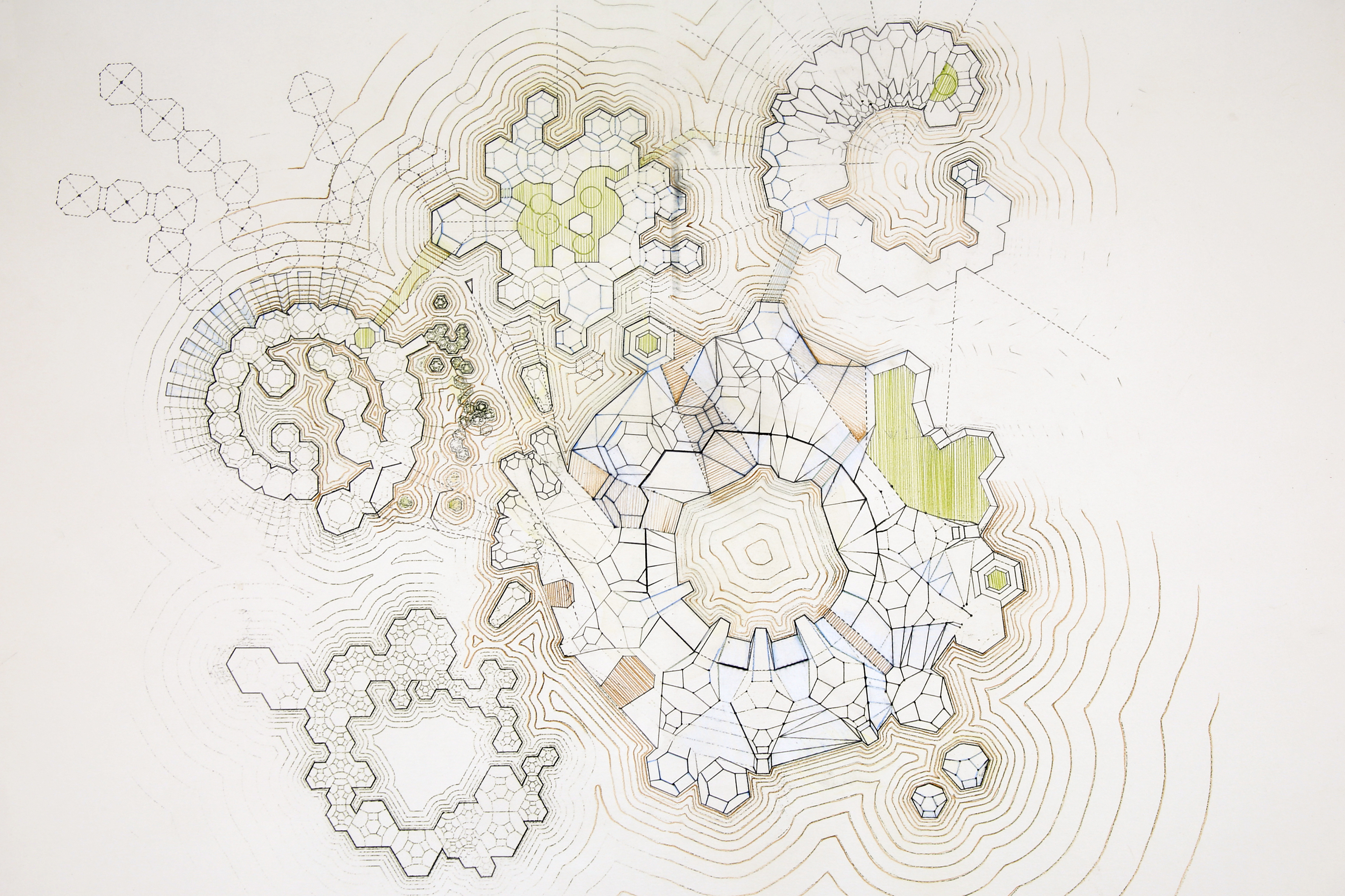
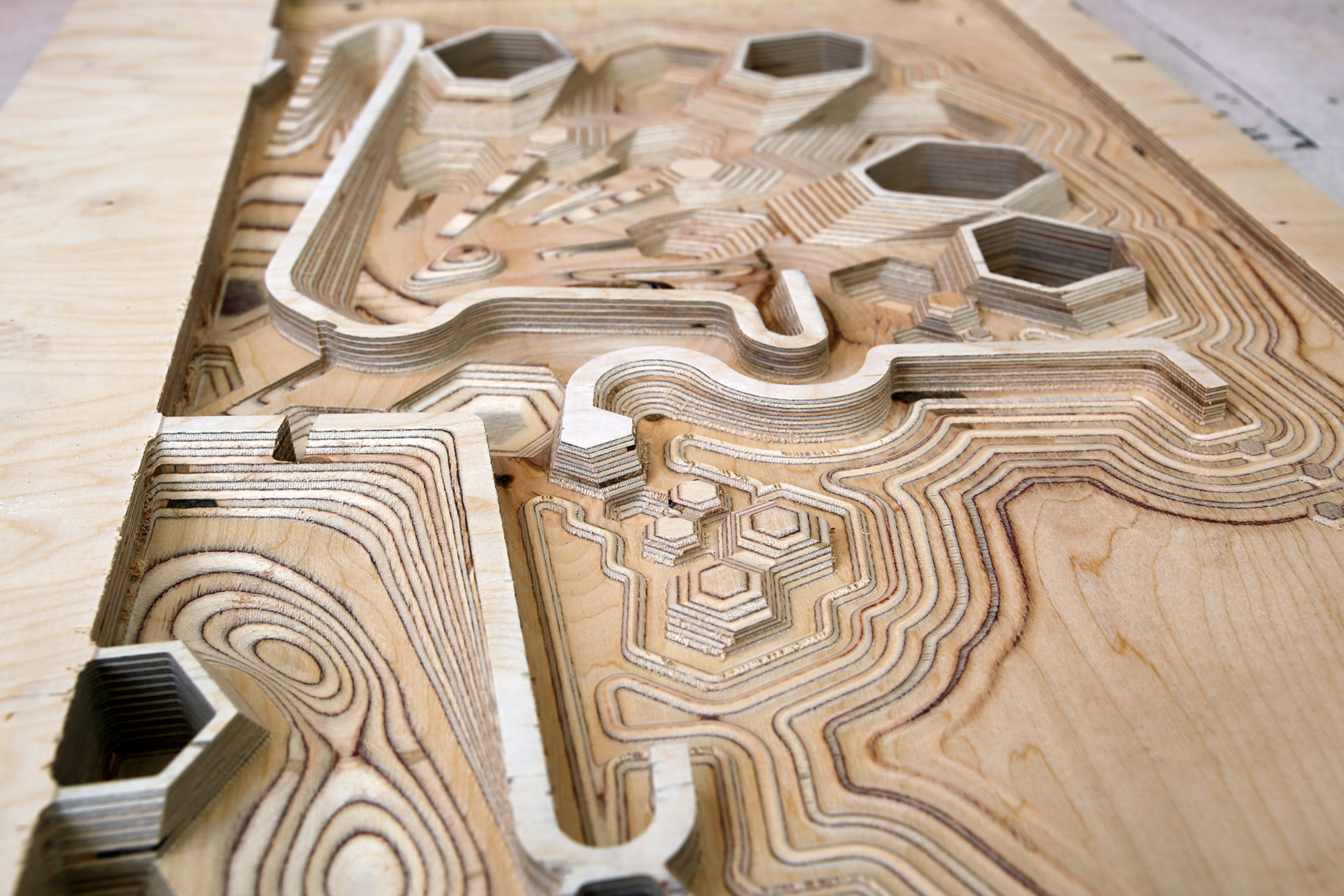
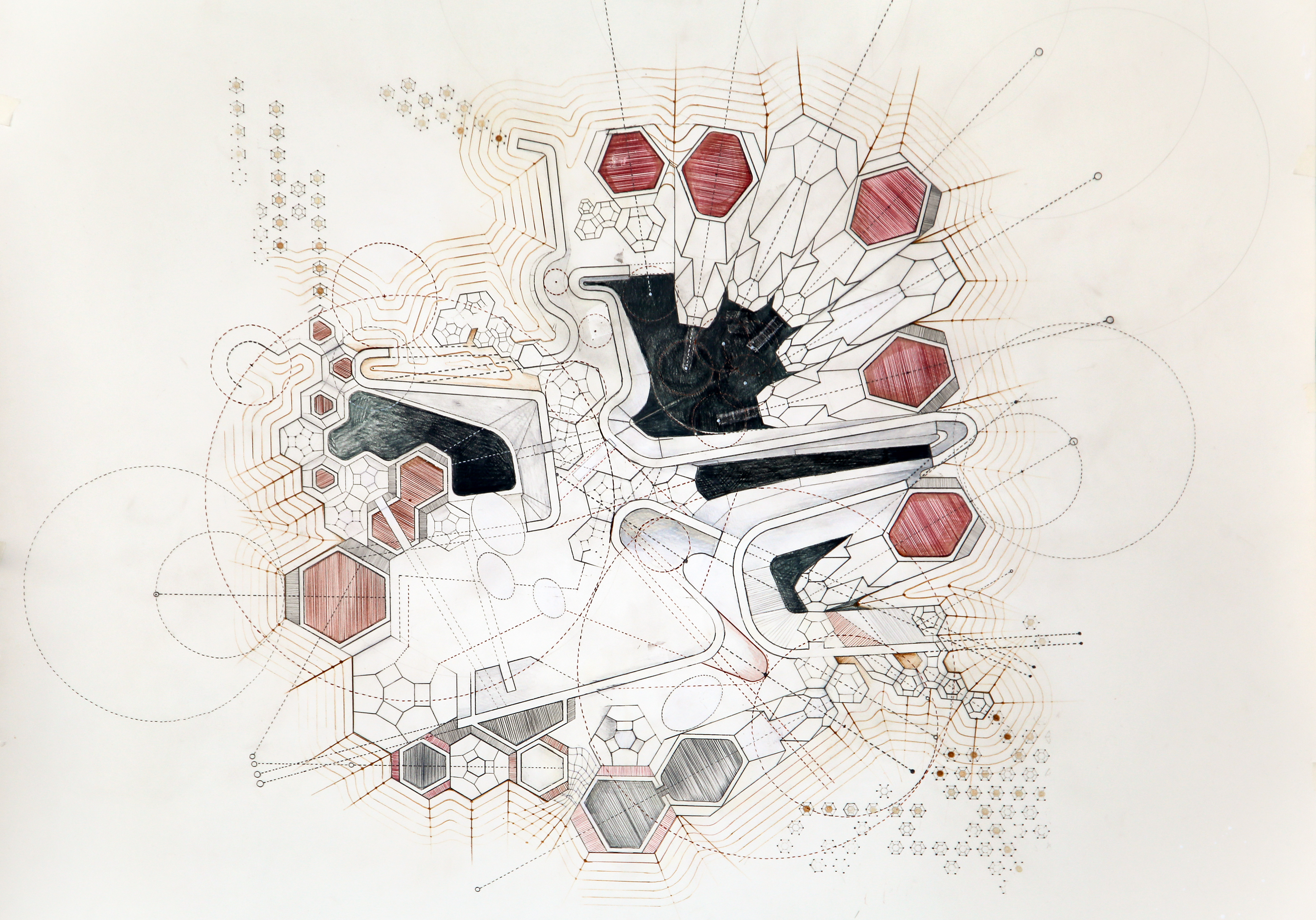
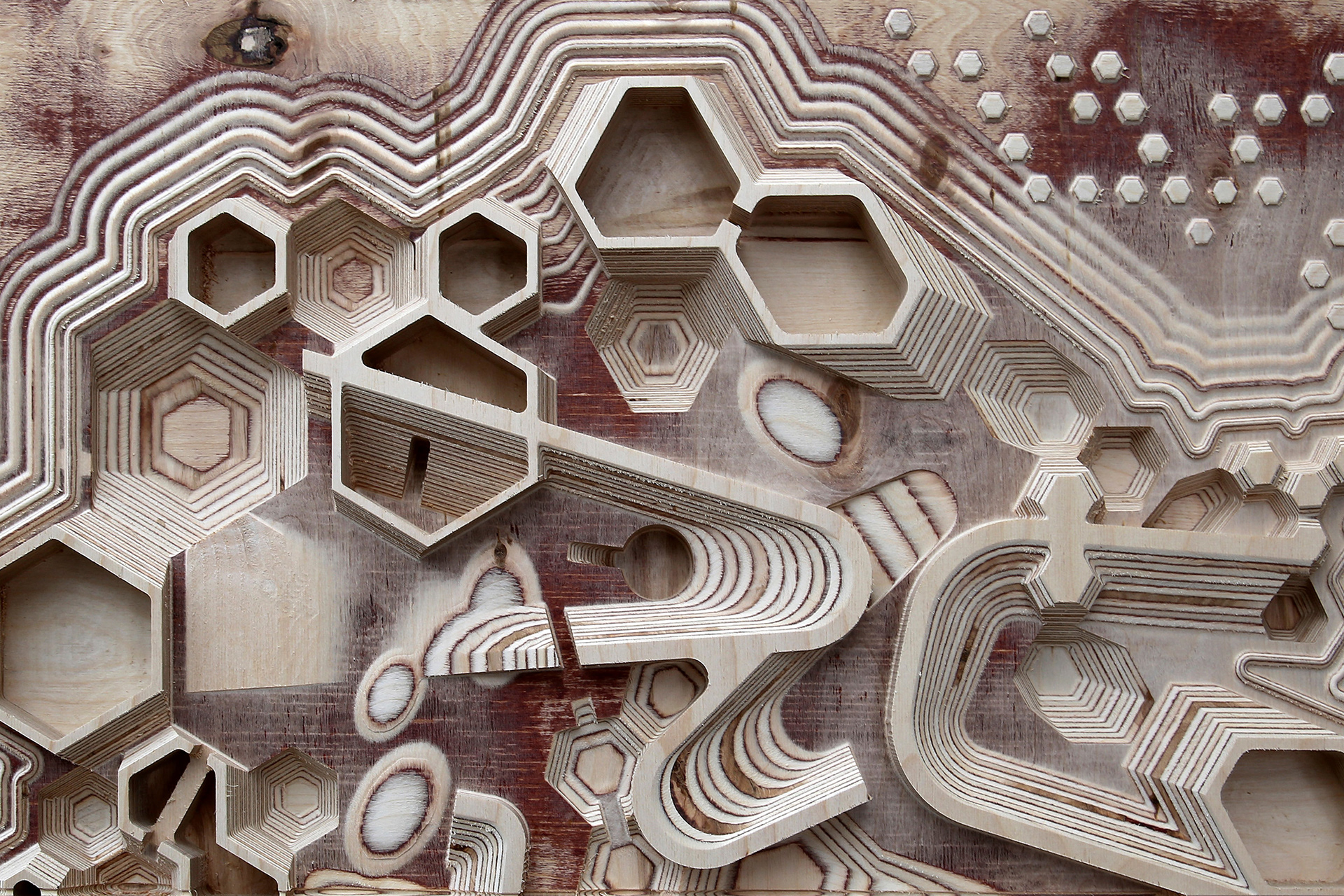
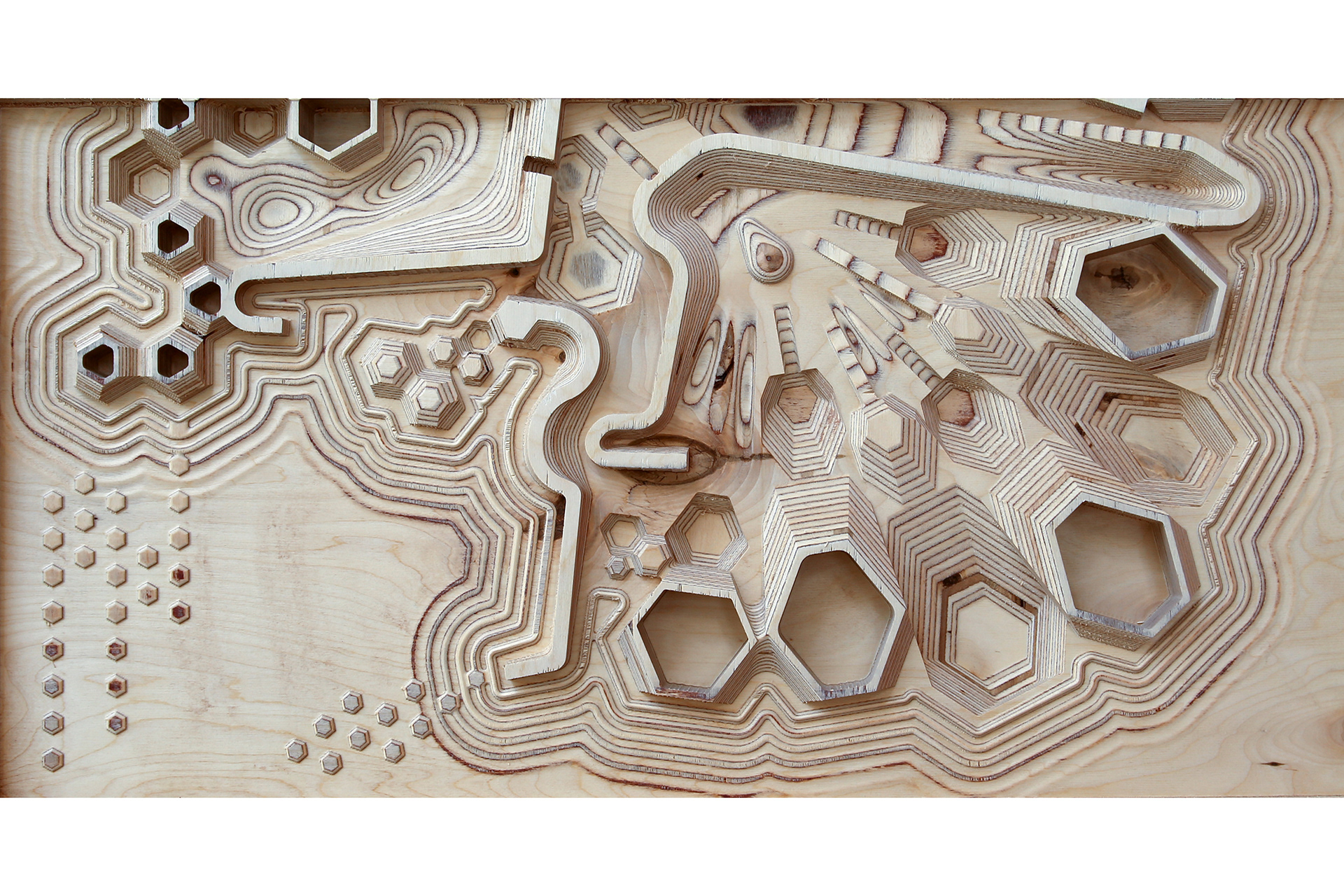
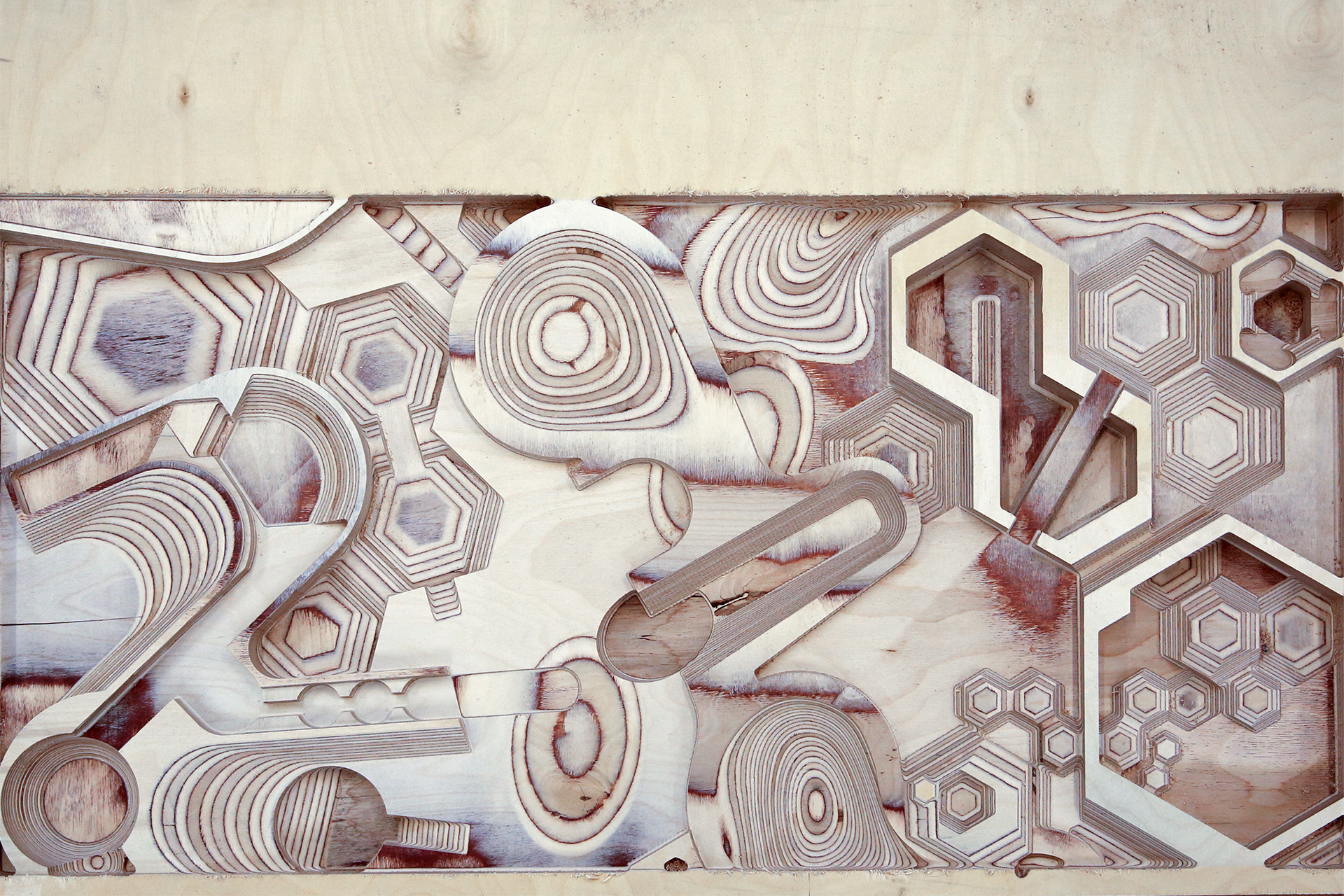
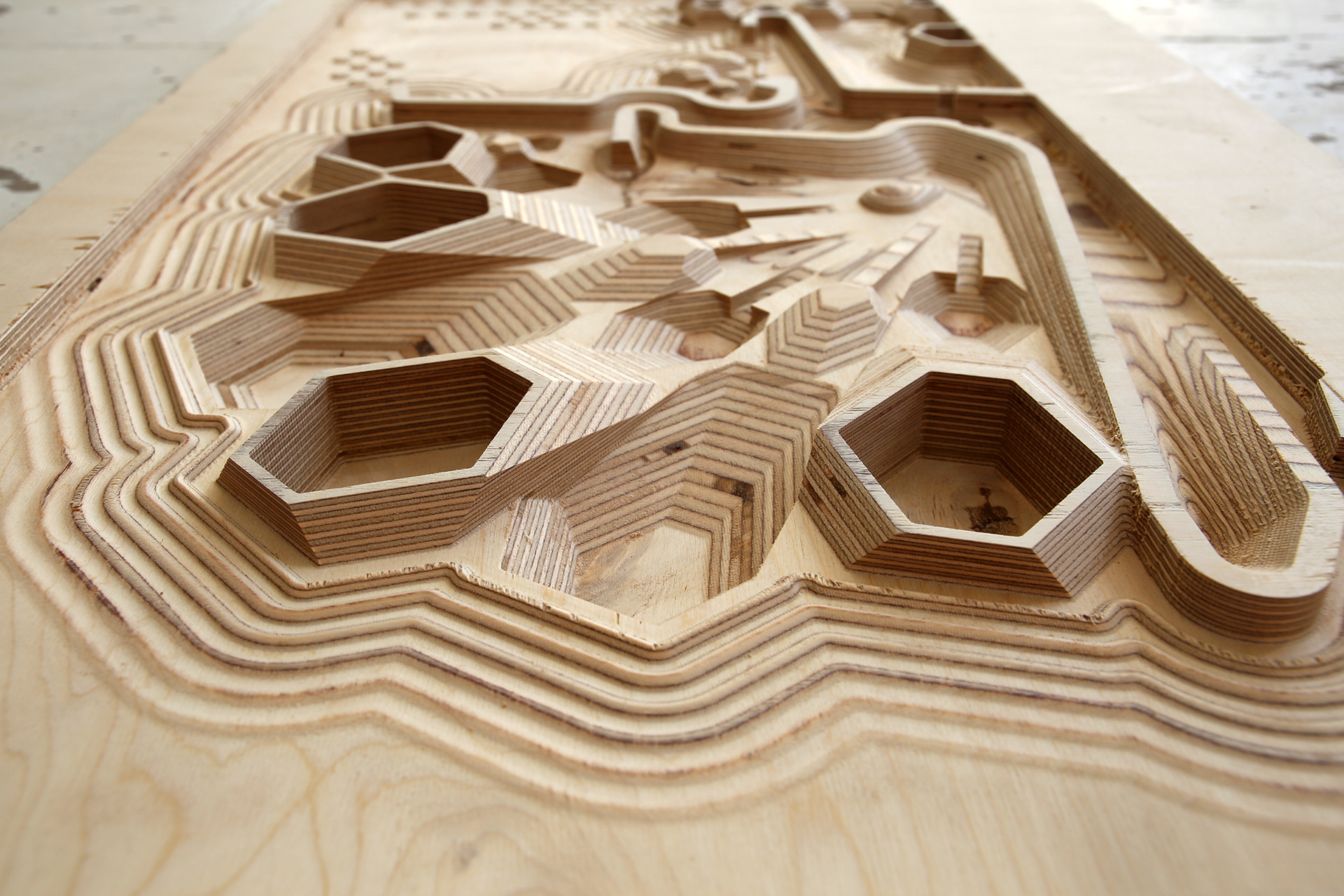
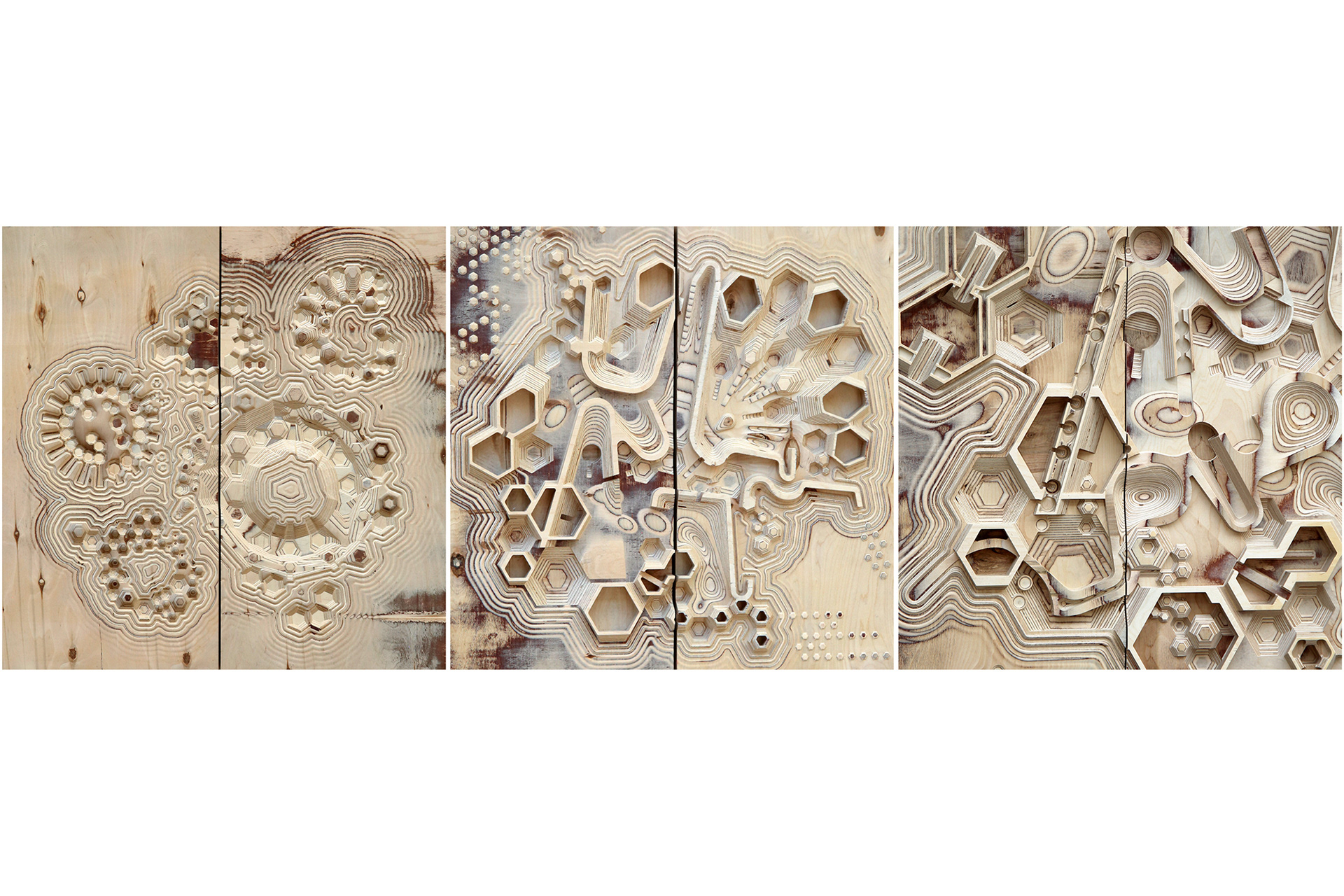
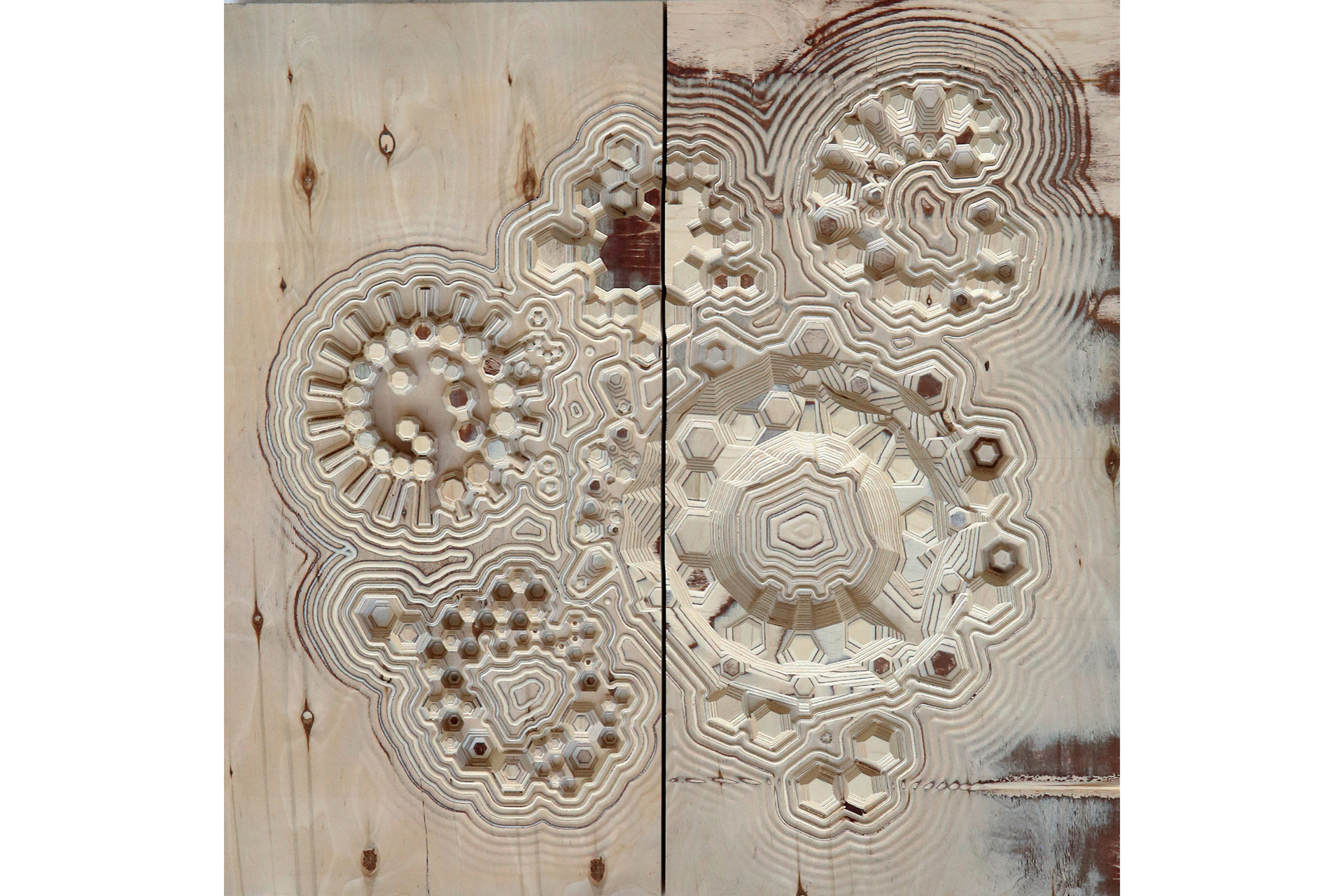
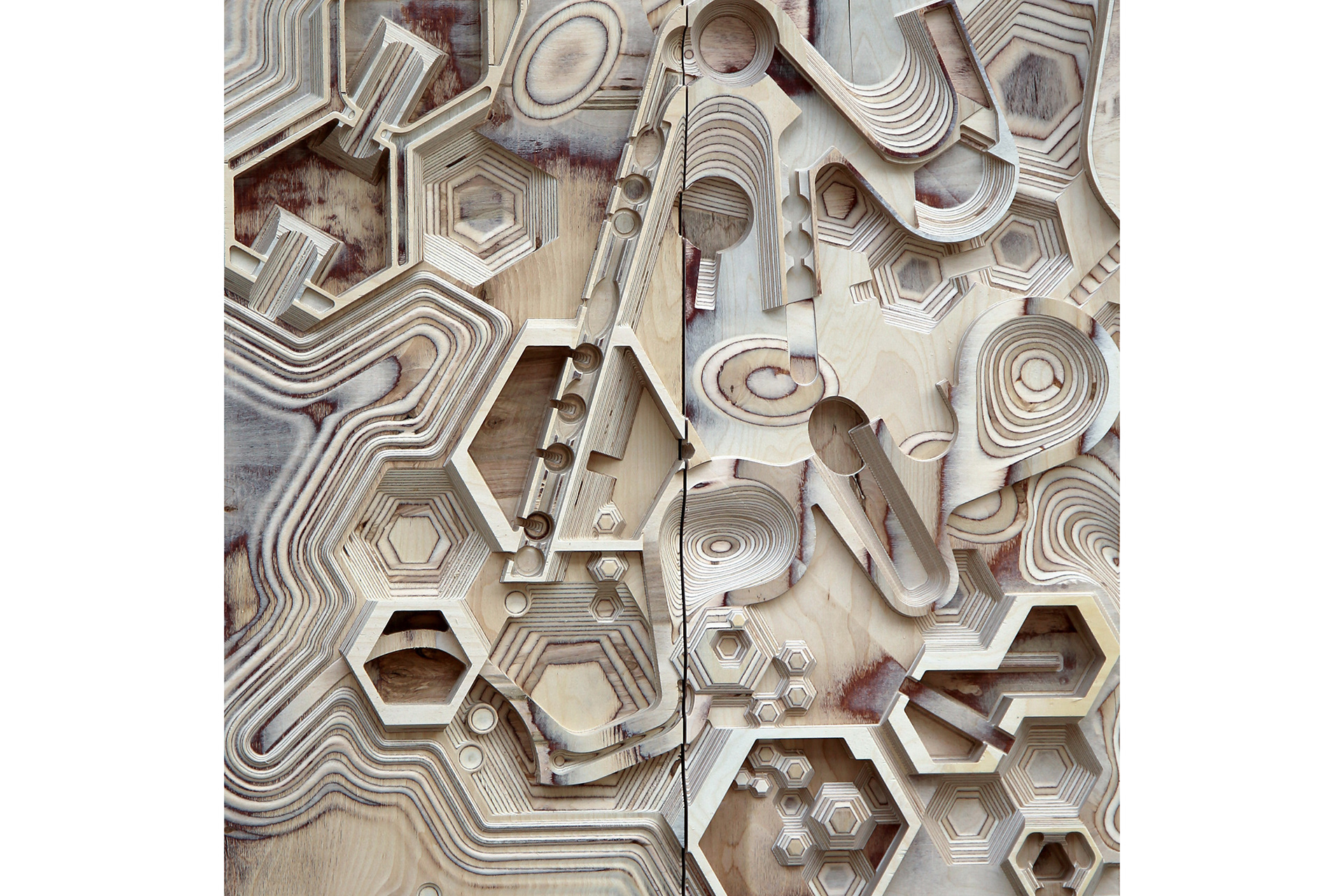
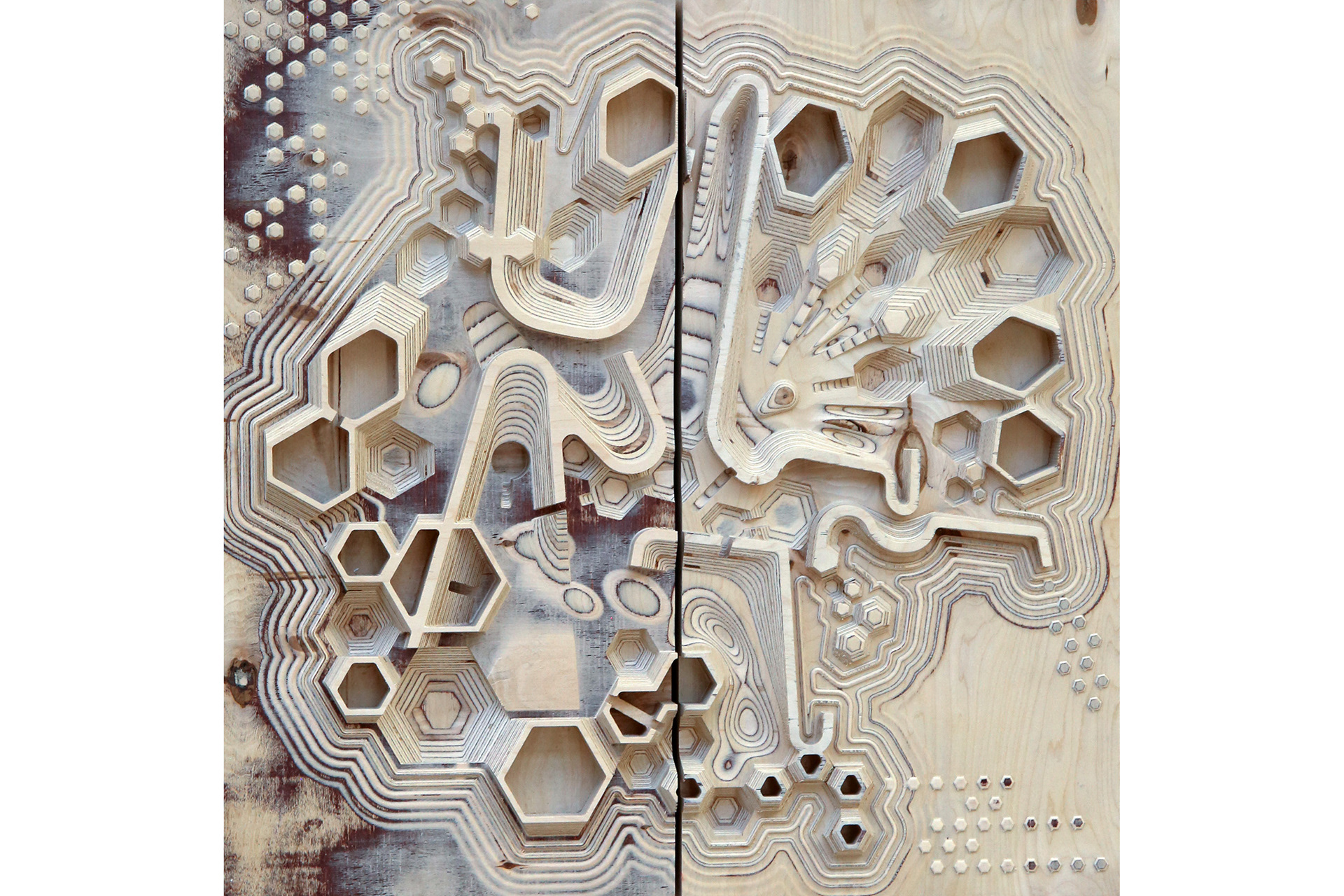
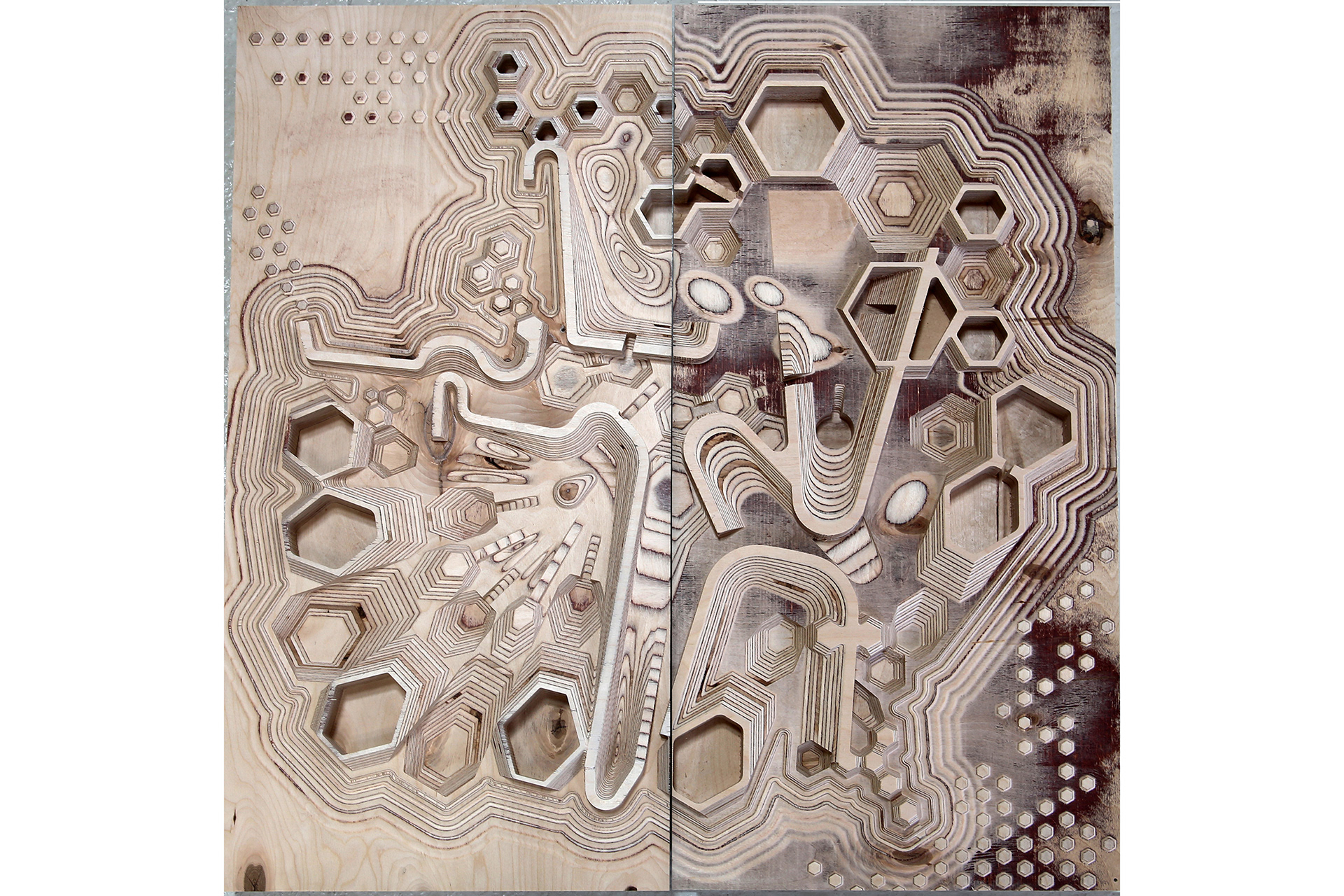
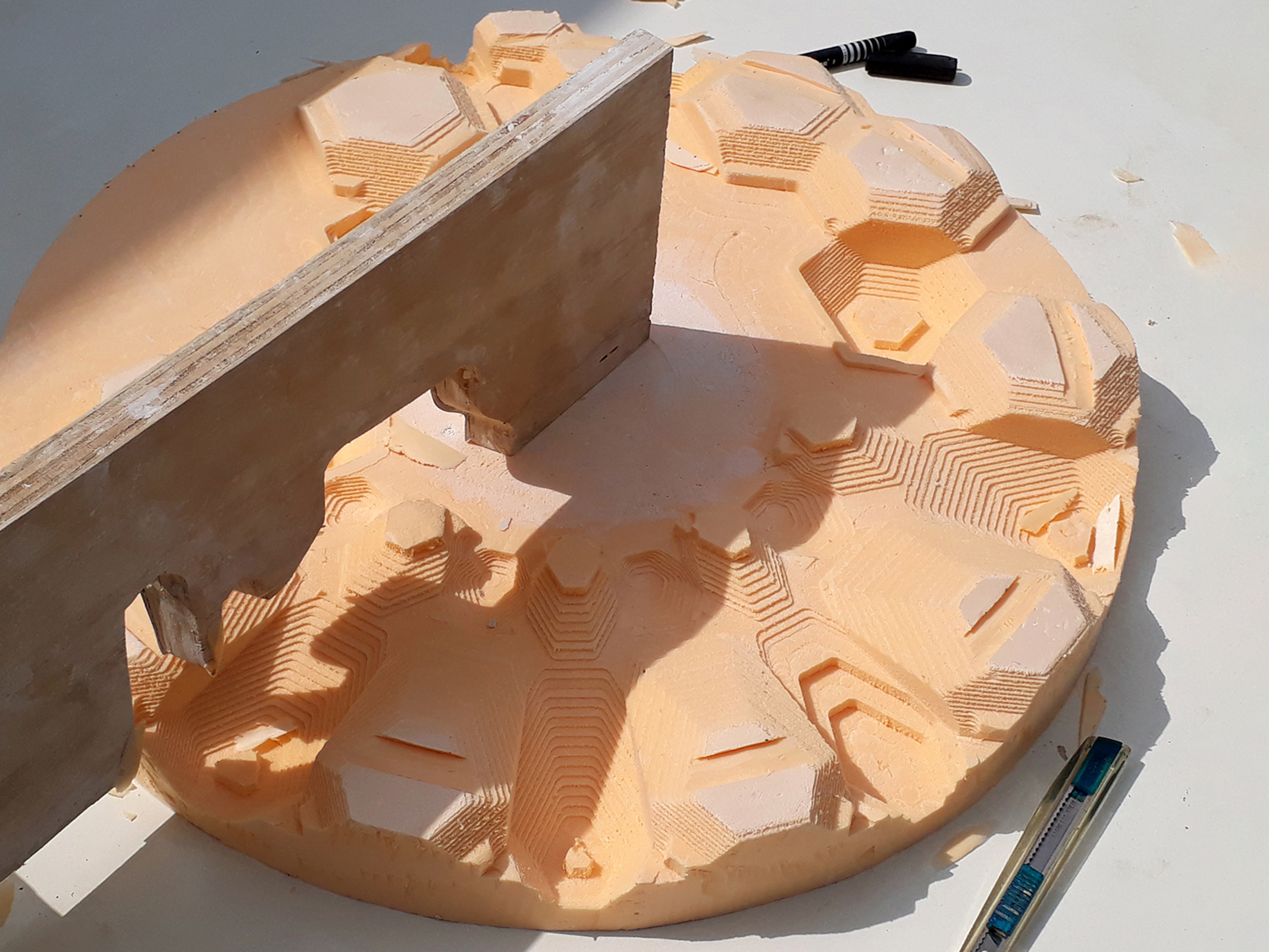
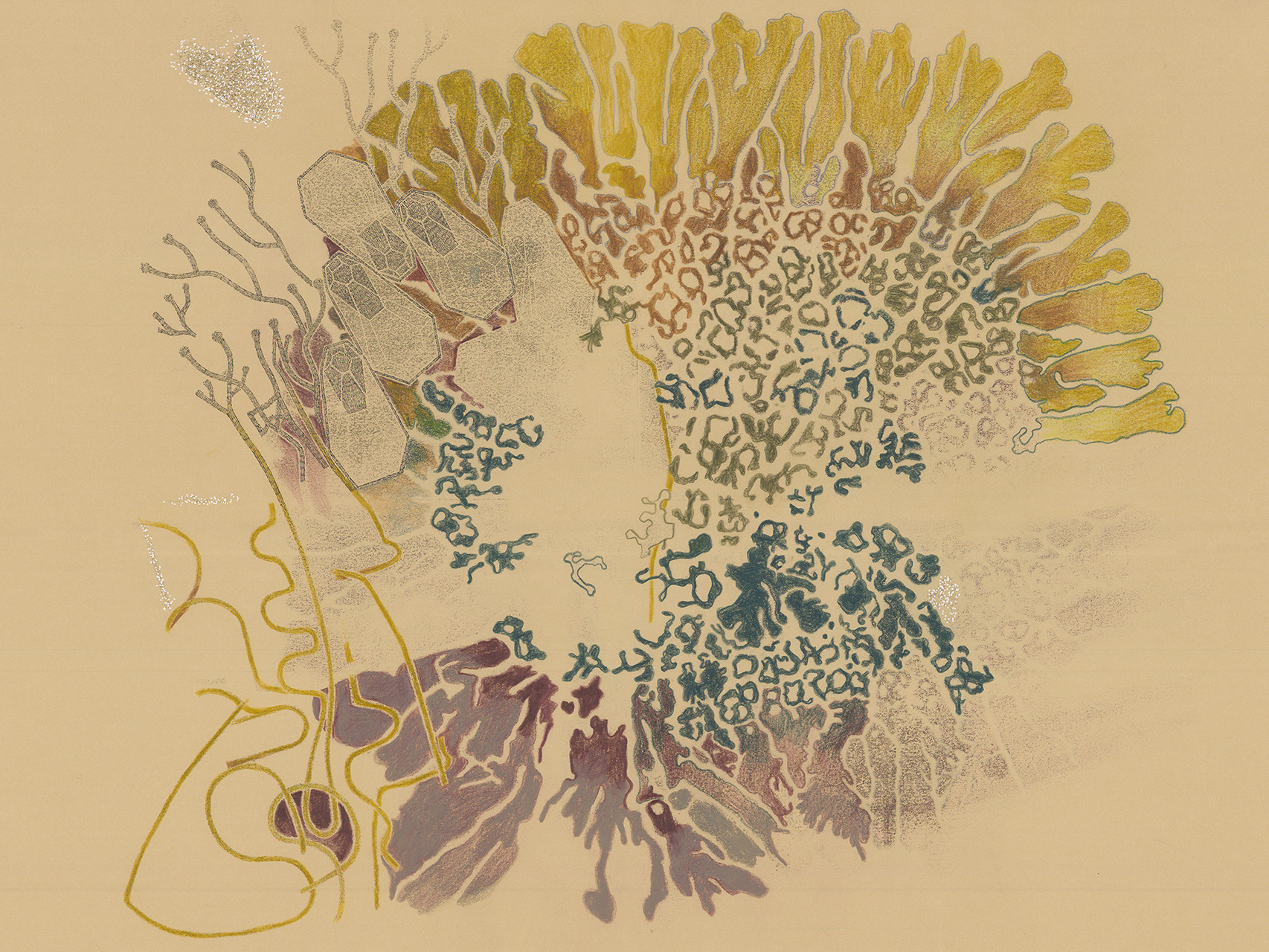
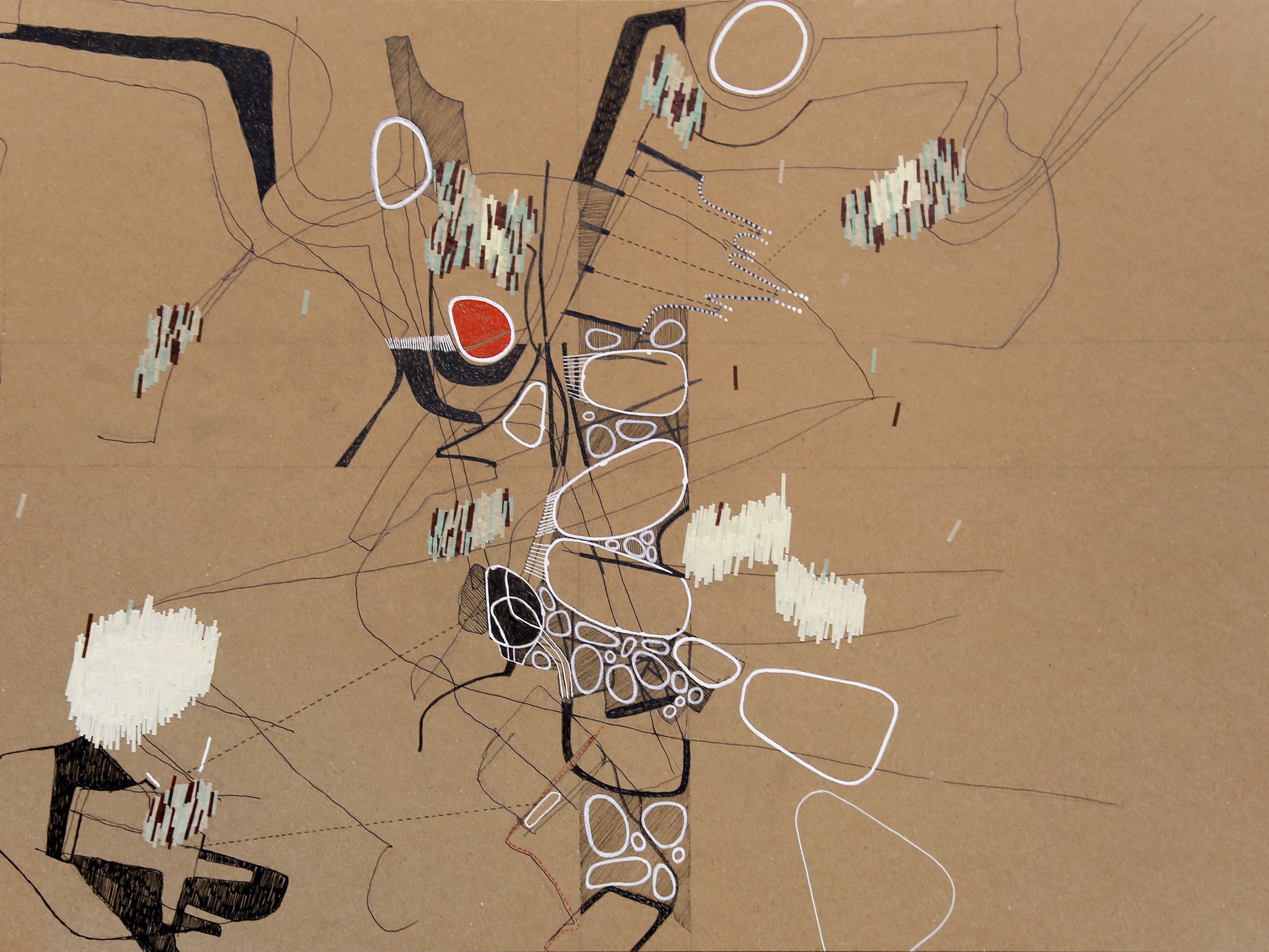
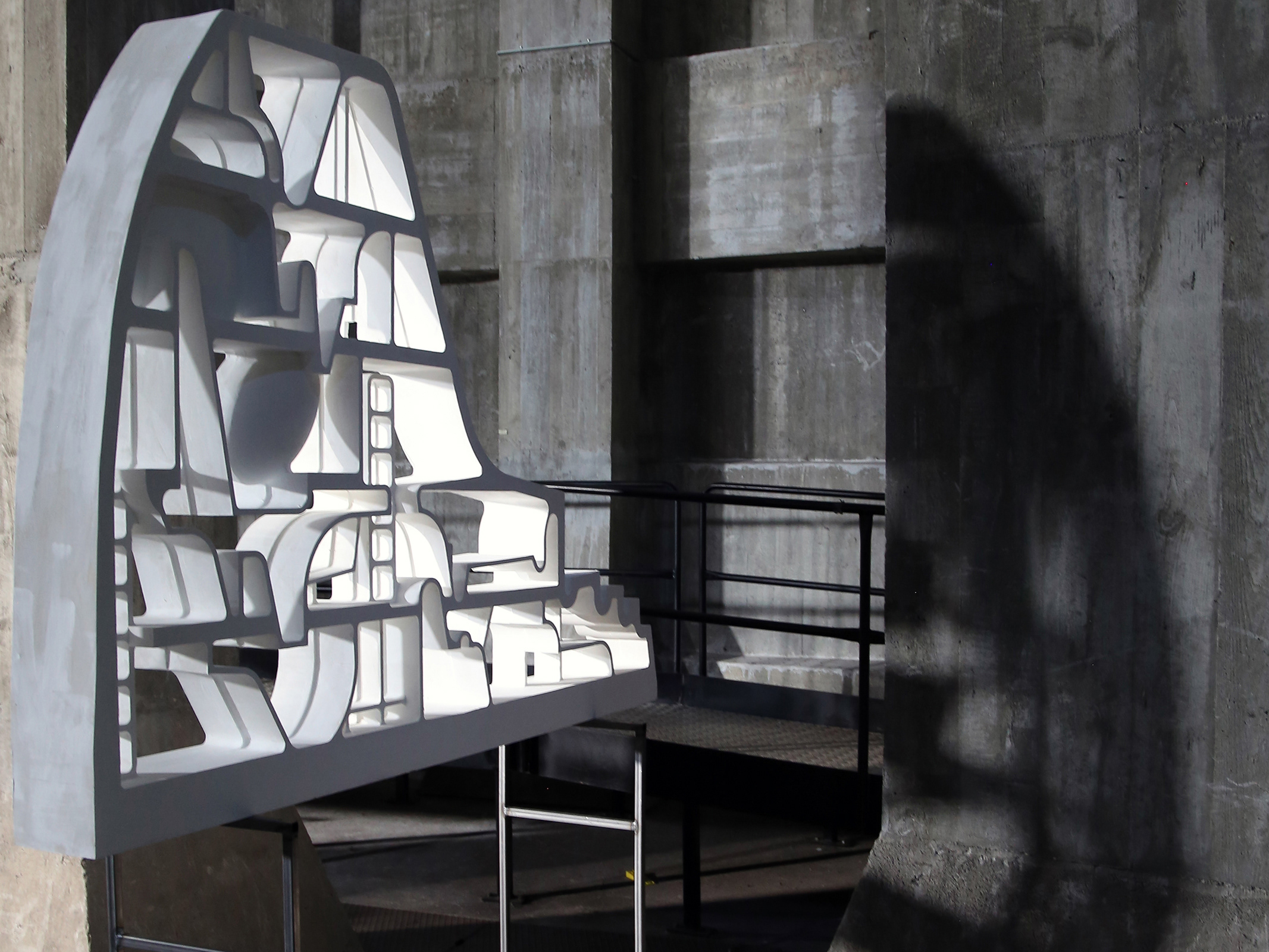
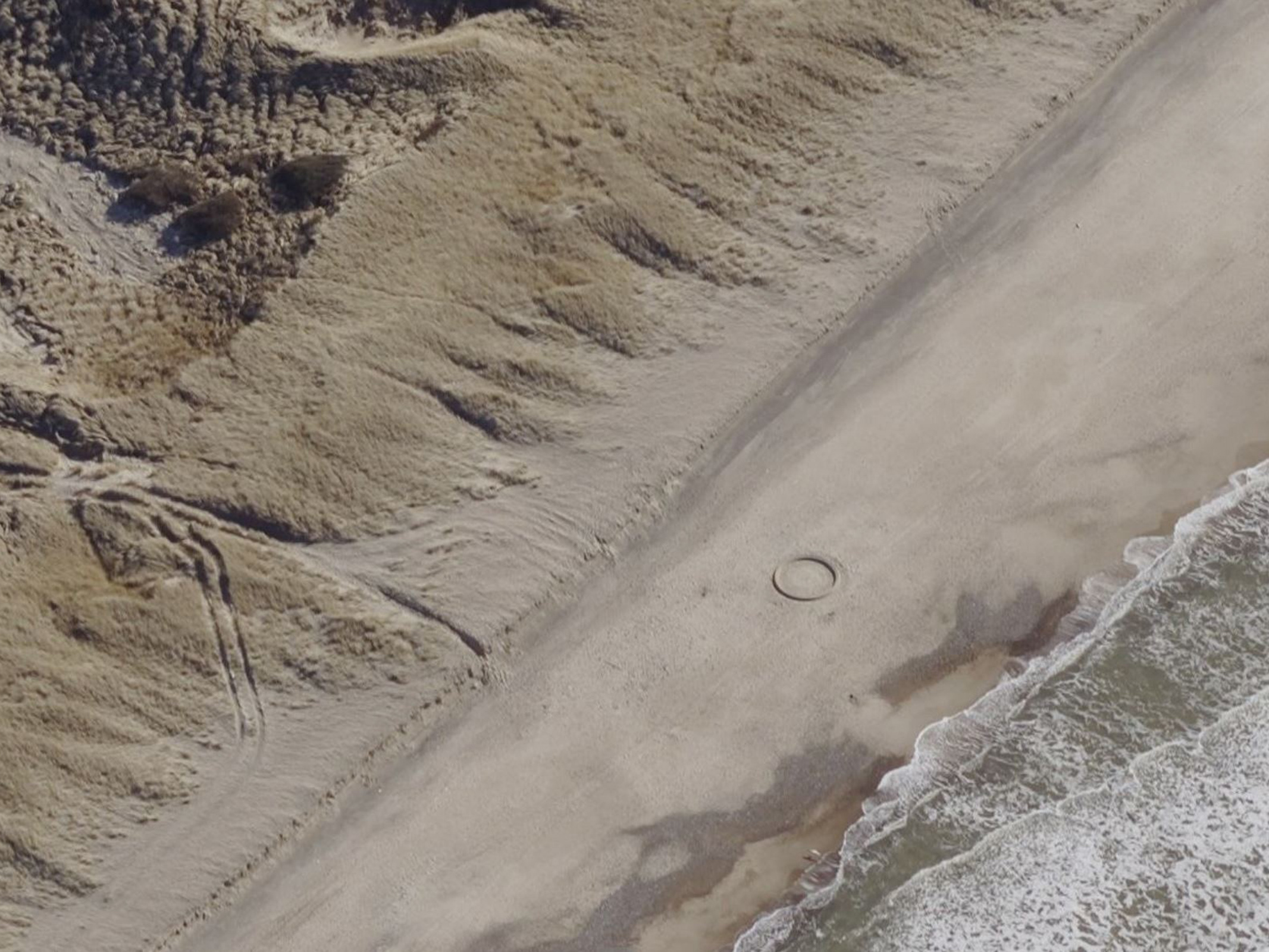
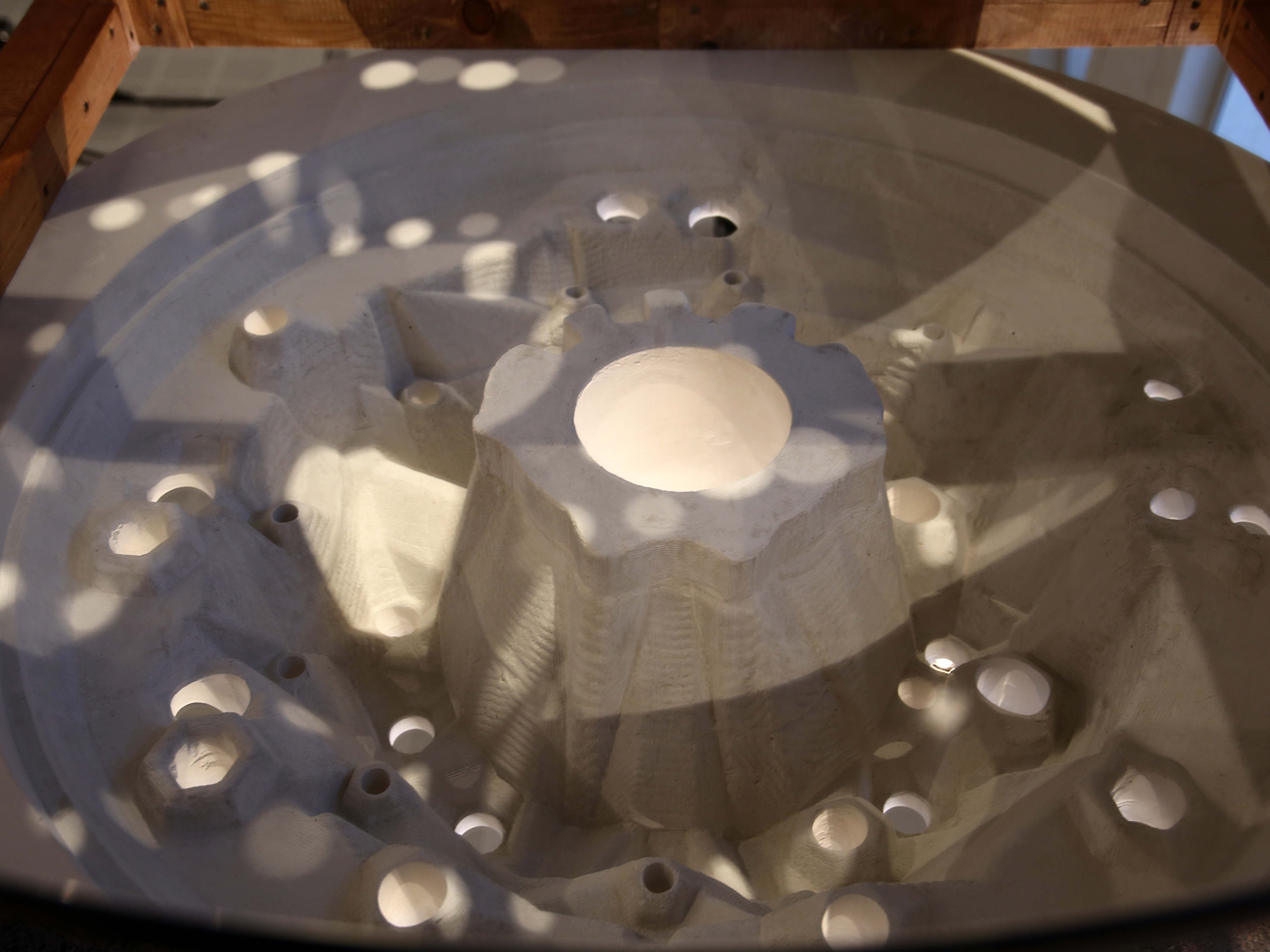
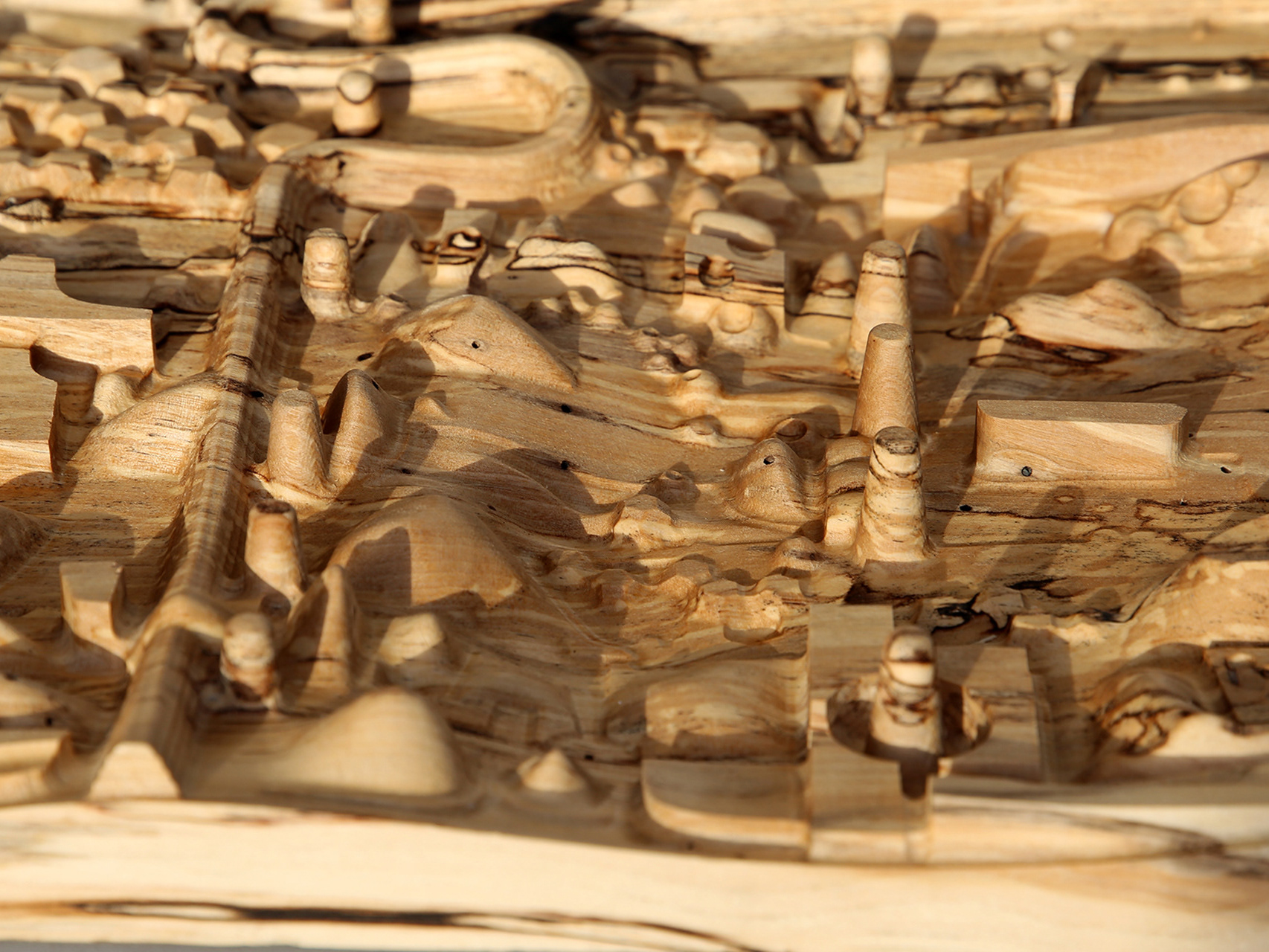
Archipelago is an ongoing series of drawings and reliefs in which the island is considered an element within a larger, continually evolving field rather than a singular, bounded object.
Forms recur across the works. They are copied, displaced, enlarged, reduced, and adapted to new surroundings. What begins as one island becomes many, and the connections between them become as important as the individual forms themselves.
The archipelago offers a way of imagining growth without a single center or a predetermined master plan. Each island retains a degree of autonomy while remaining dependent on its relationship with the others. The water between them is not an empty background but an active space of separation, connection, and exchange.
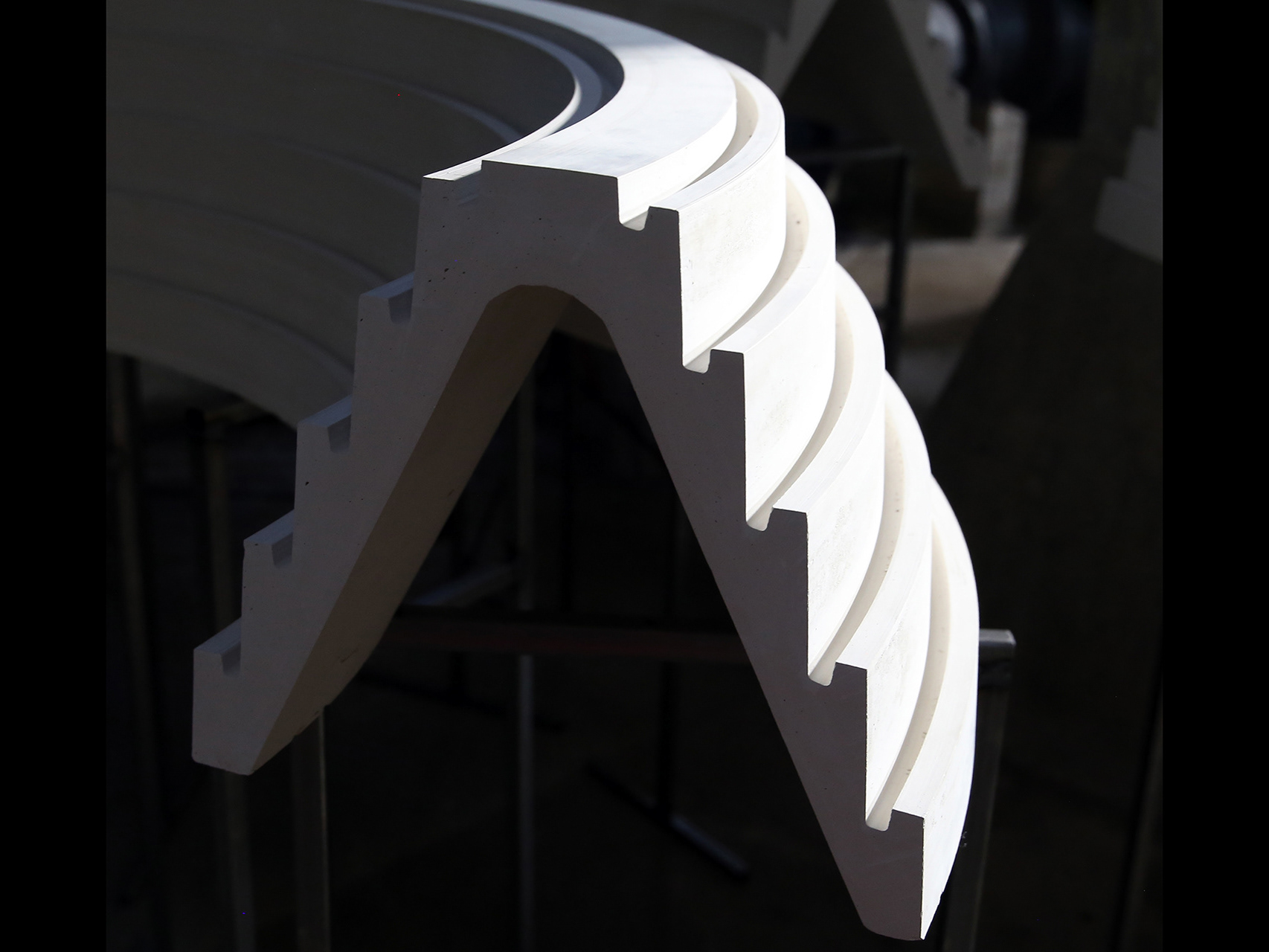
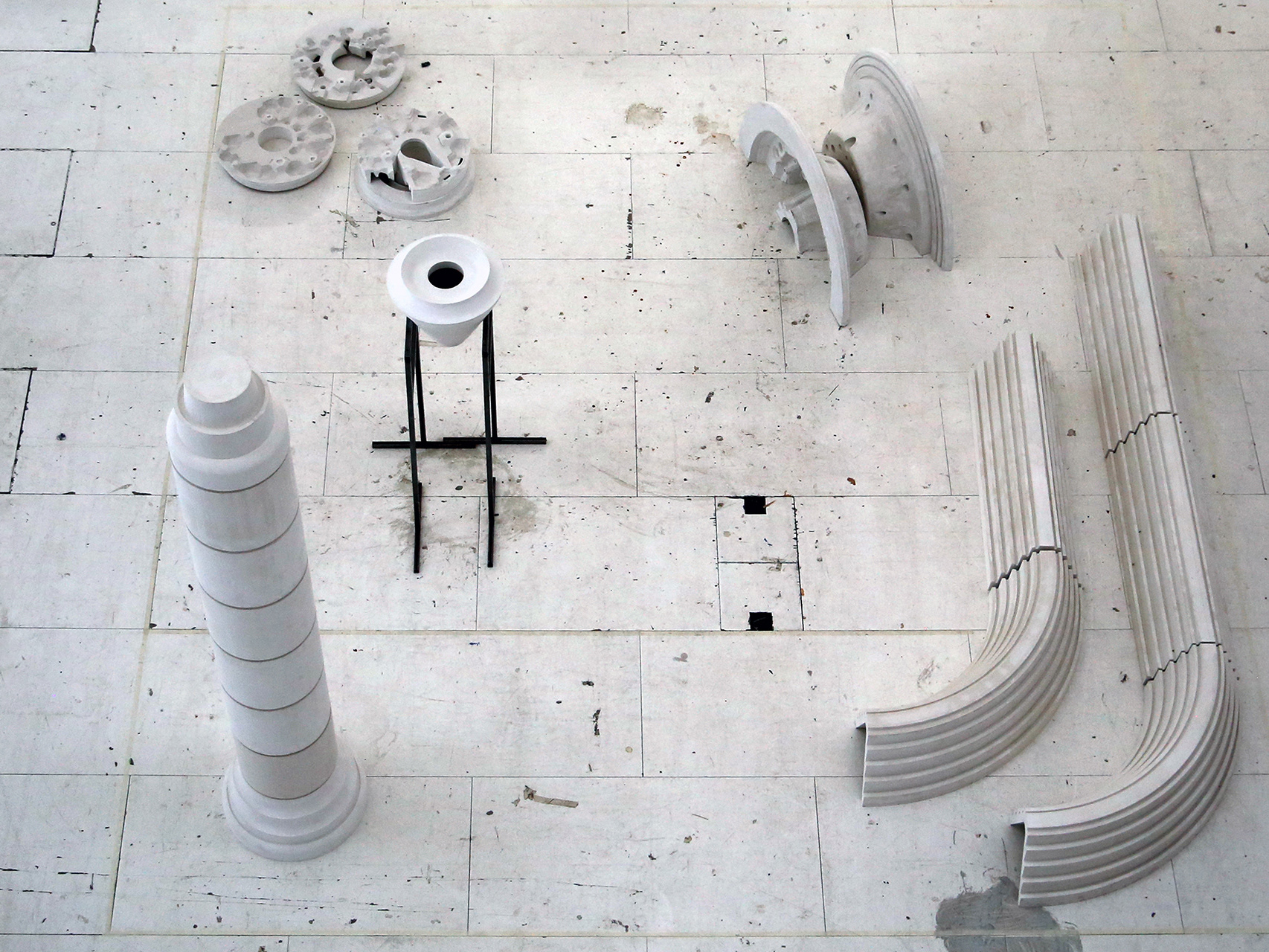
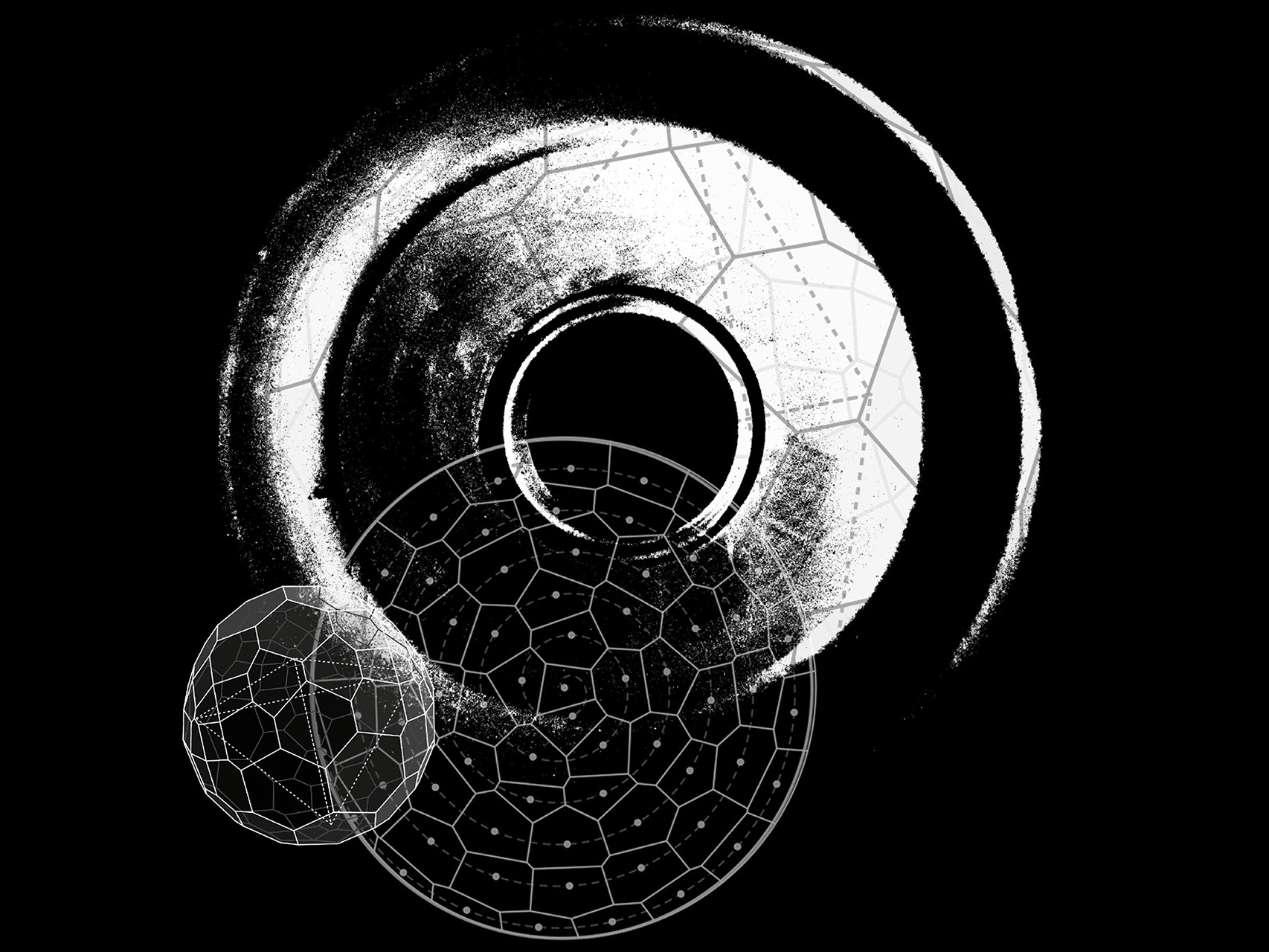
The drawings move between different forms of representation. They may be read as maps, aerial views, geological formations, or architectural plans. In the reliefs, these ambiguous topographies acquire material depth: lines become edges, surfaces become territories, and overlapping forms suggest processes of accumulation and erosion. Without a fixed scale or program, the works may evoke landscapes, organisms, infrastructures, or settlements.