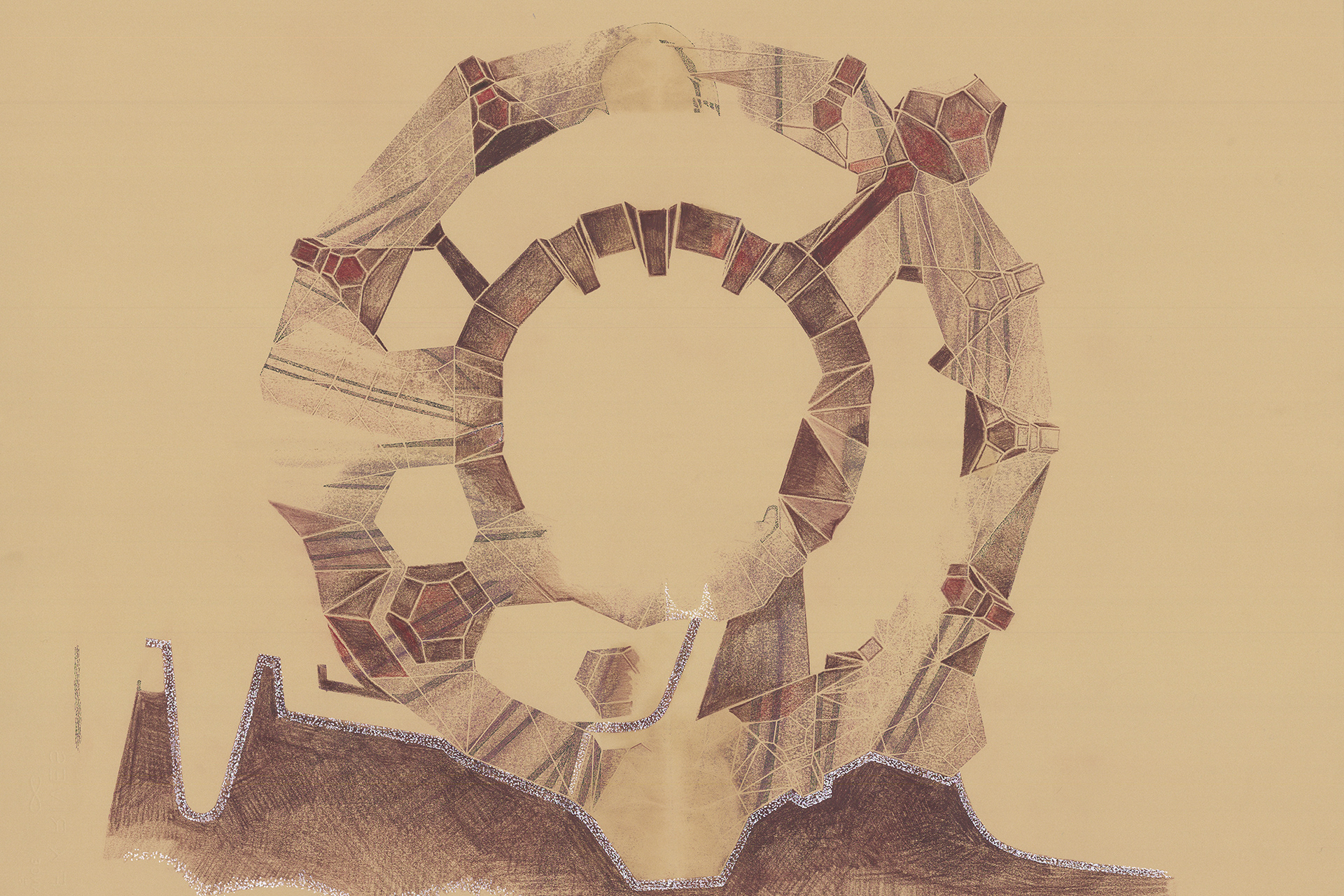
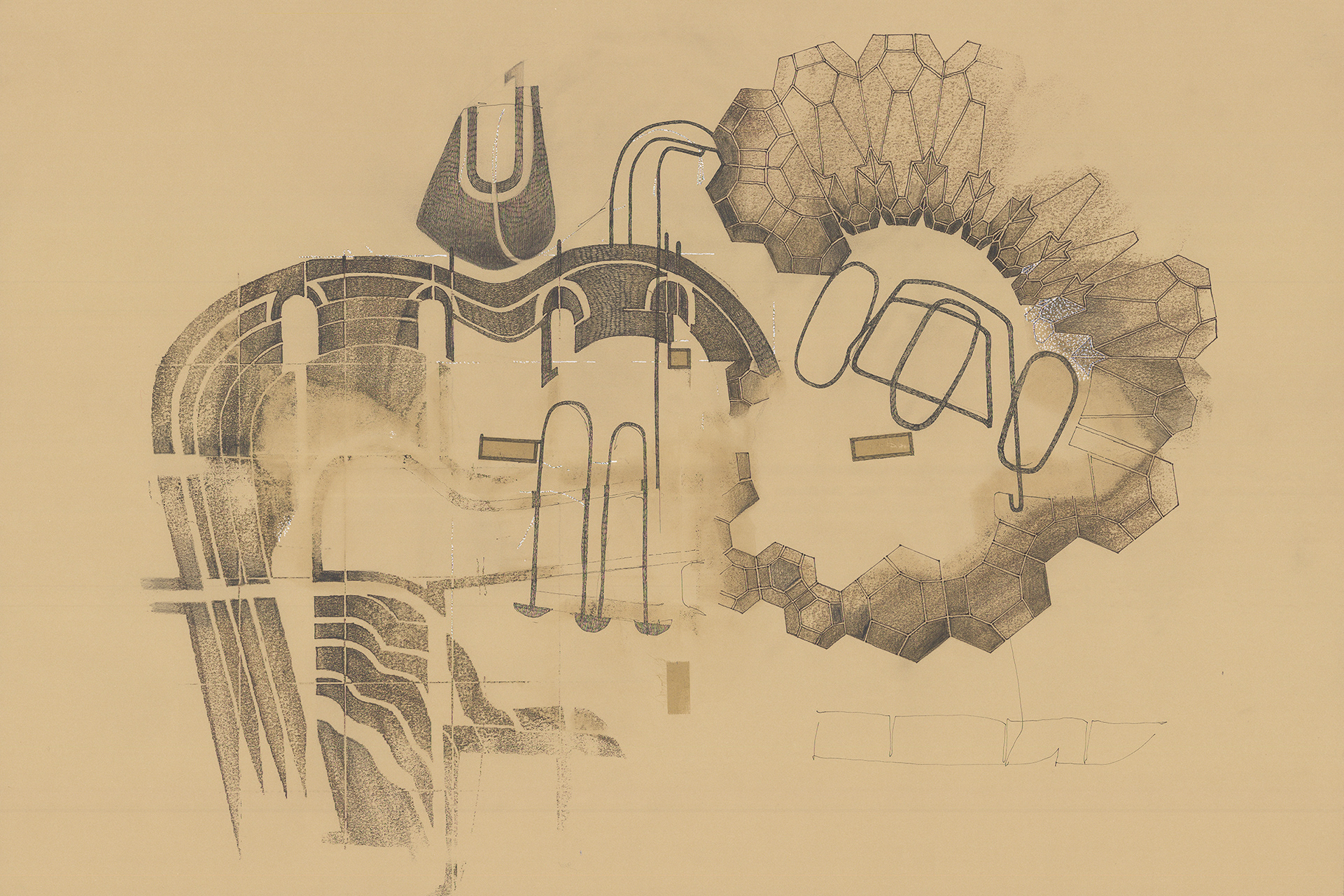
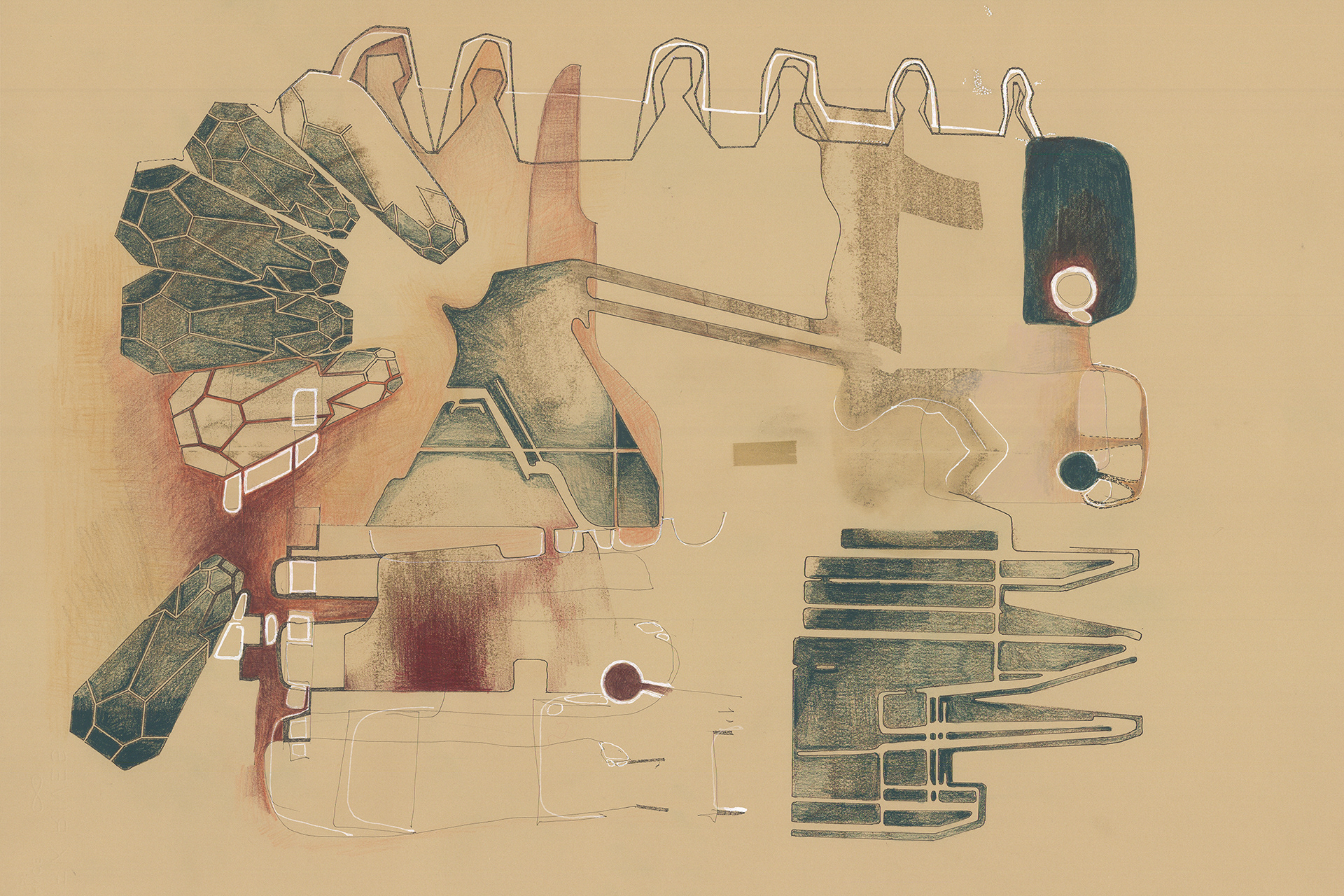
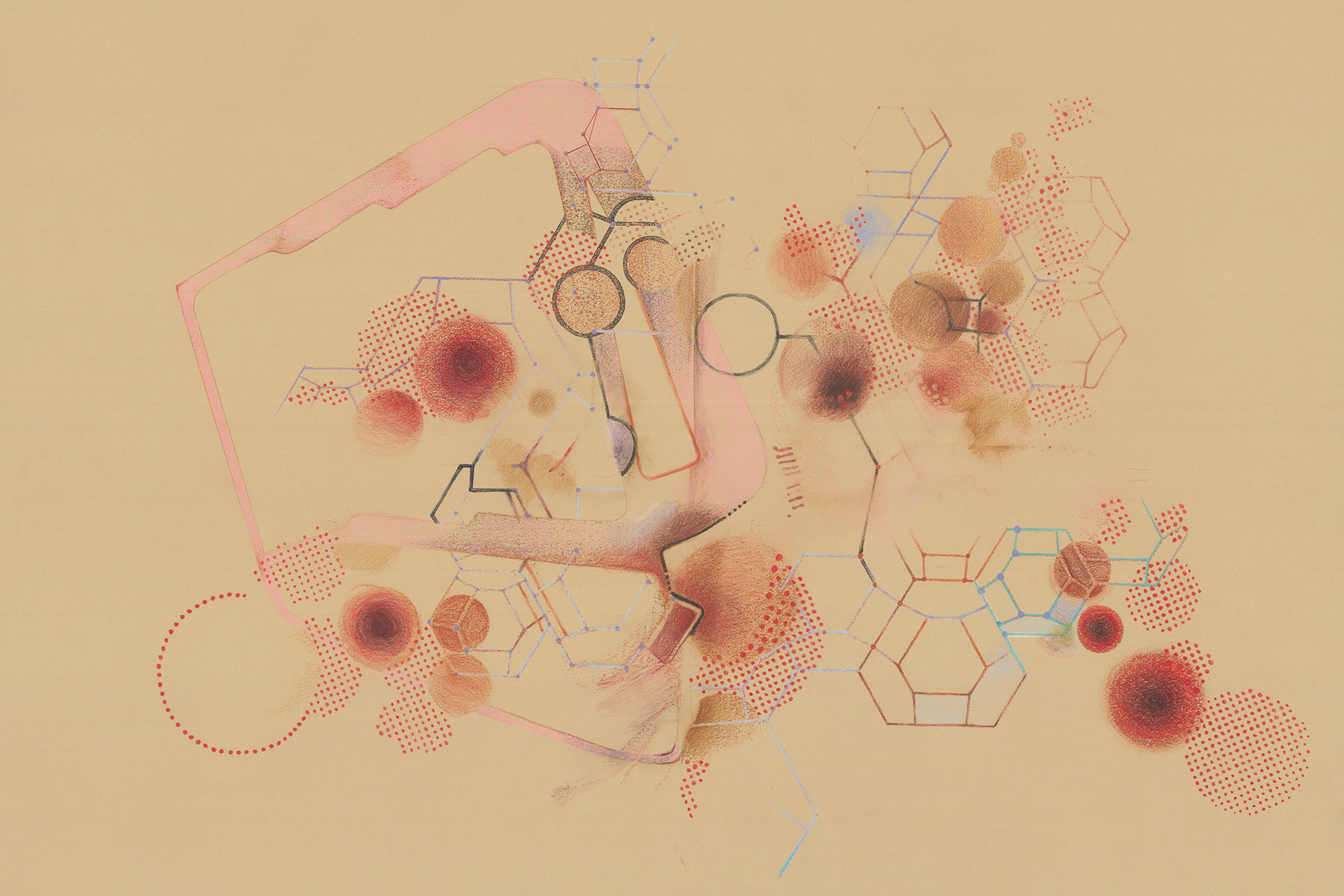
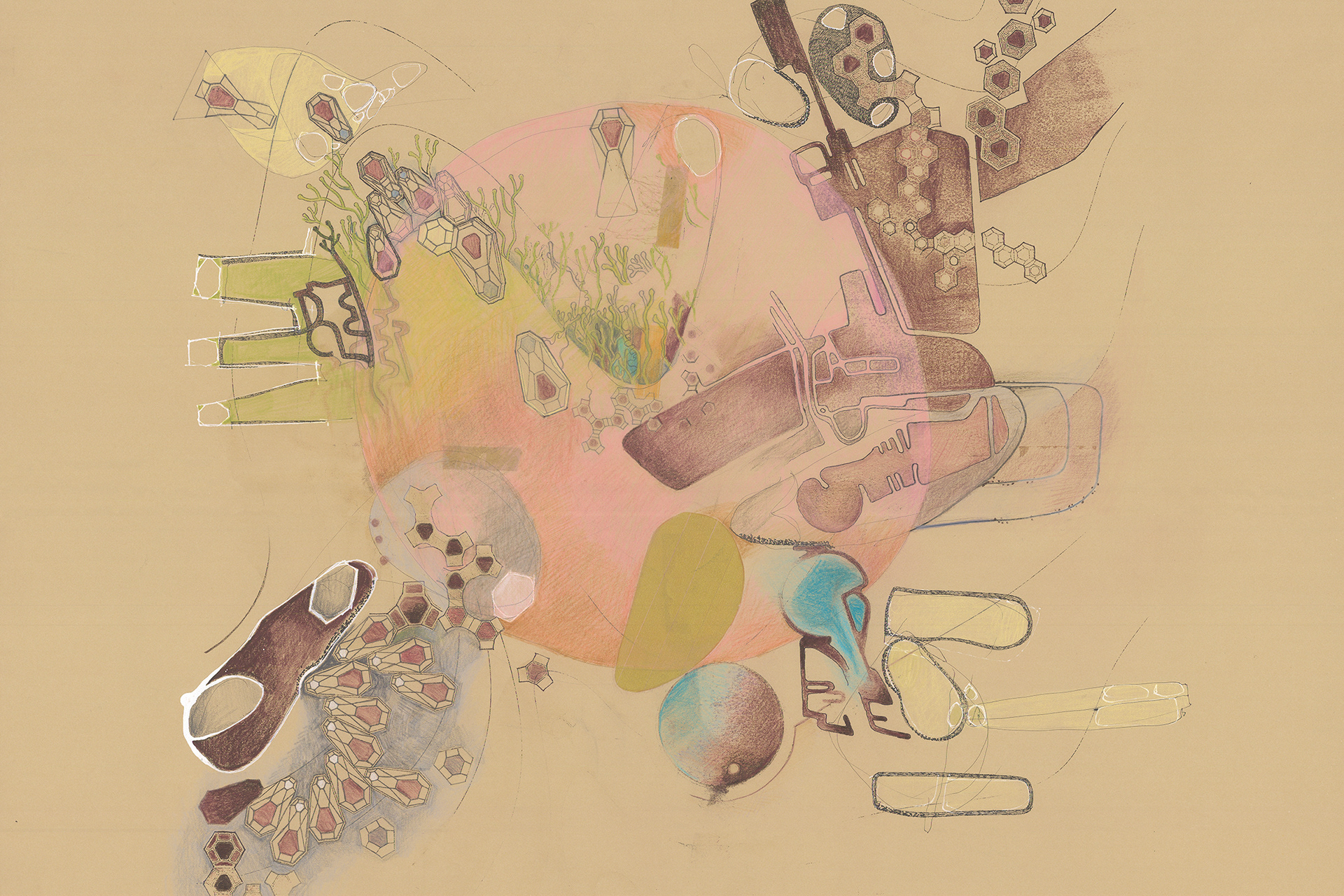
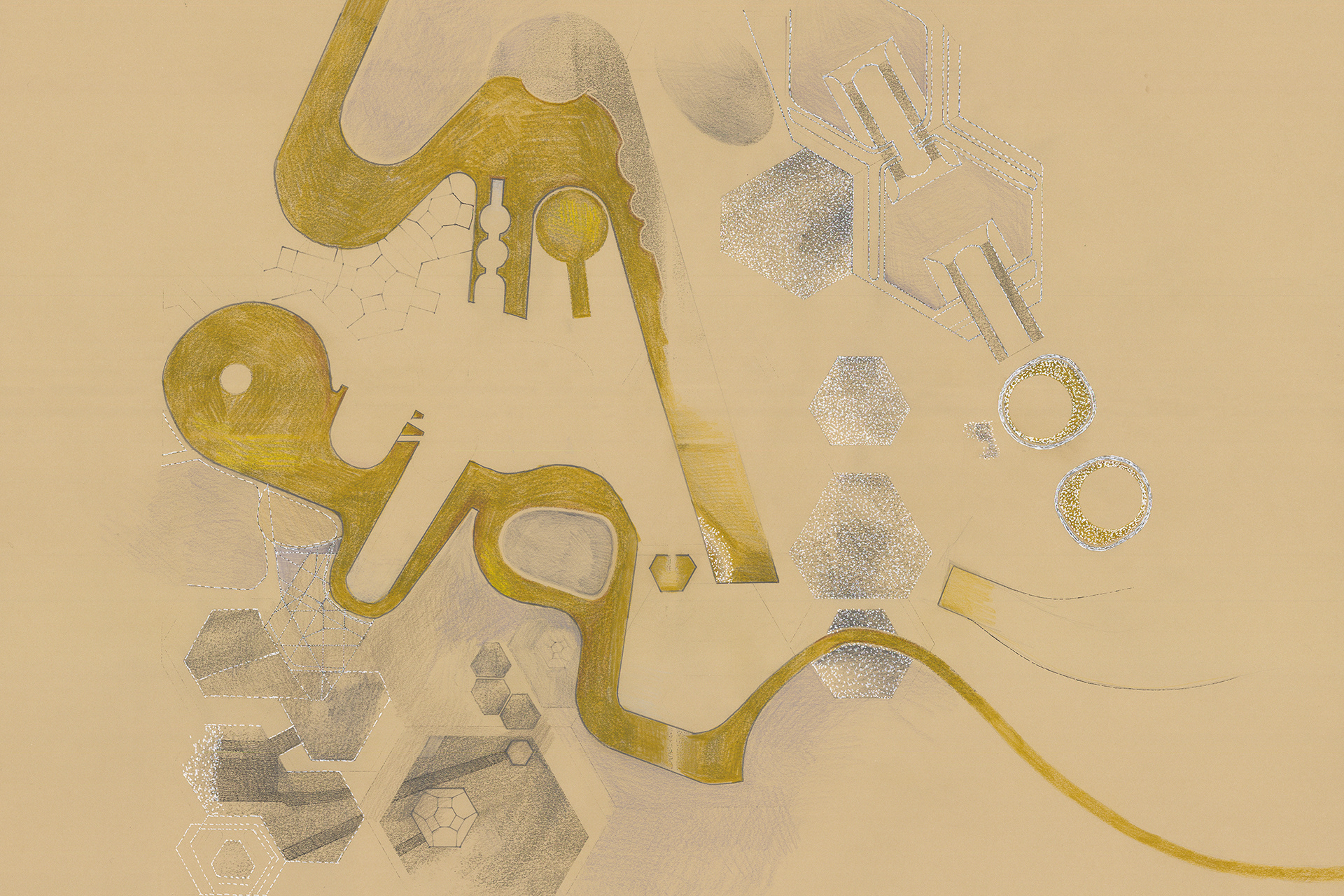
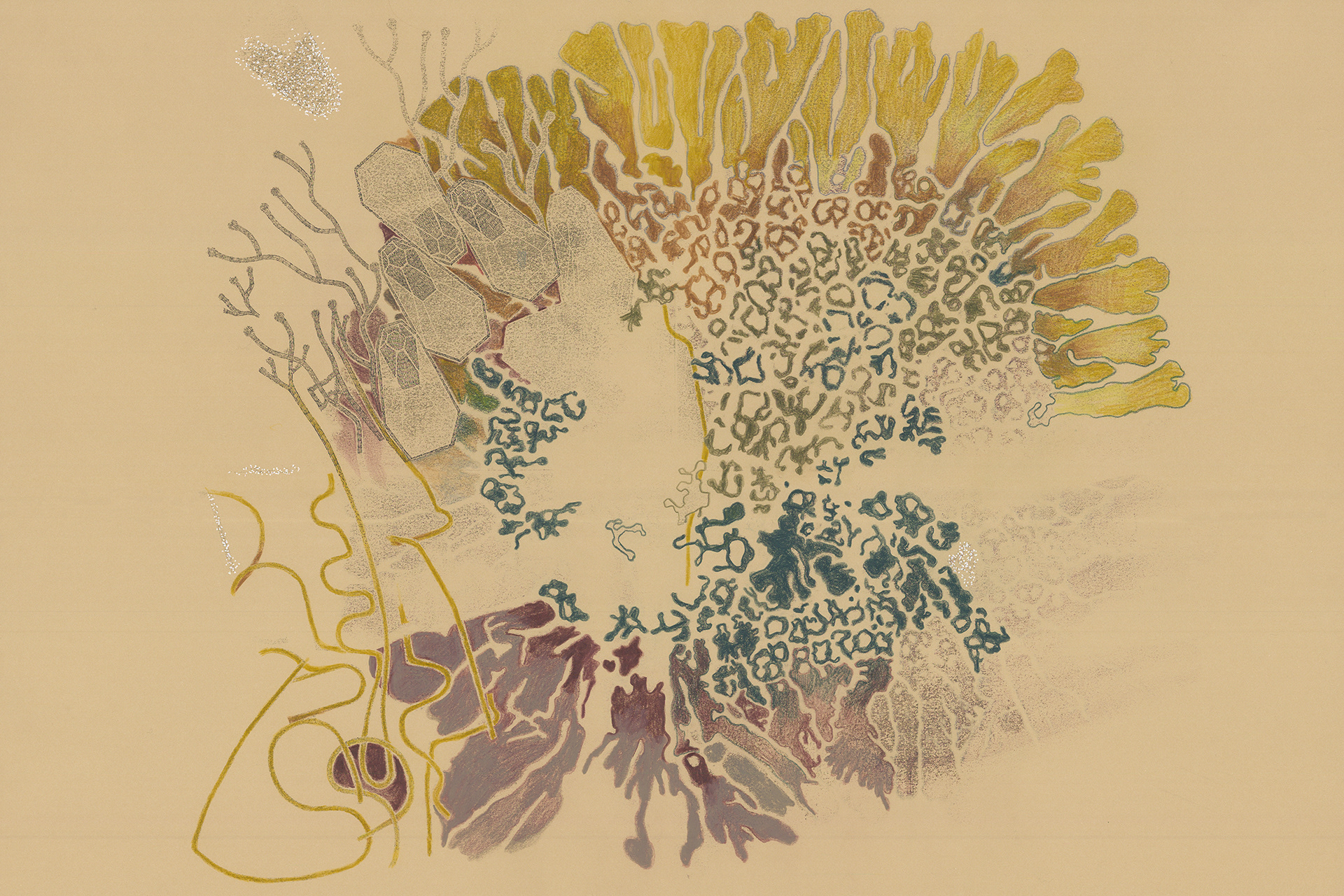
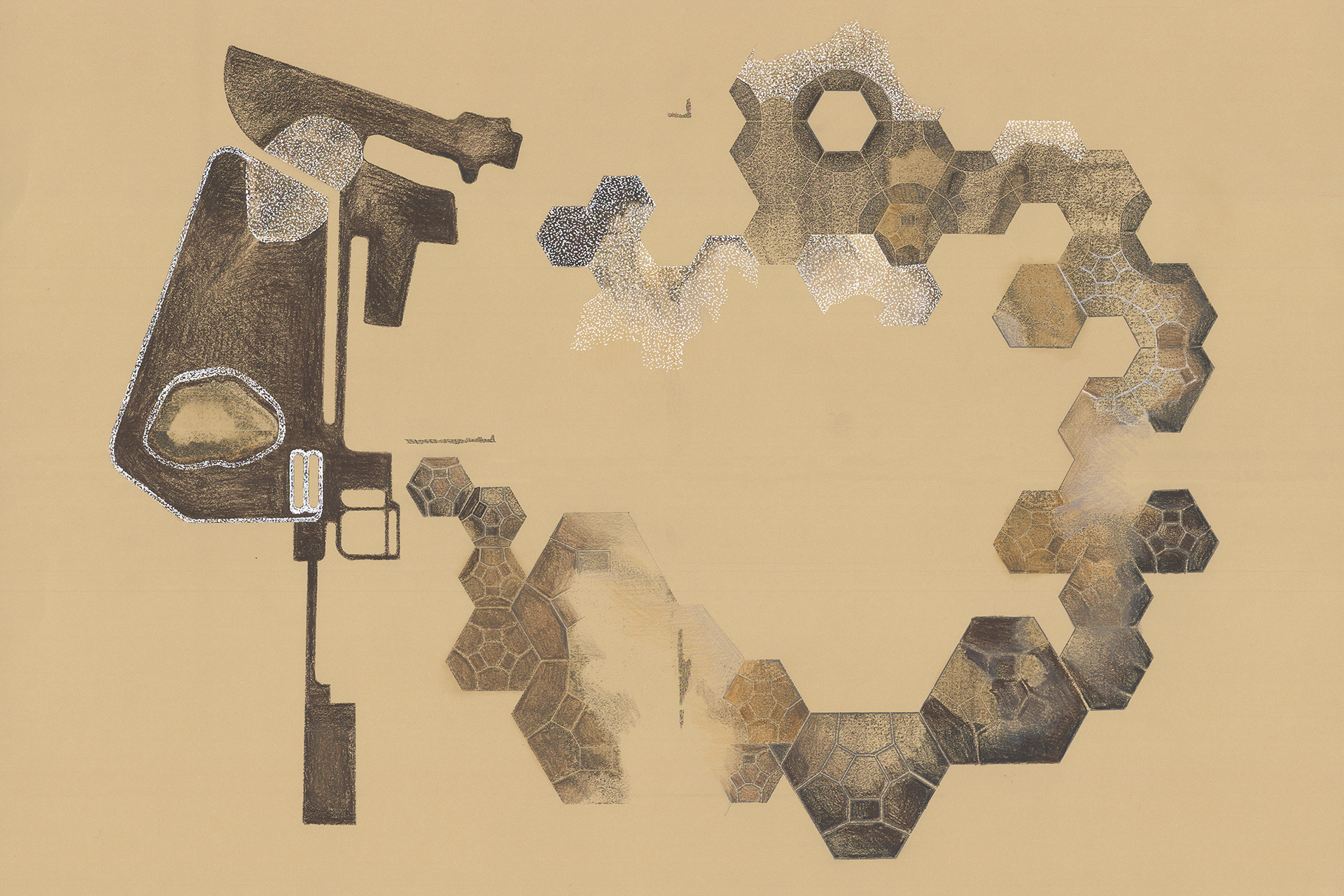
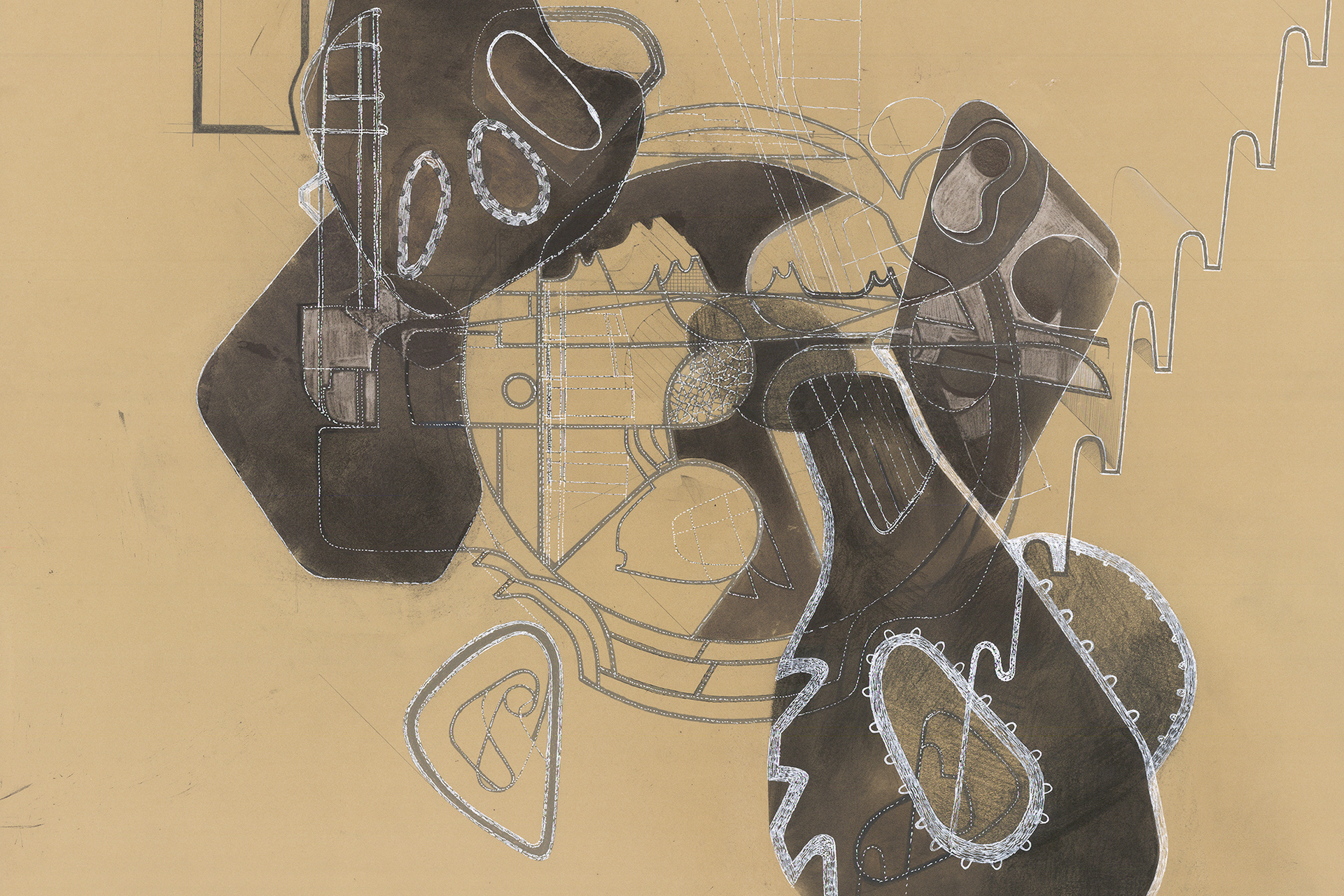
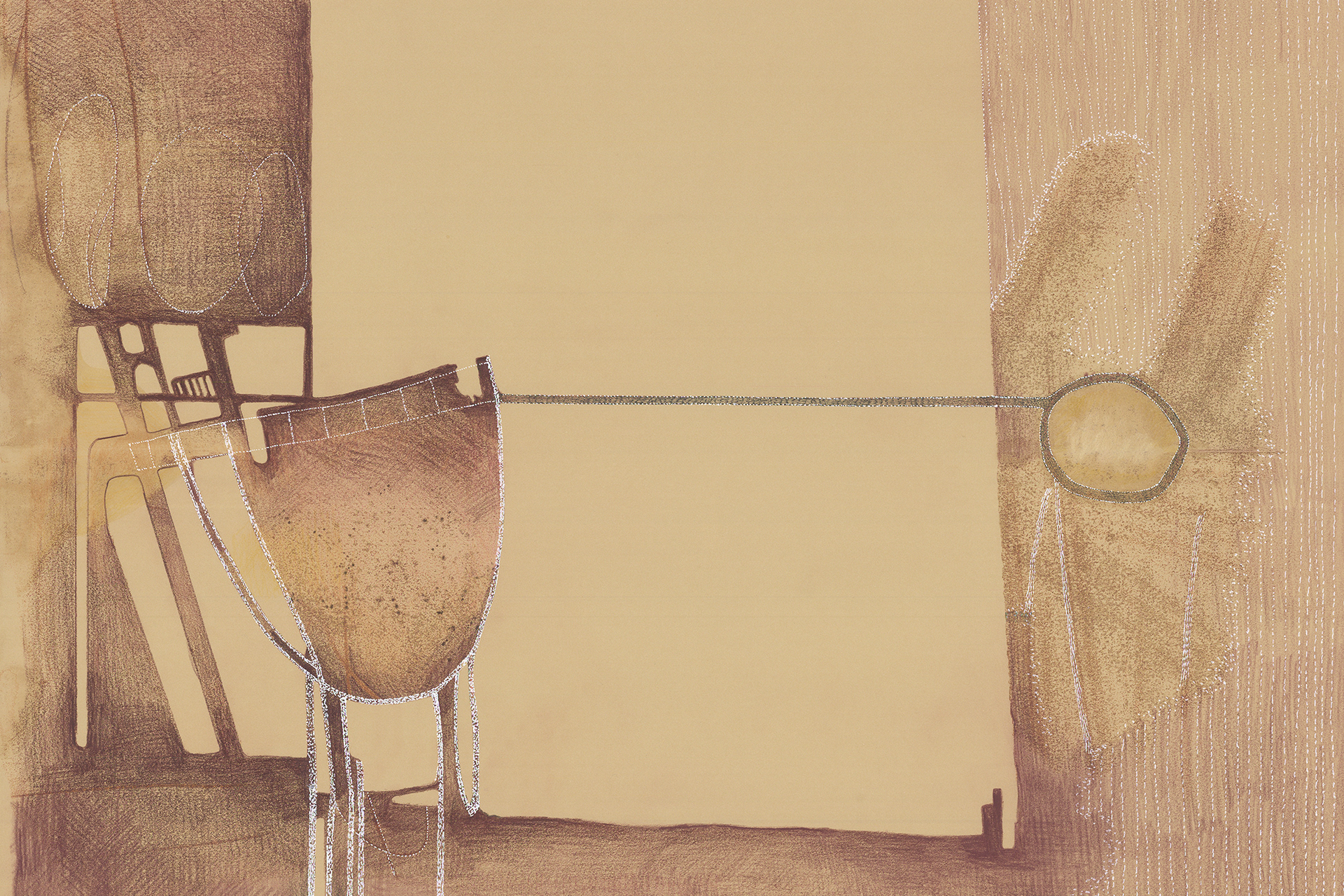
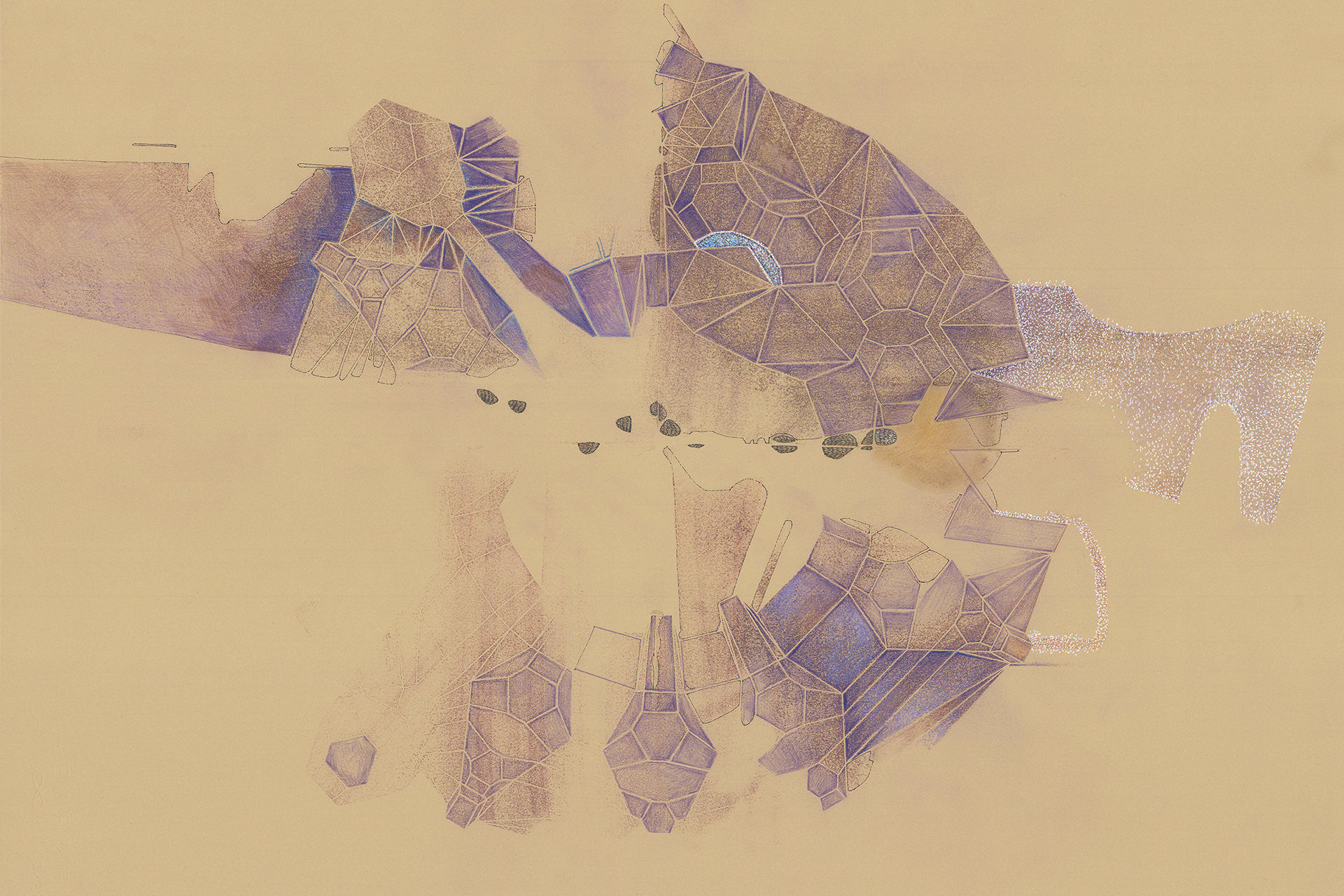
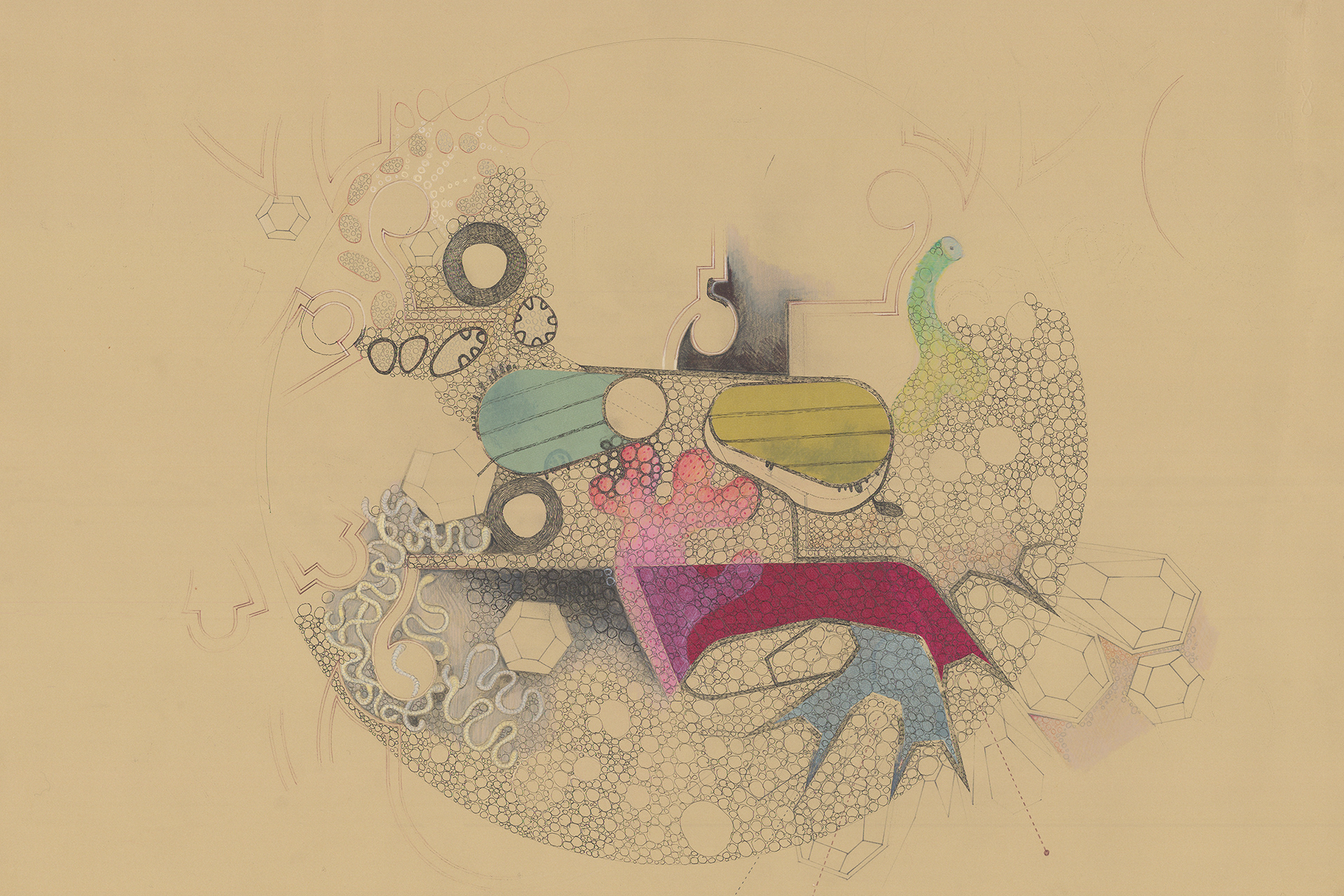
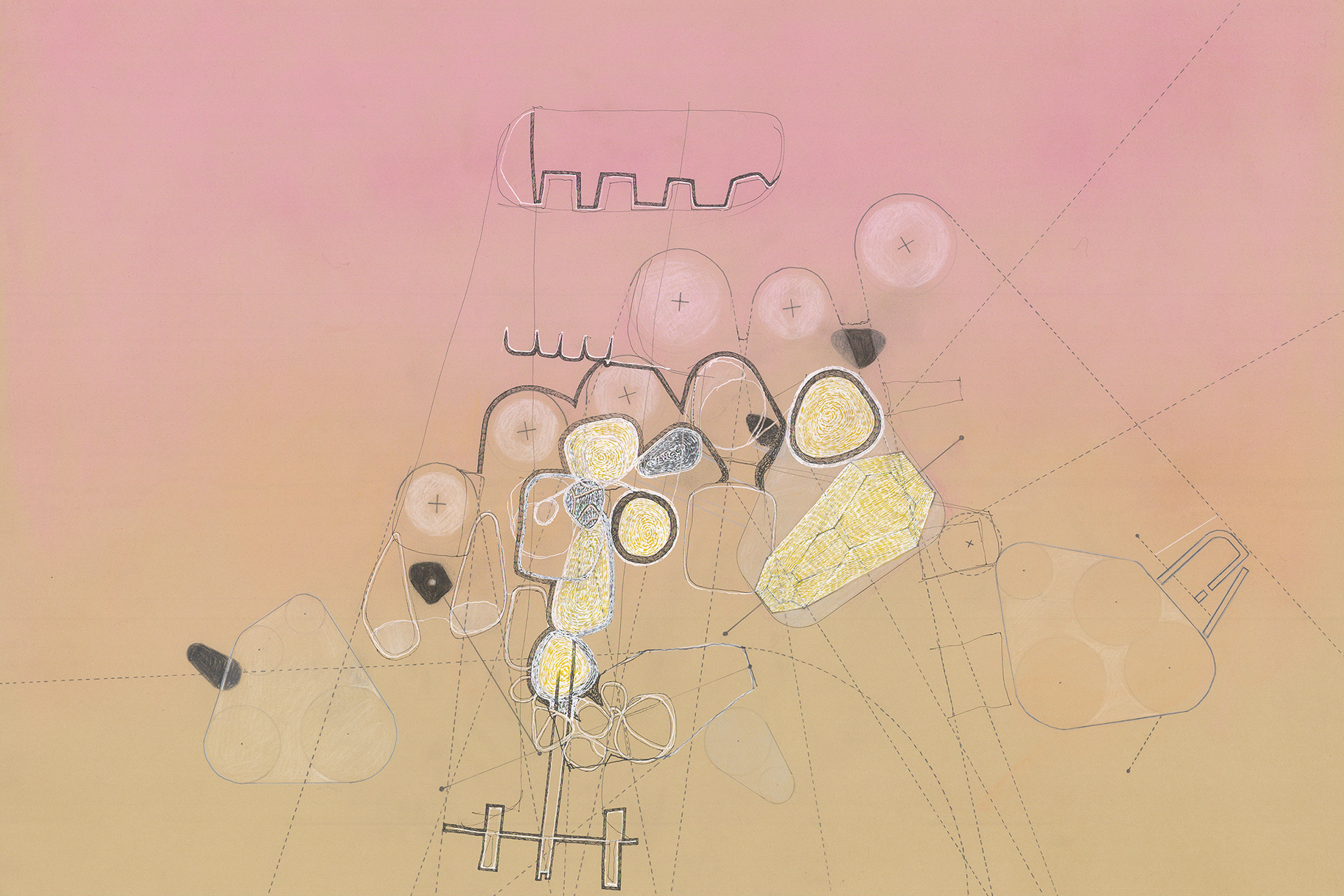
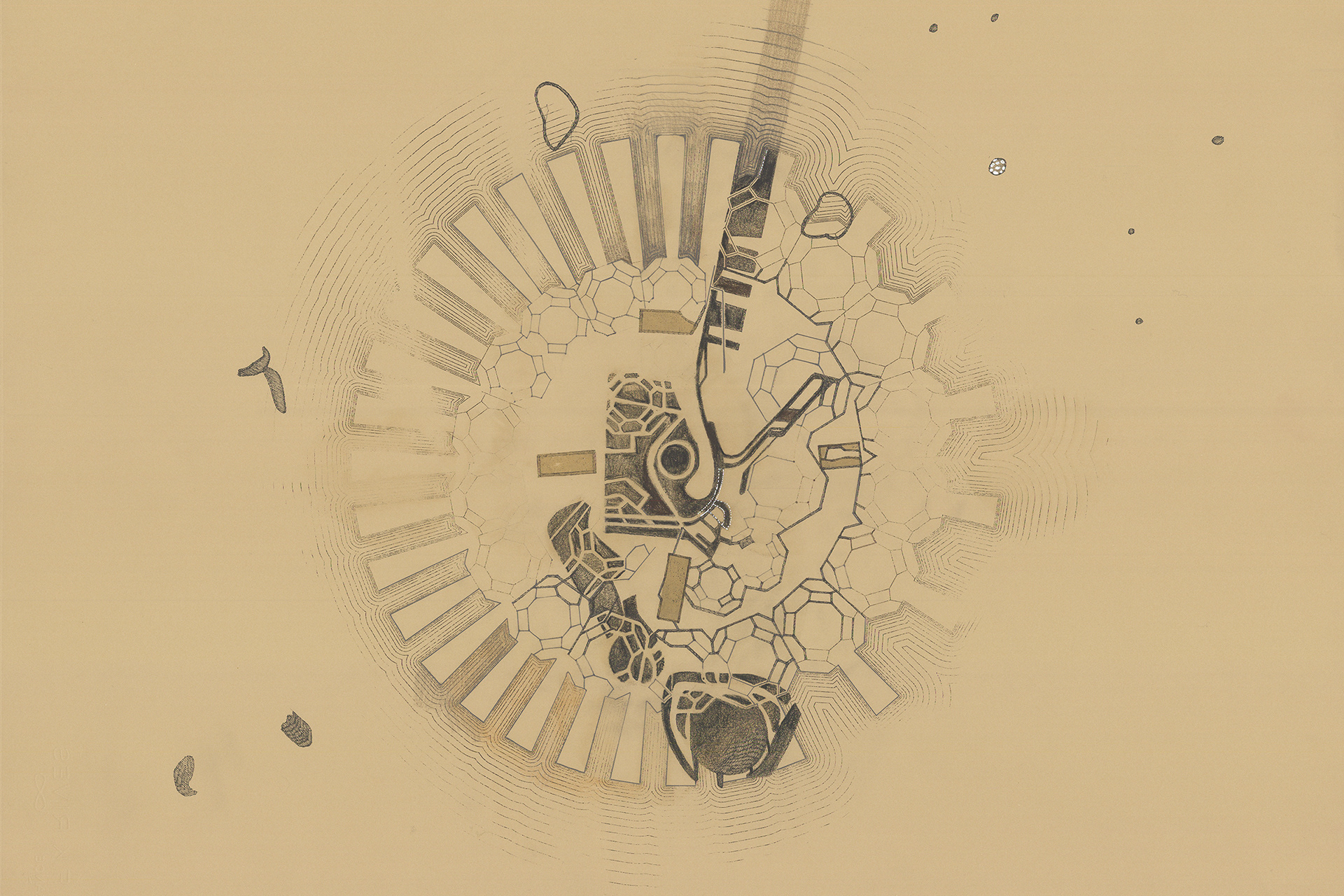
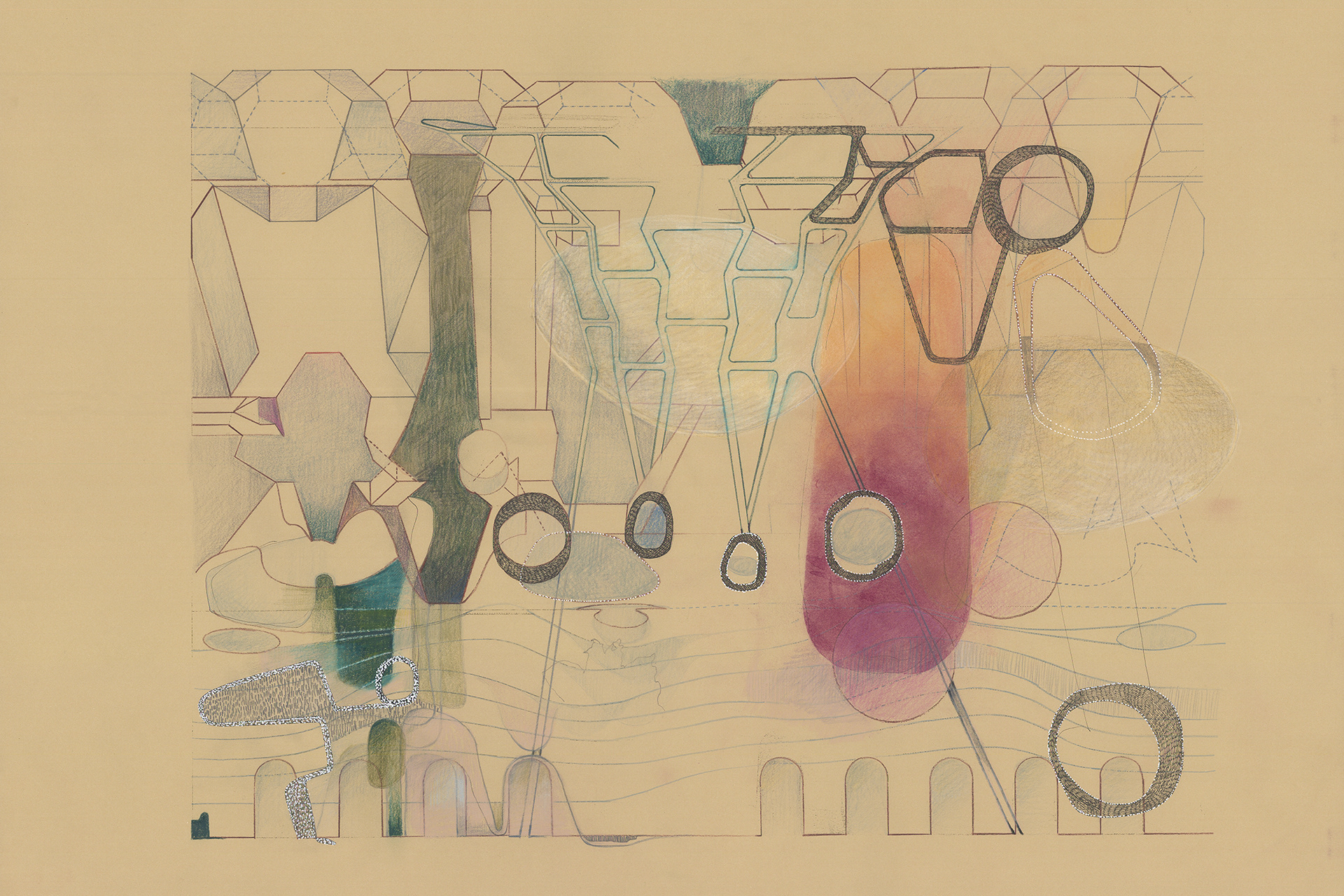
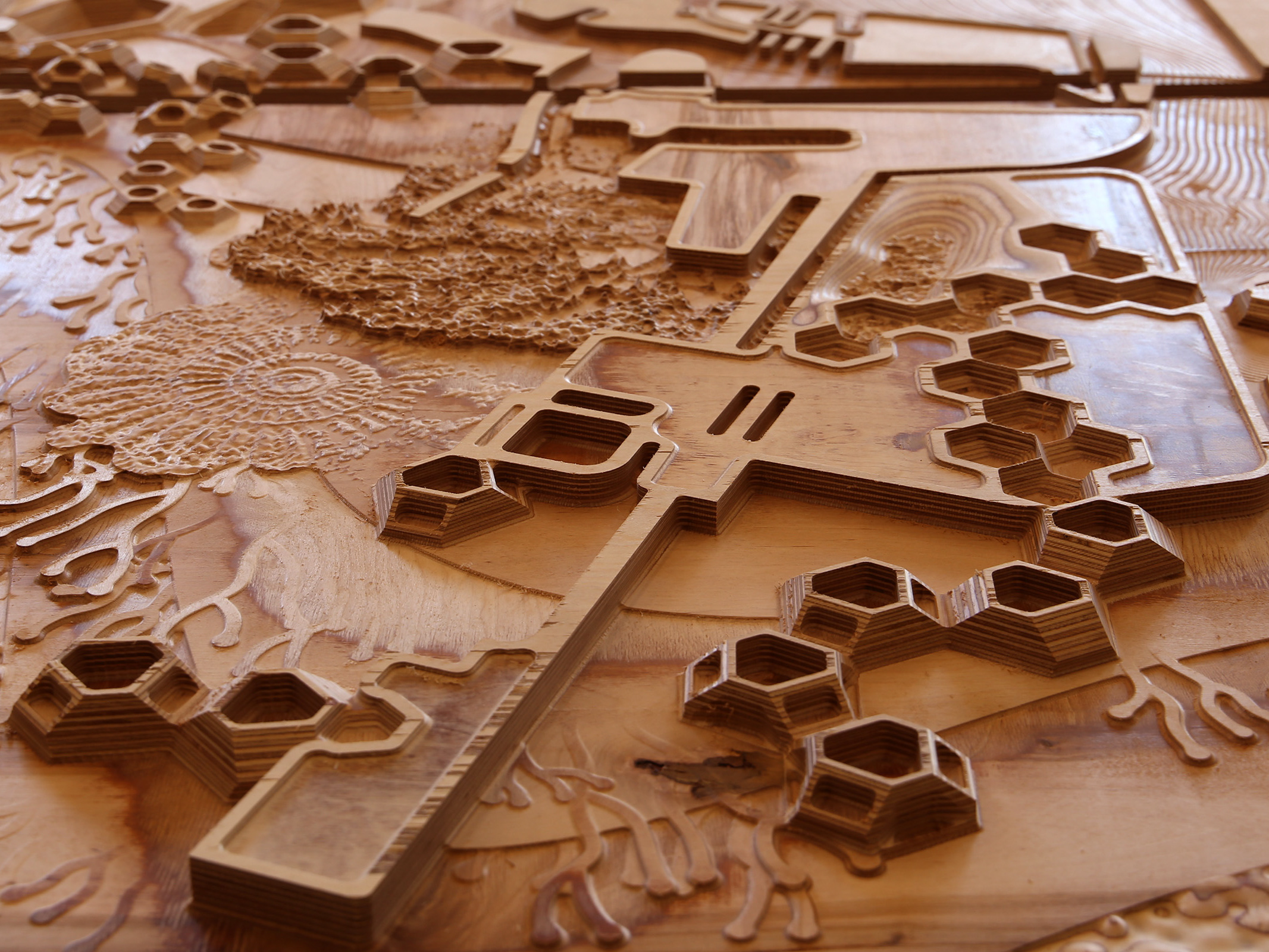
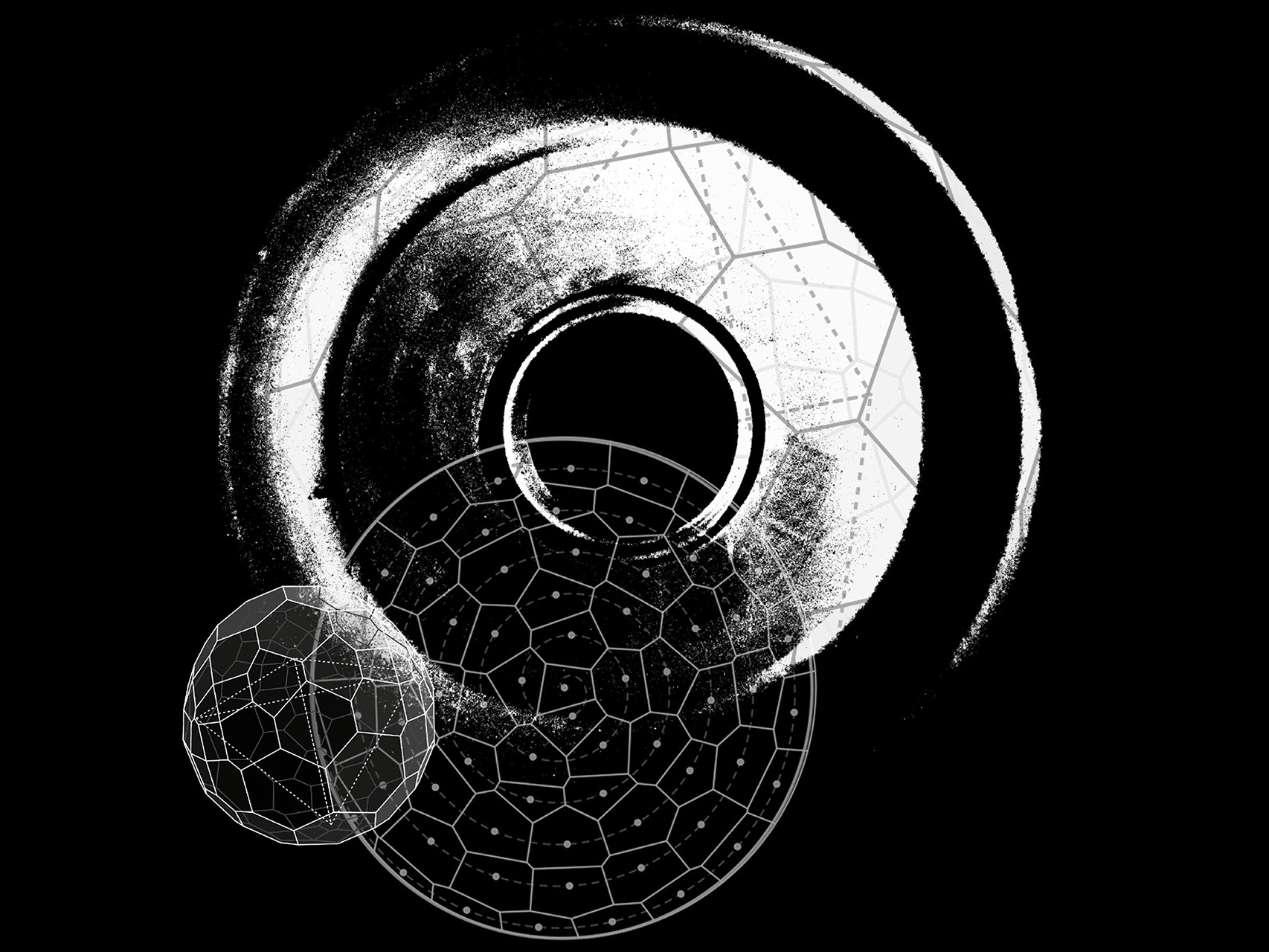
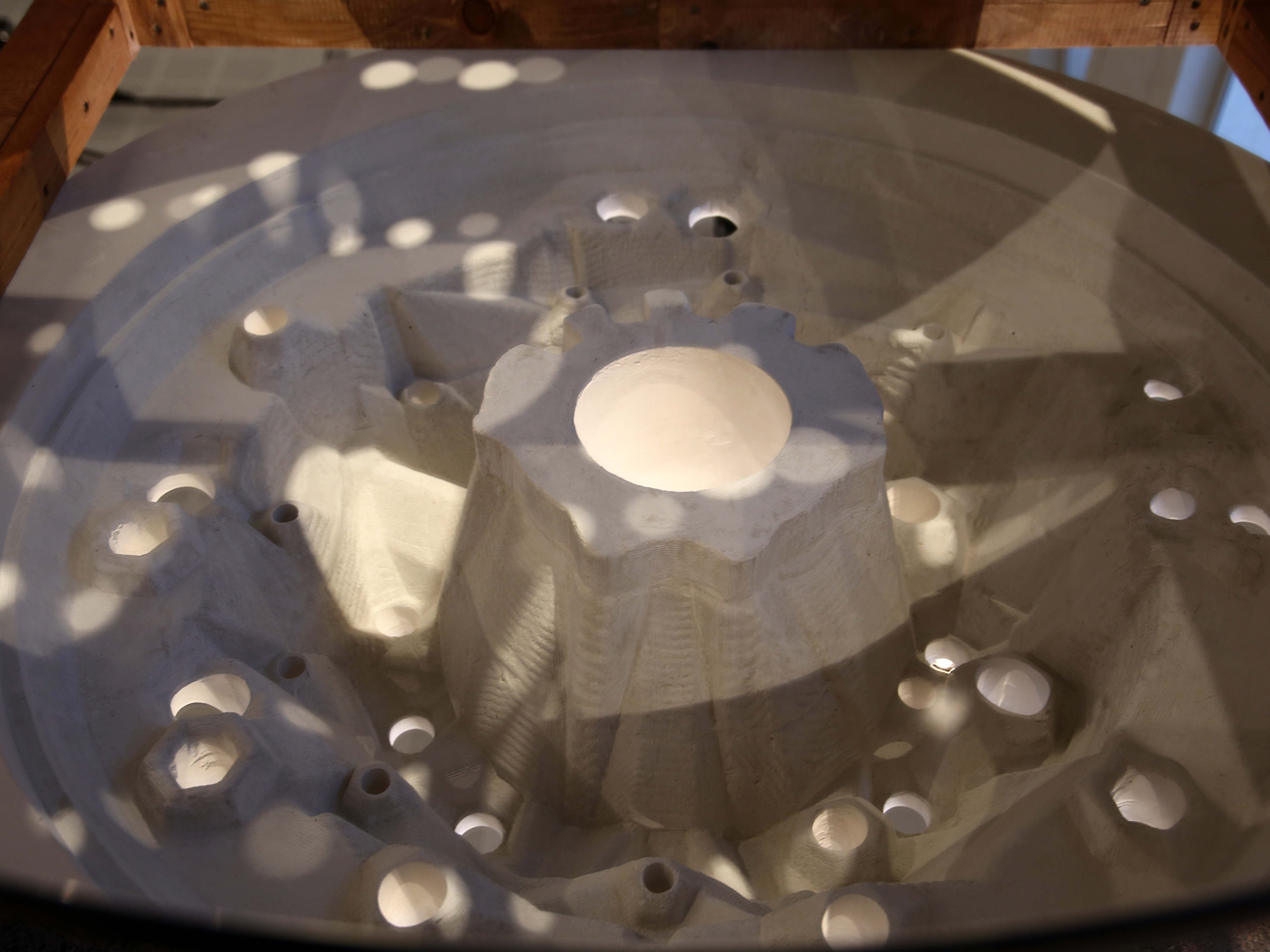
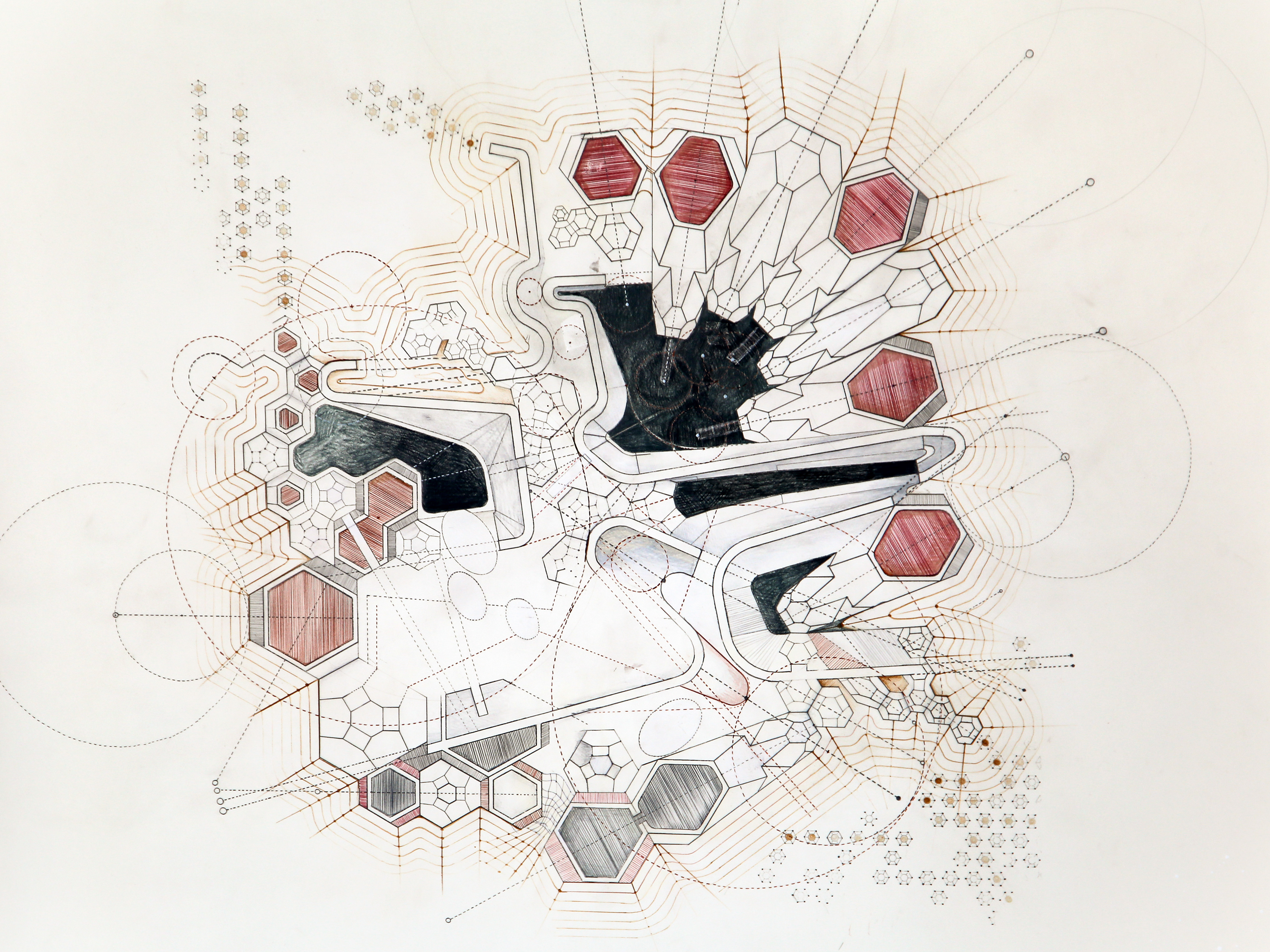
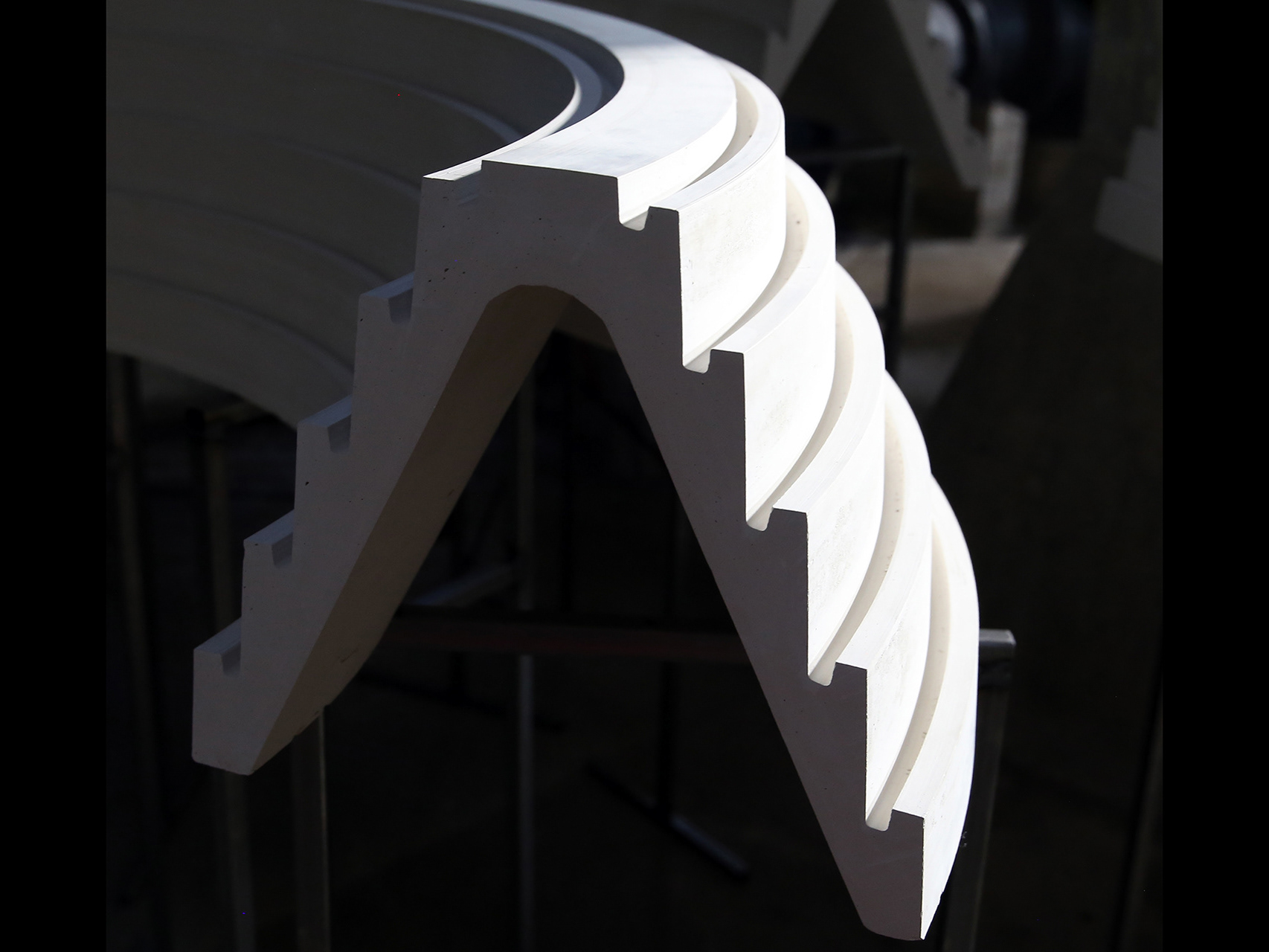
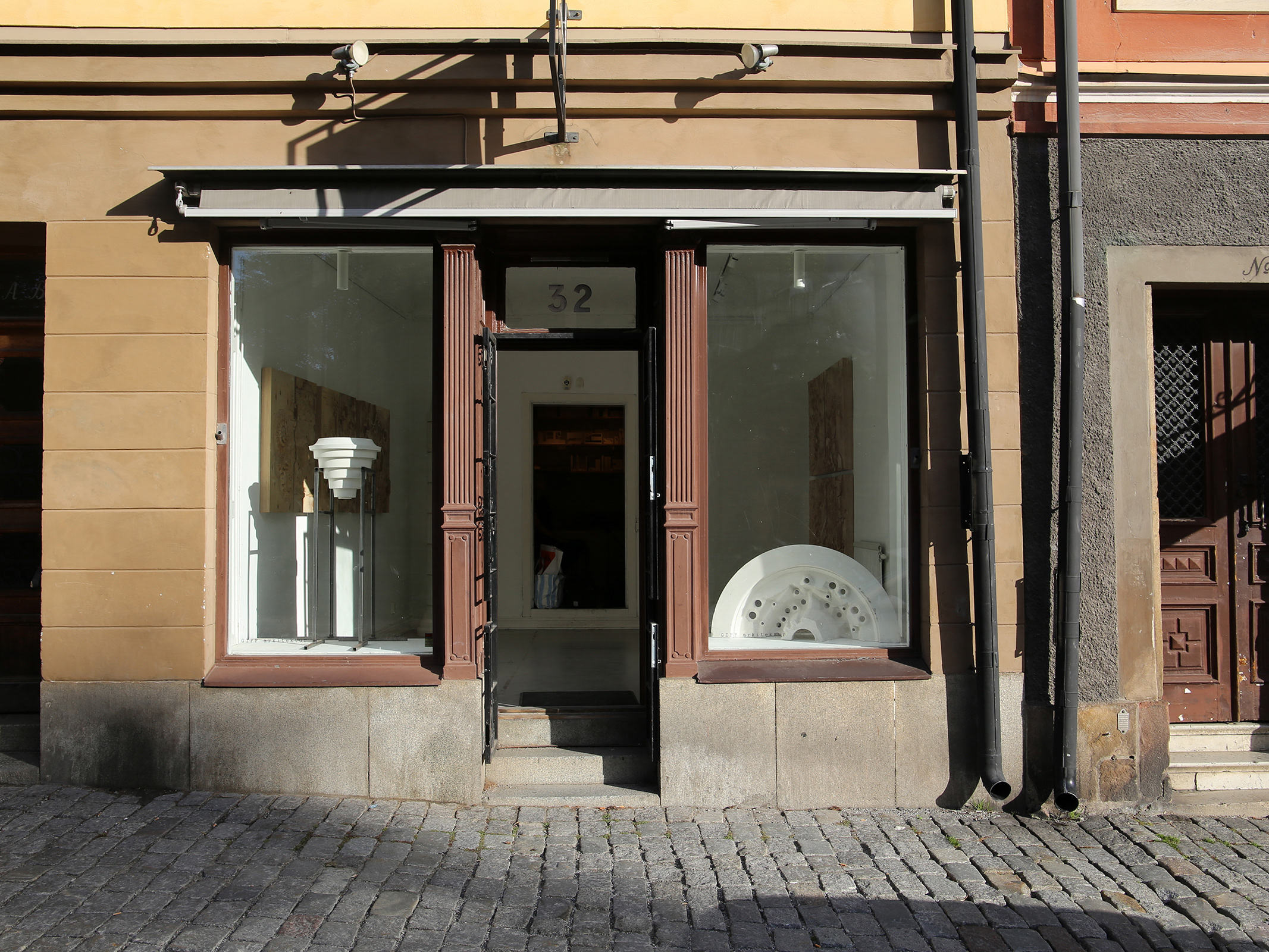
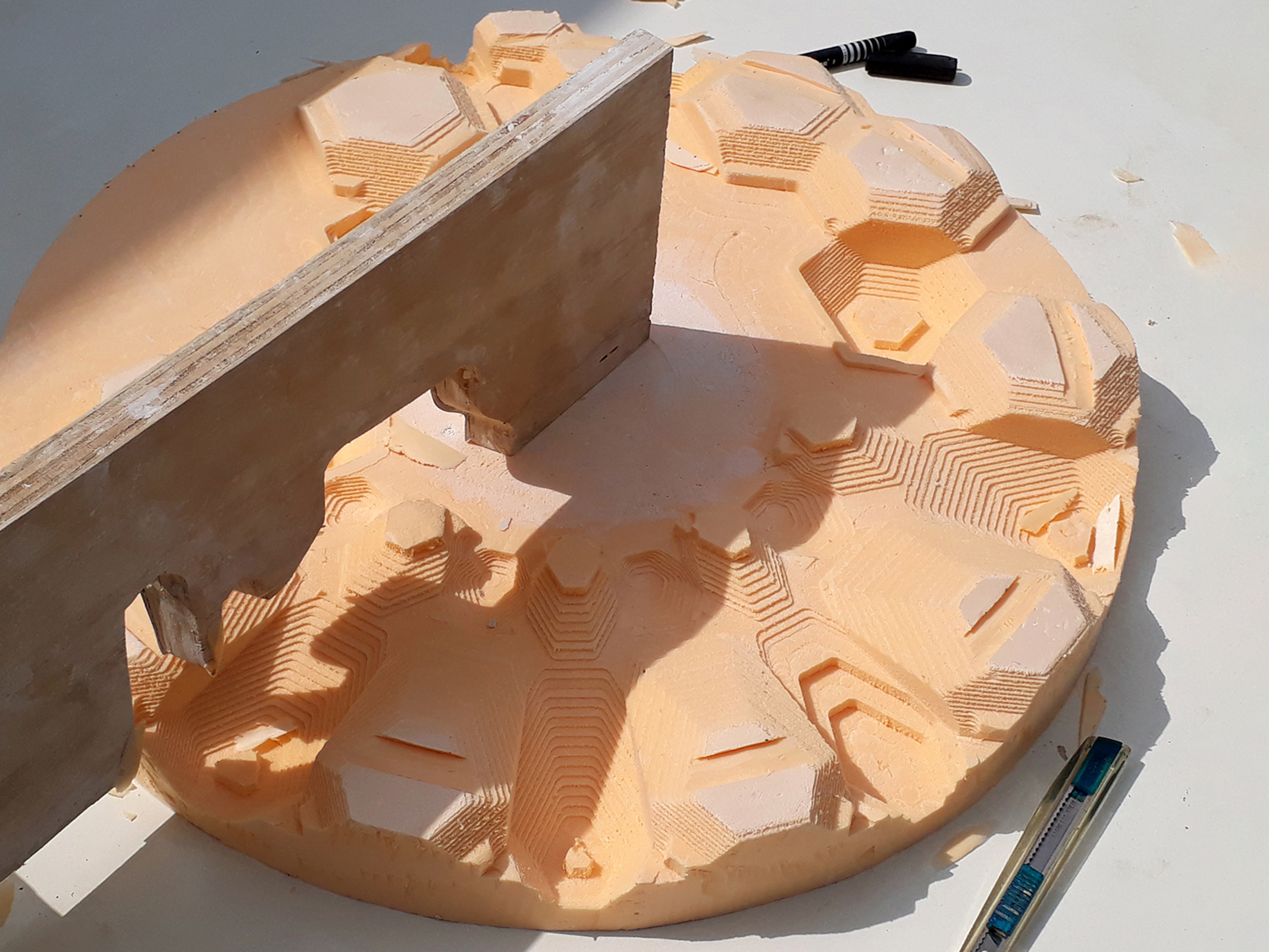
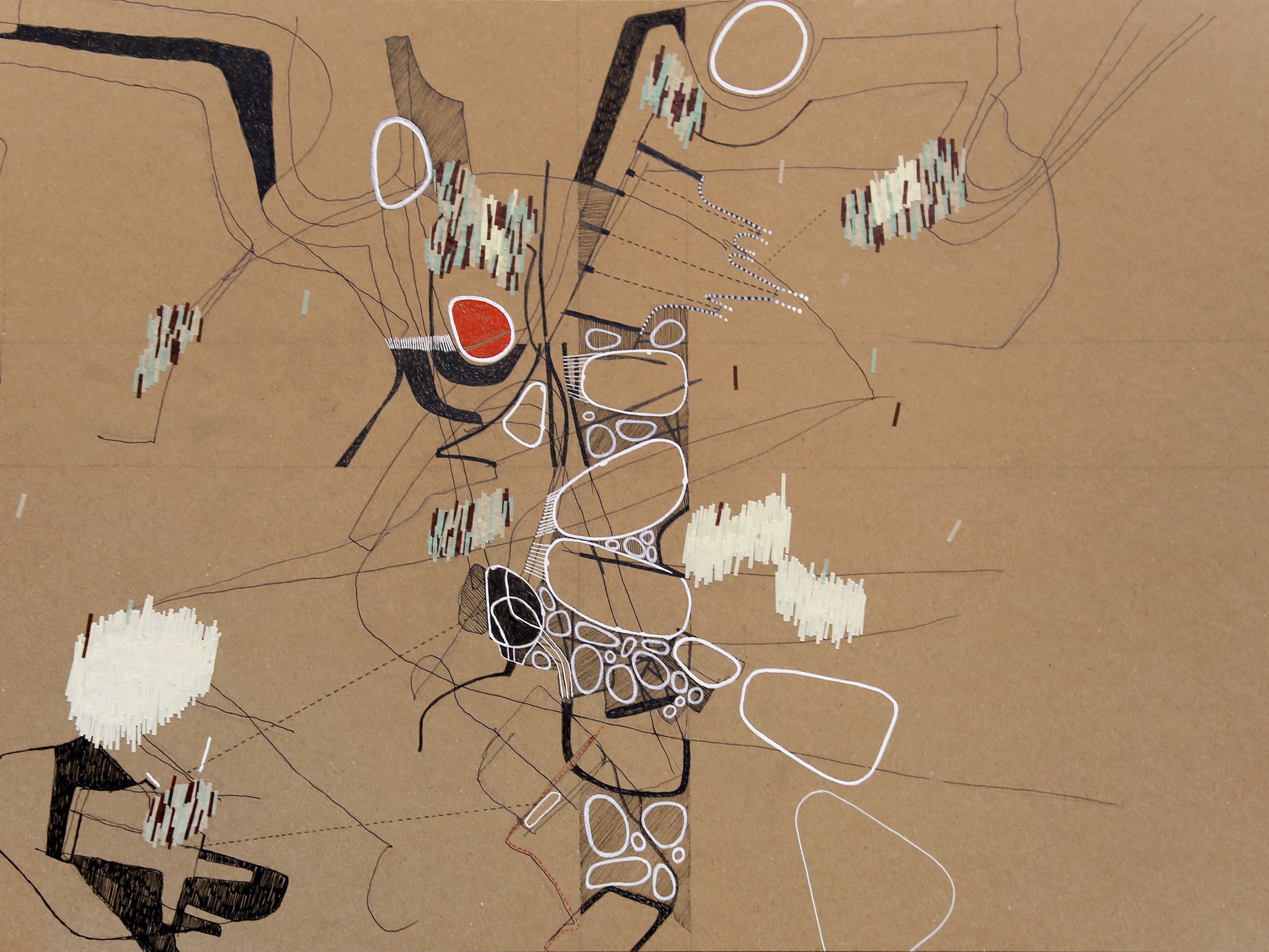
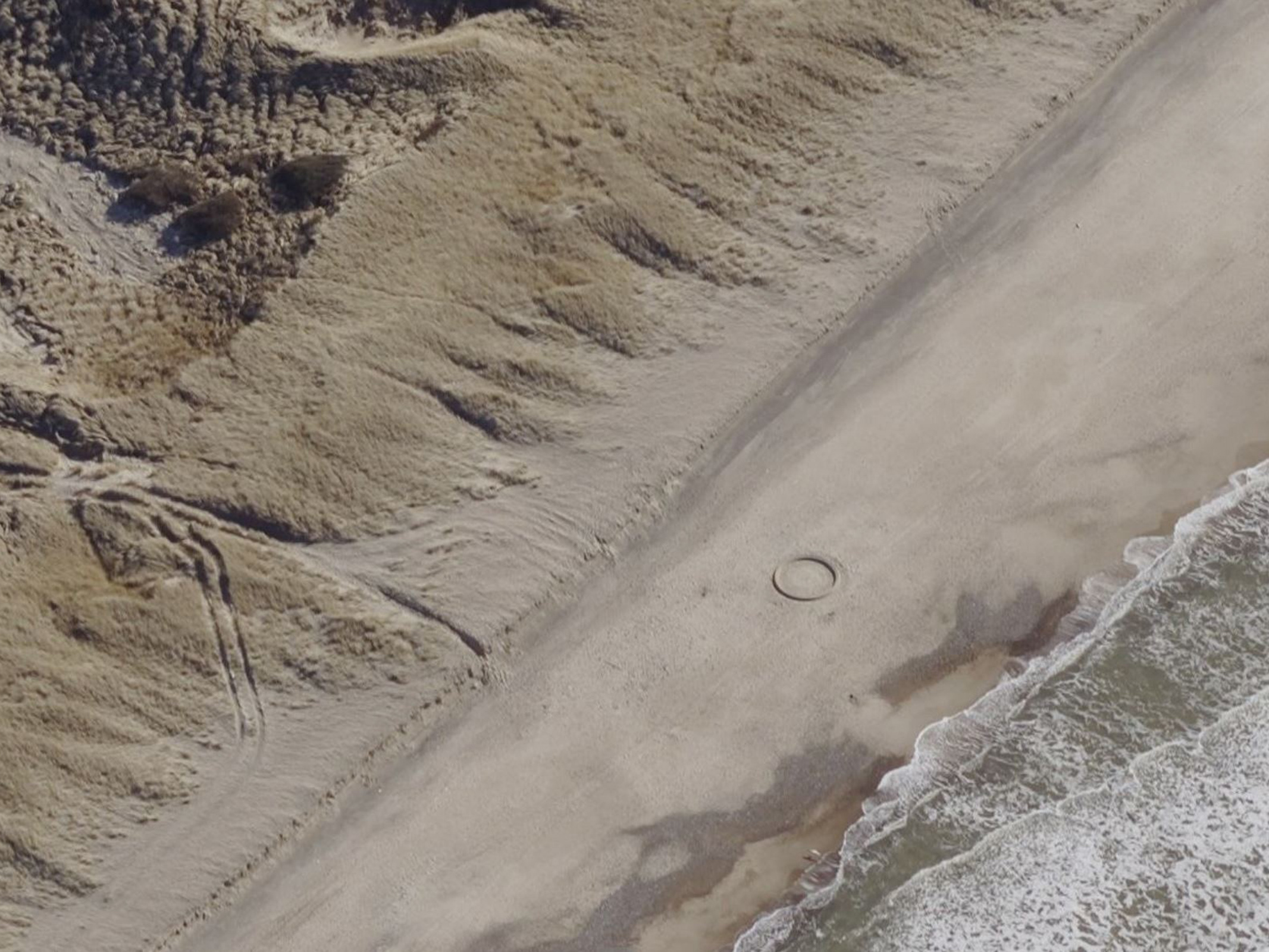
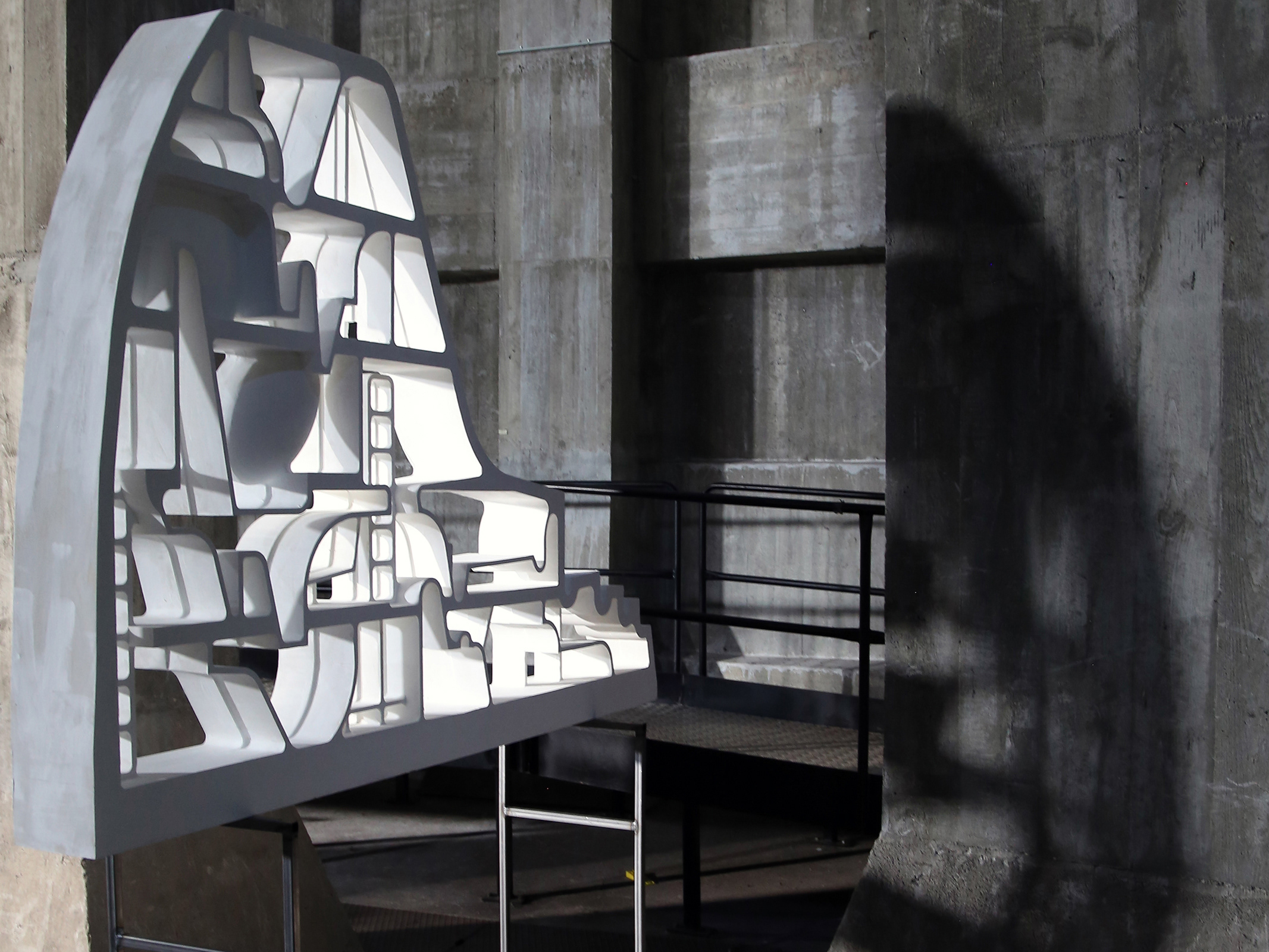
After Architecture is a series of 16 drawings that explore a future where architecture and nature are no longer separate but merge in a new ecological thinking. The drawings are pages in a large book in A1 format, hardbound by a professional bookbinder. They are complemented by a plaster model that 'stands guard' over the works - in the process of dissolving and merging with the landscape it was previously separated from. The plaster is weathering, becoming porous, just like the idea of architecture as something fixated and delimited.
The drawings are a form of cognition. They are created in a joint, exploratory process, where we draw on top of each other's lines. Types and characters emerge in one drawing and are transplanted to new drawings, where they are changed by the context. Connections, seeds and sprouts emerge between the drawings, like a slow, natural growth. Constraints and aesthetic regimes inform the process: Baroque ornamentation and geometry, the logic of compostation, and nature's repetitions that are never quite the same.
Nature is inherently decorative. It can't help being so. Throughout history it has been used as ornament - stylized, systematized, idealized. Architecture should be inspired by this today, where a new aesthetic must emerge. Beauty and form are being renegotiated under new conditions: climate crisis, scarcity of resources, biogenic materials, and the need for transformation rather than new construction. Nature appears as motif and method - but also as an invitation to rethink the decorative as a form of necessity. An ornamentation that goes beyond Loos' and Modernism's rejection of the decorative.
The drawings are both investigations and statements. Together with the plaster model, they function as a reflection on the role of architecture in a future where the nature-culture dichotomy no longer makes sense. They invite new insights into architecture's relationship with the living - and ask what comes after architecture.