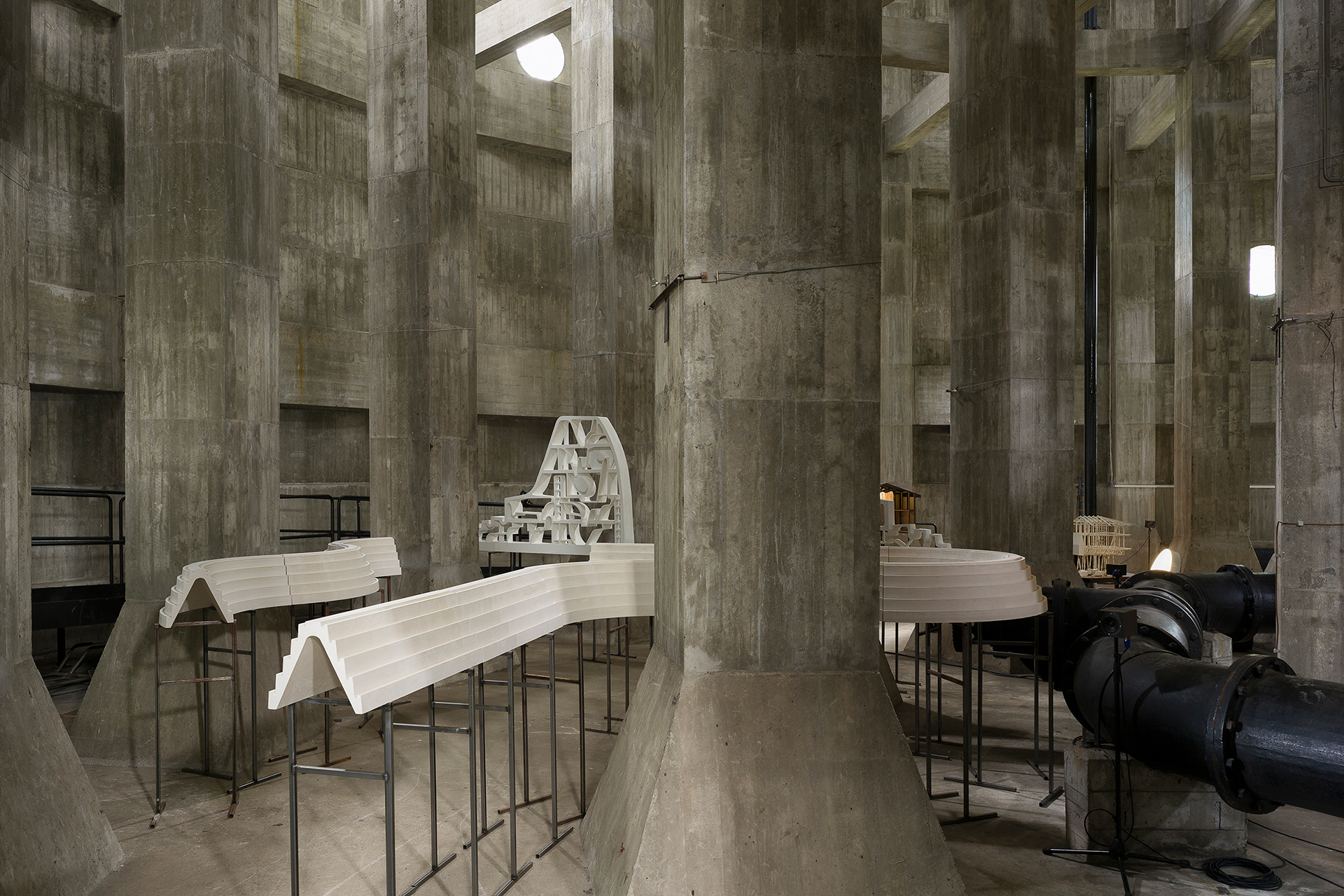
Brønshøj Water Tower was designed by Danish architect Ib Lunding in 1928 to supply the growing population of northwestern Copenhagen with water. Although it is no longer in use, its original principle remains clearly legible: water was contained in a cylindrical tank high above the surrounding pipes, allowing gravity to create the pressure needed to distribute it. The suspended tank and the robust columns supporting it give architectural form to the human effort to contain and control water.
Today, water increasingly represents something that cannot be contained. Rising sea levels and more frequent flooding challenge existing patterns of settlement and require us to reconsider the relationship between architecture, land and water.
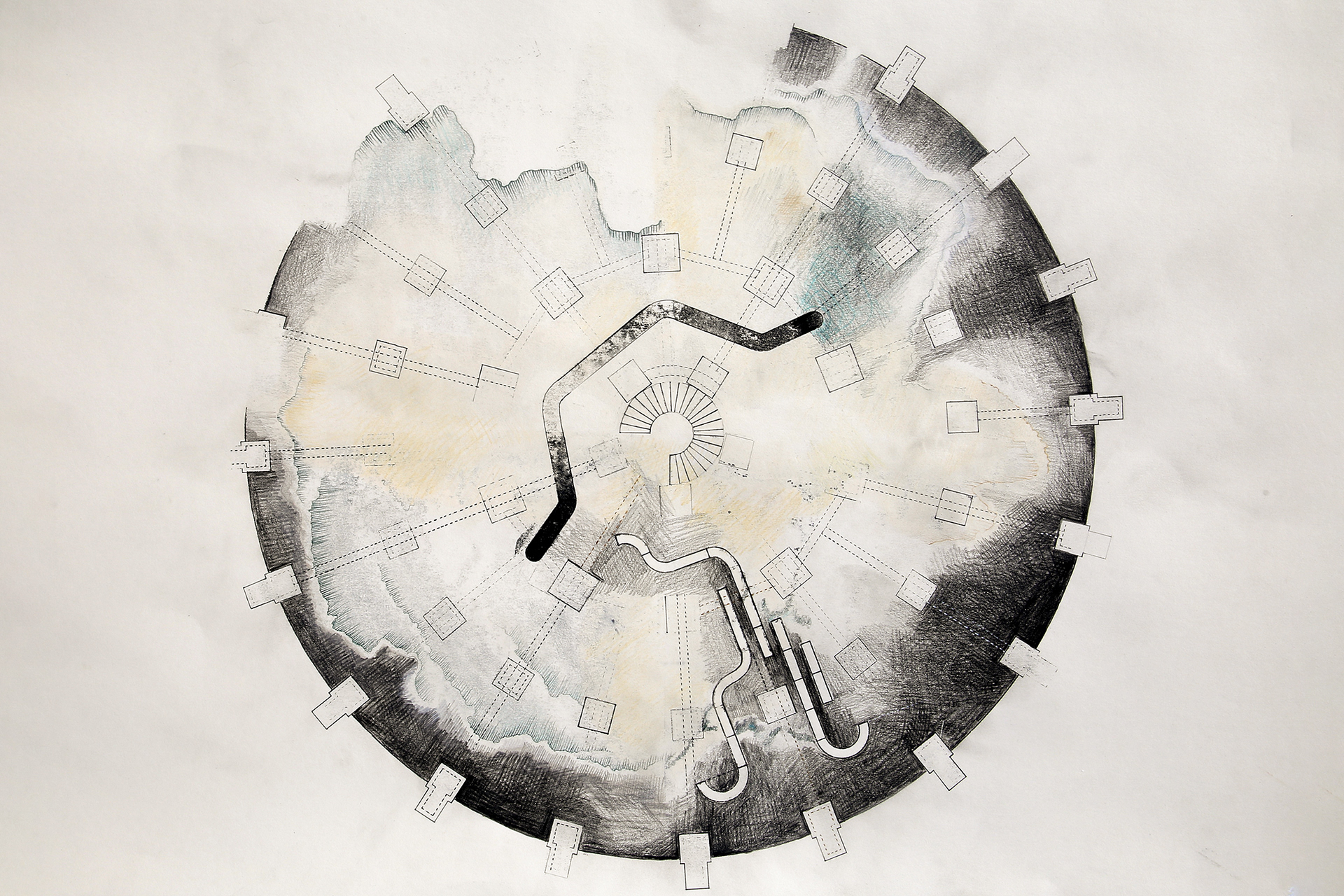
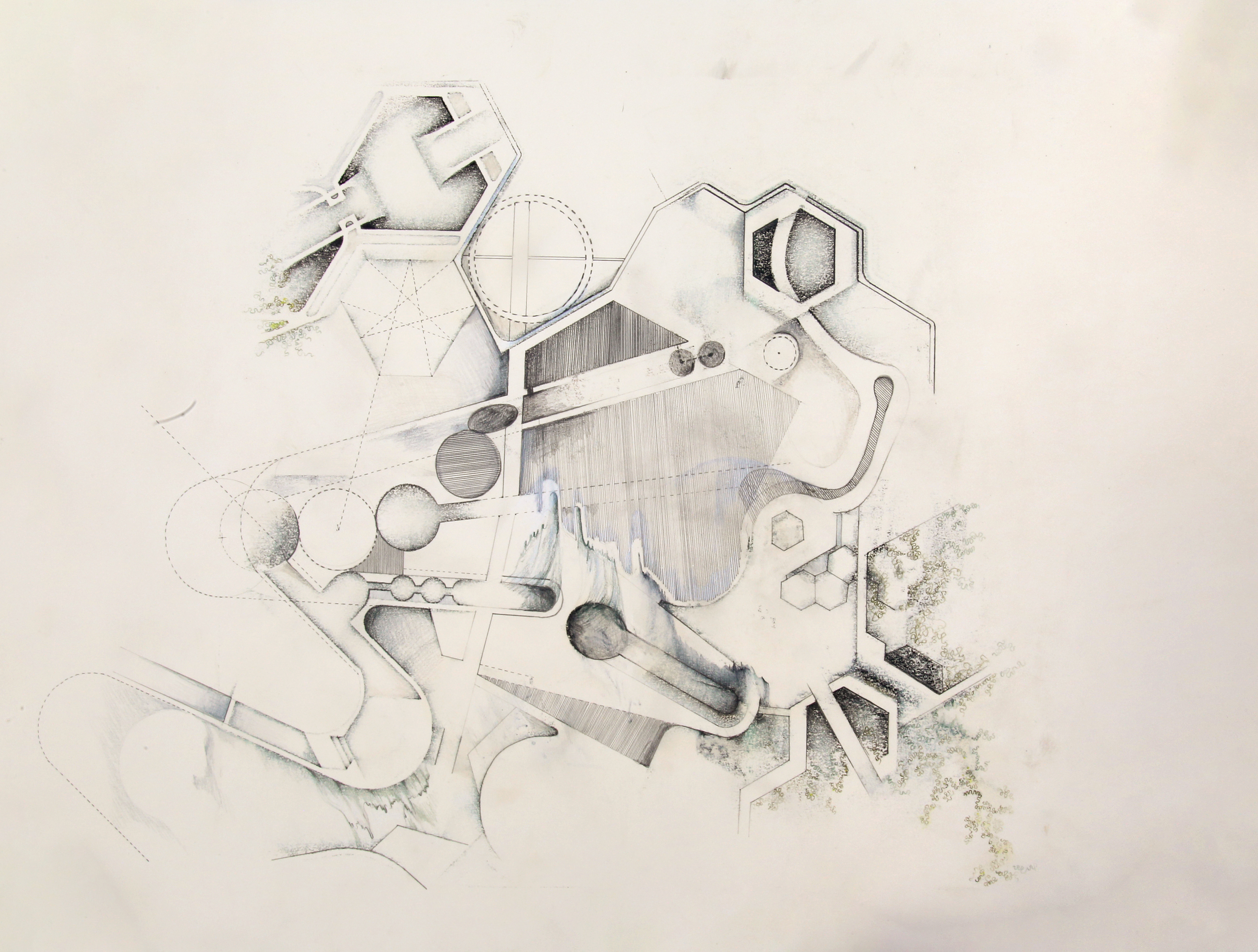
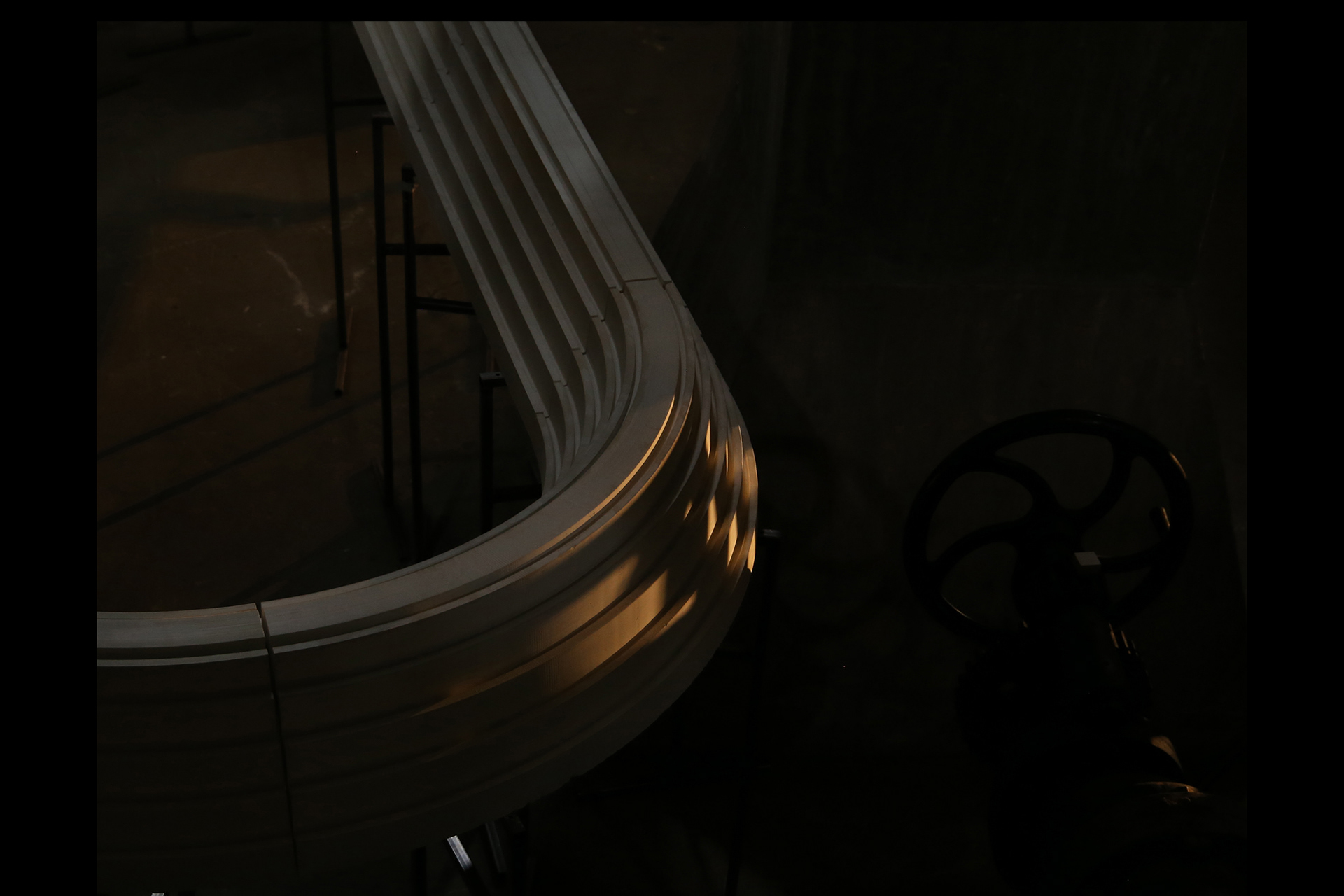
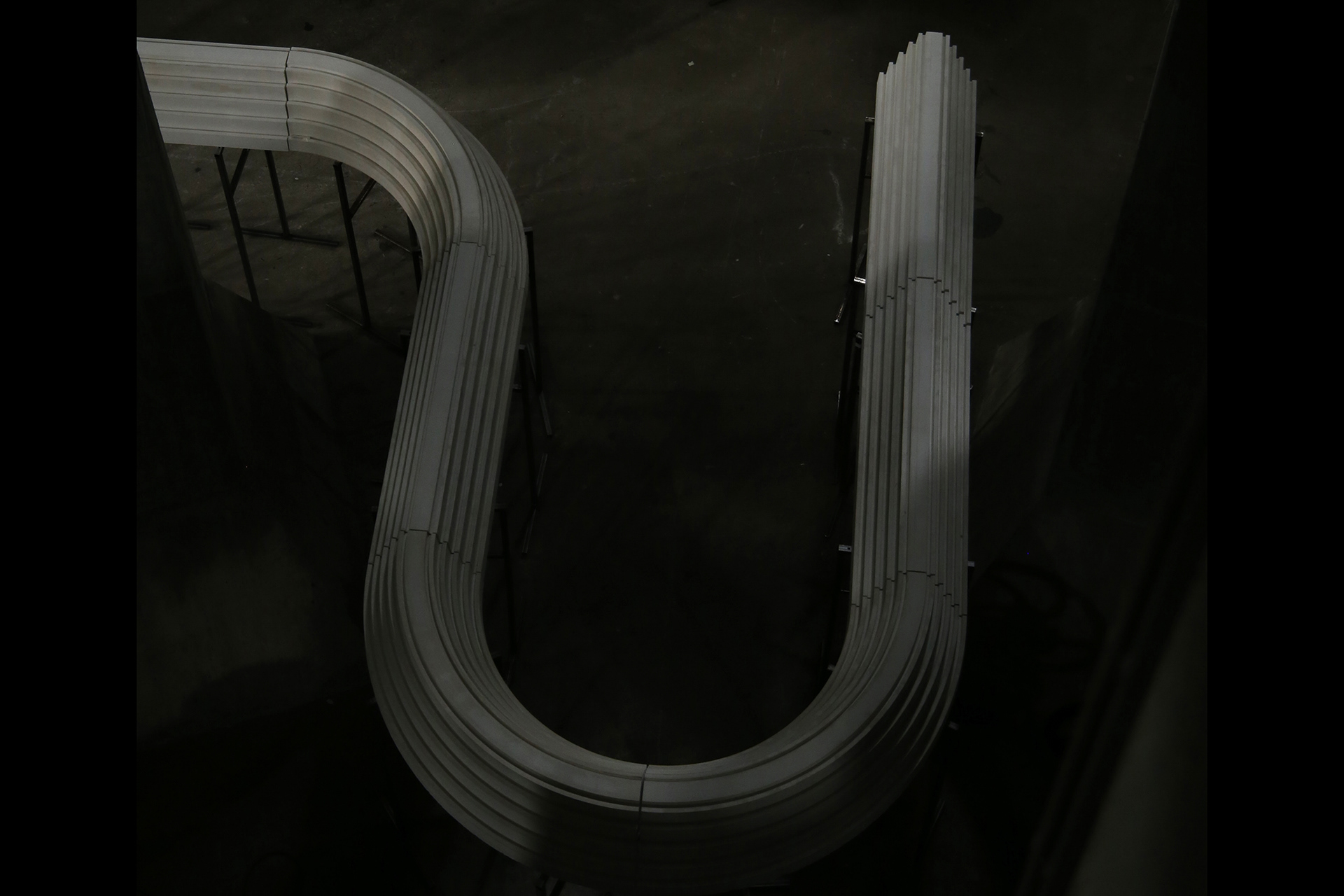
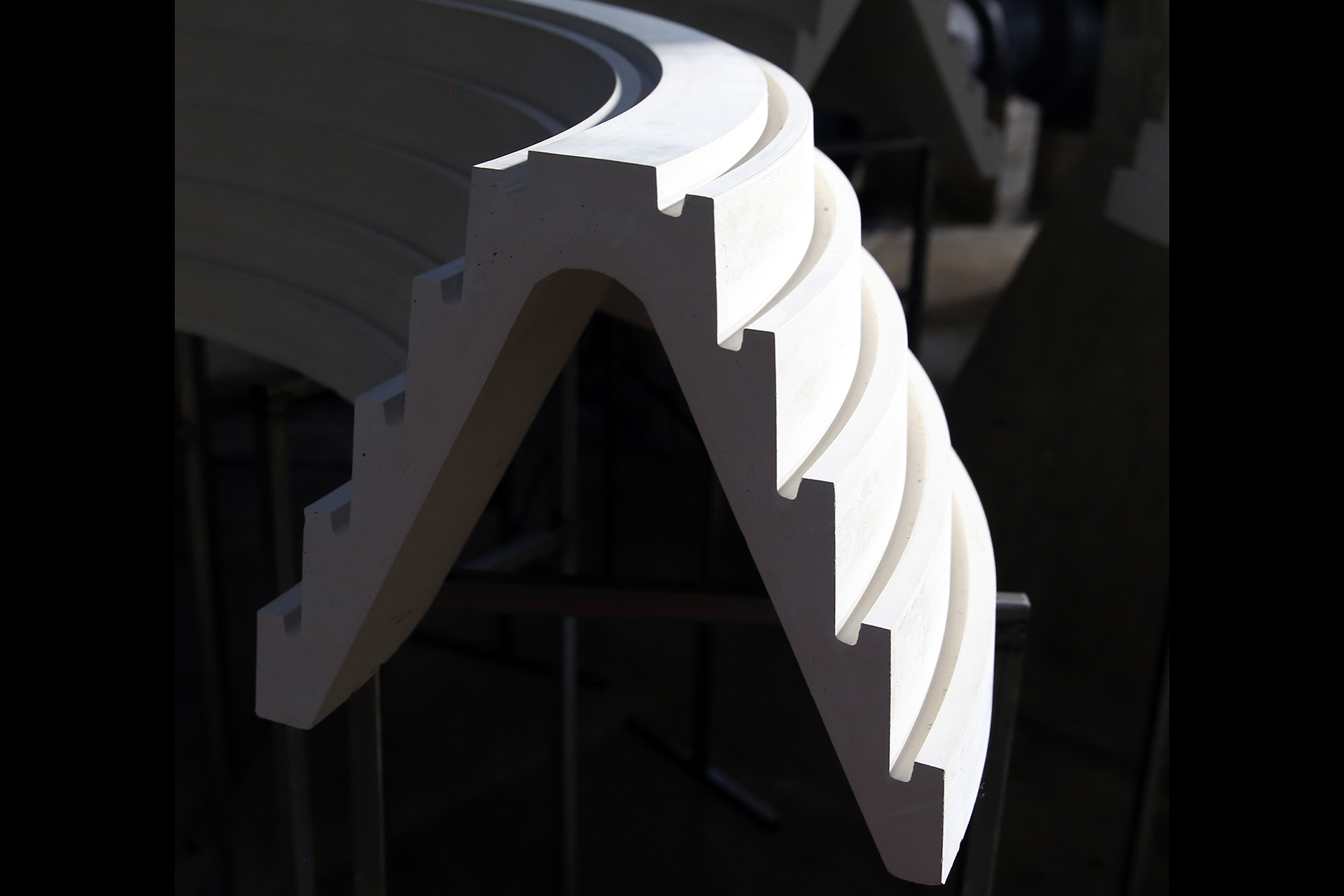
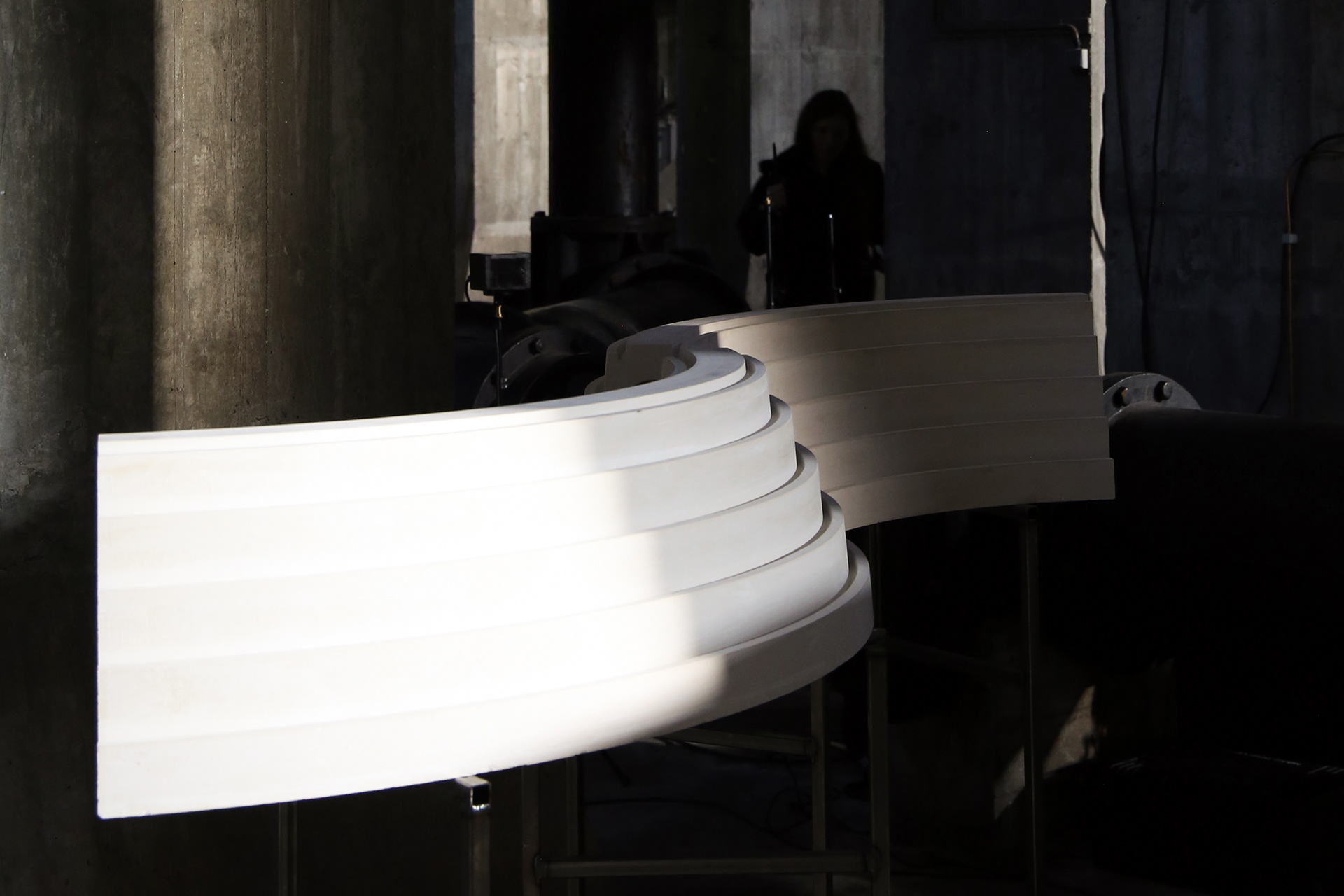
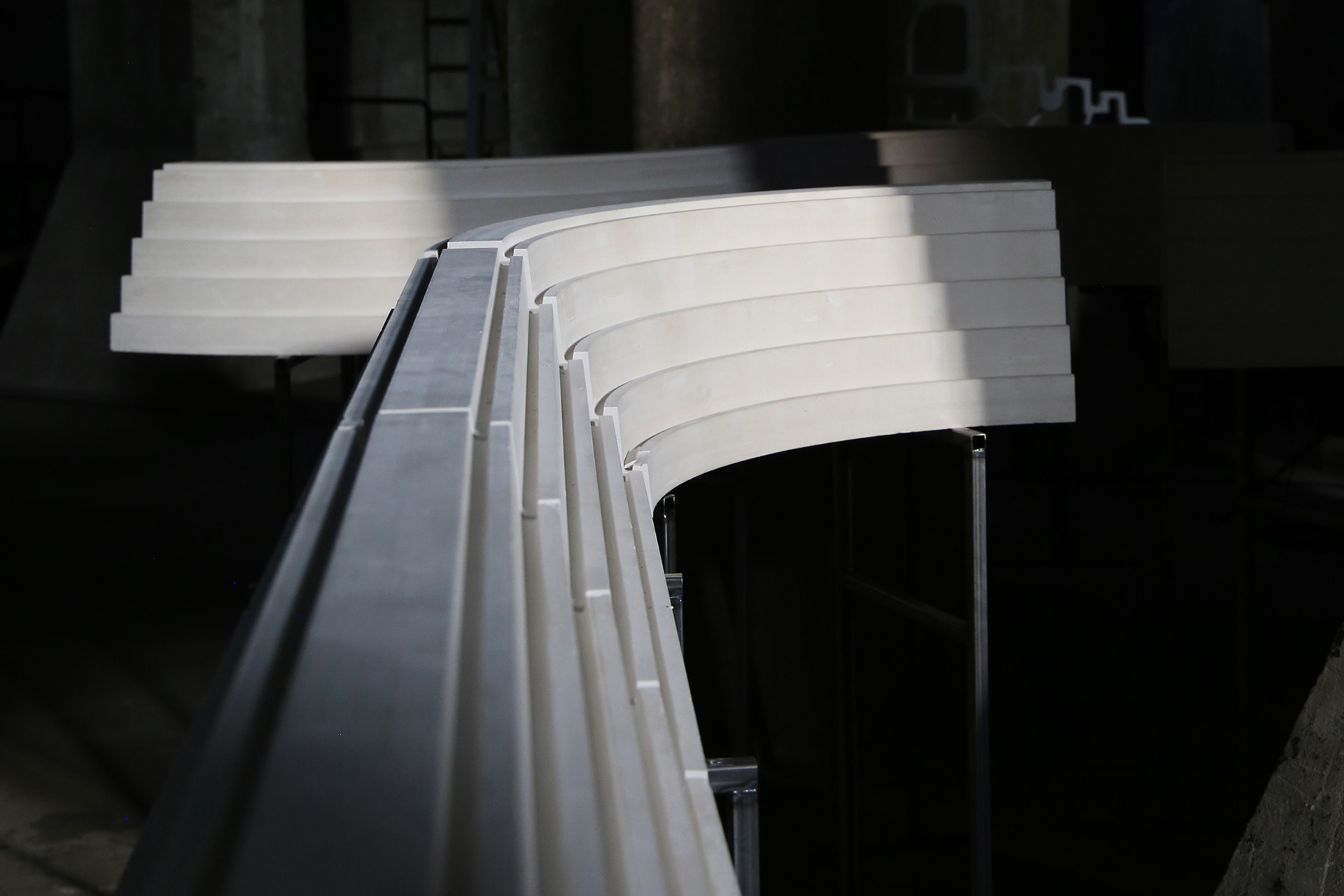
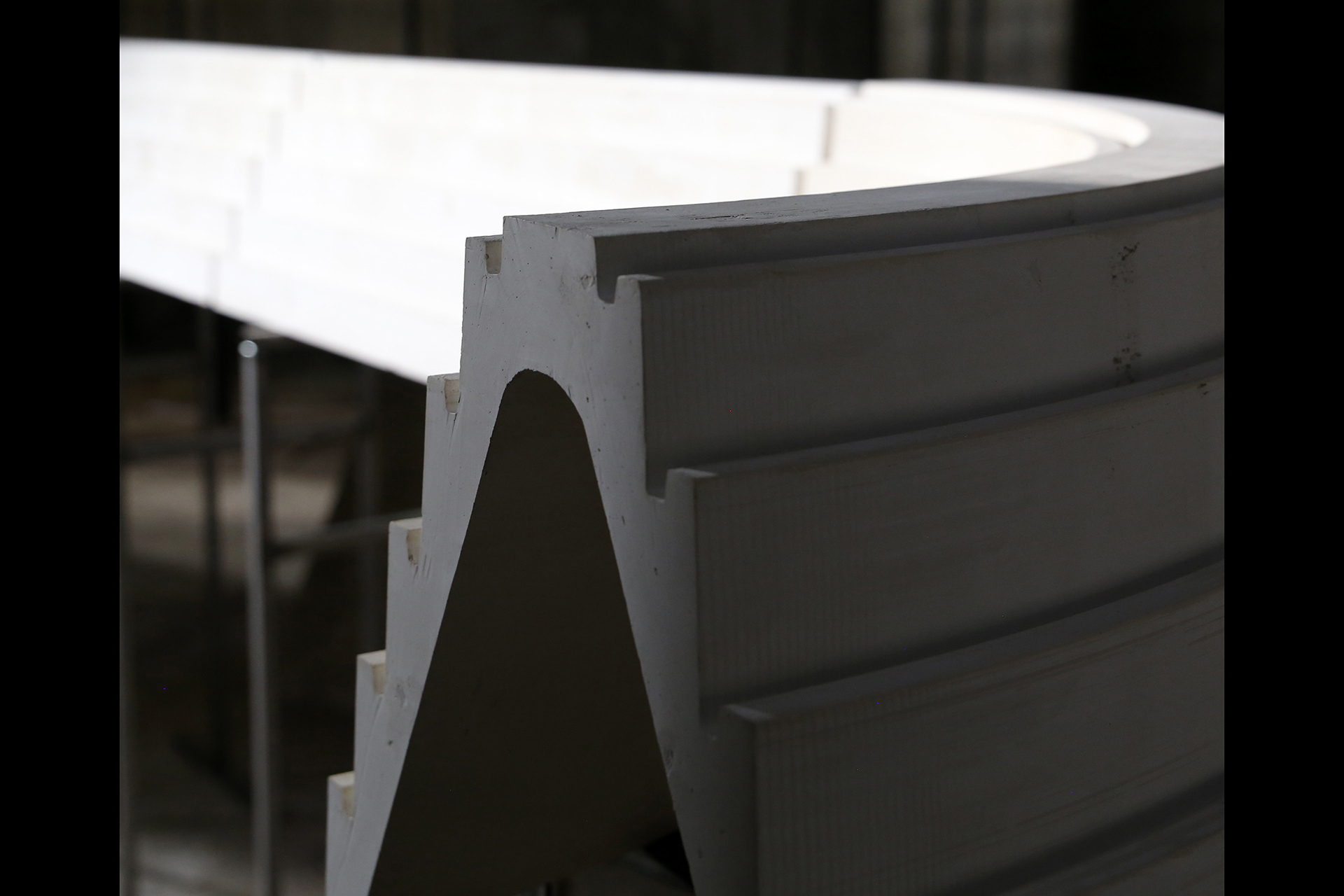
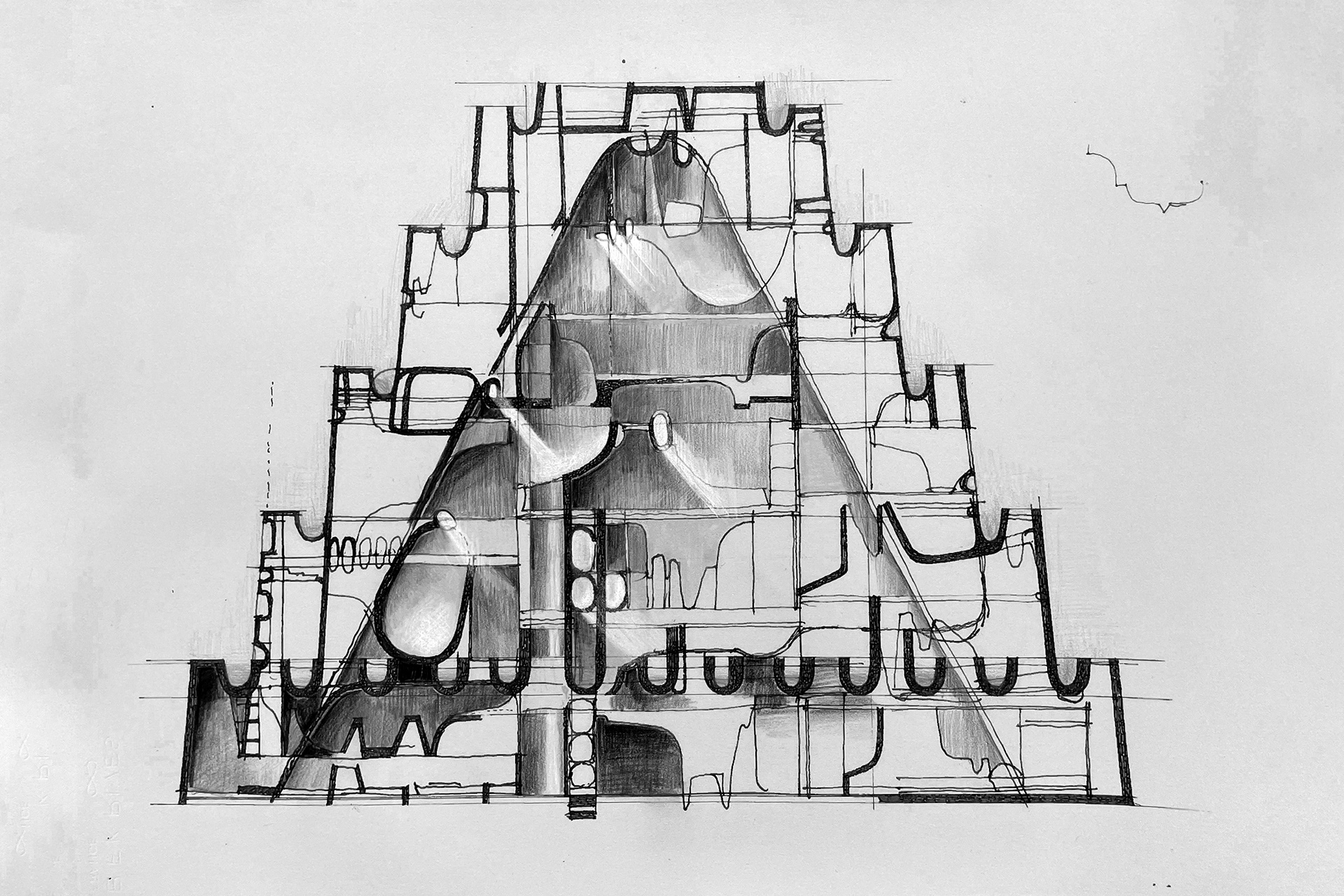
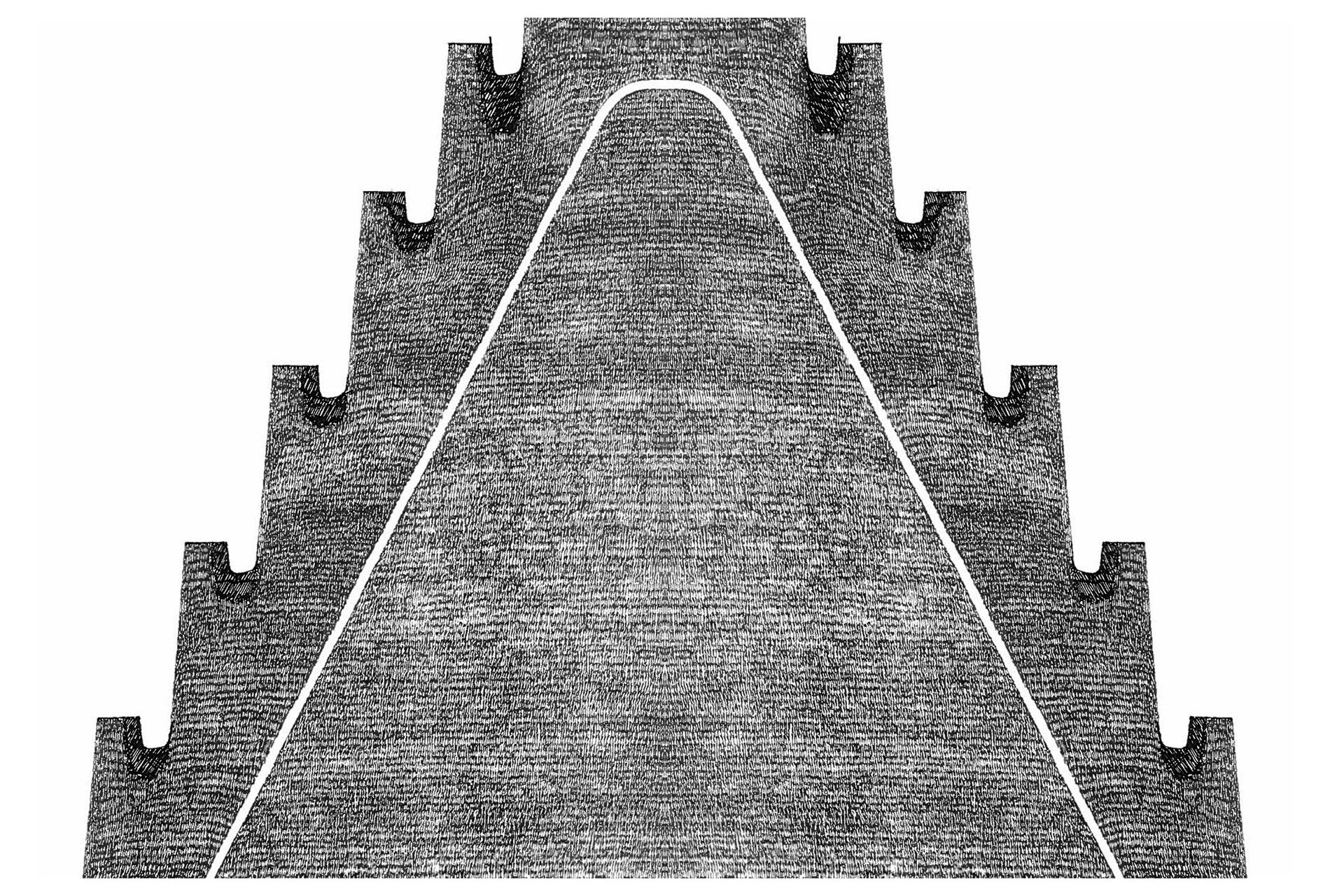
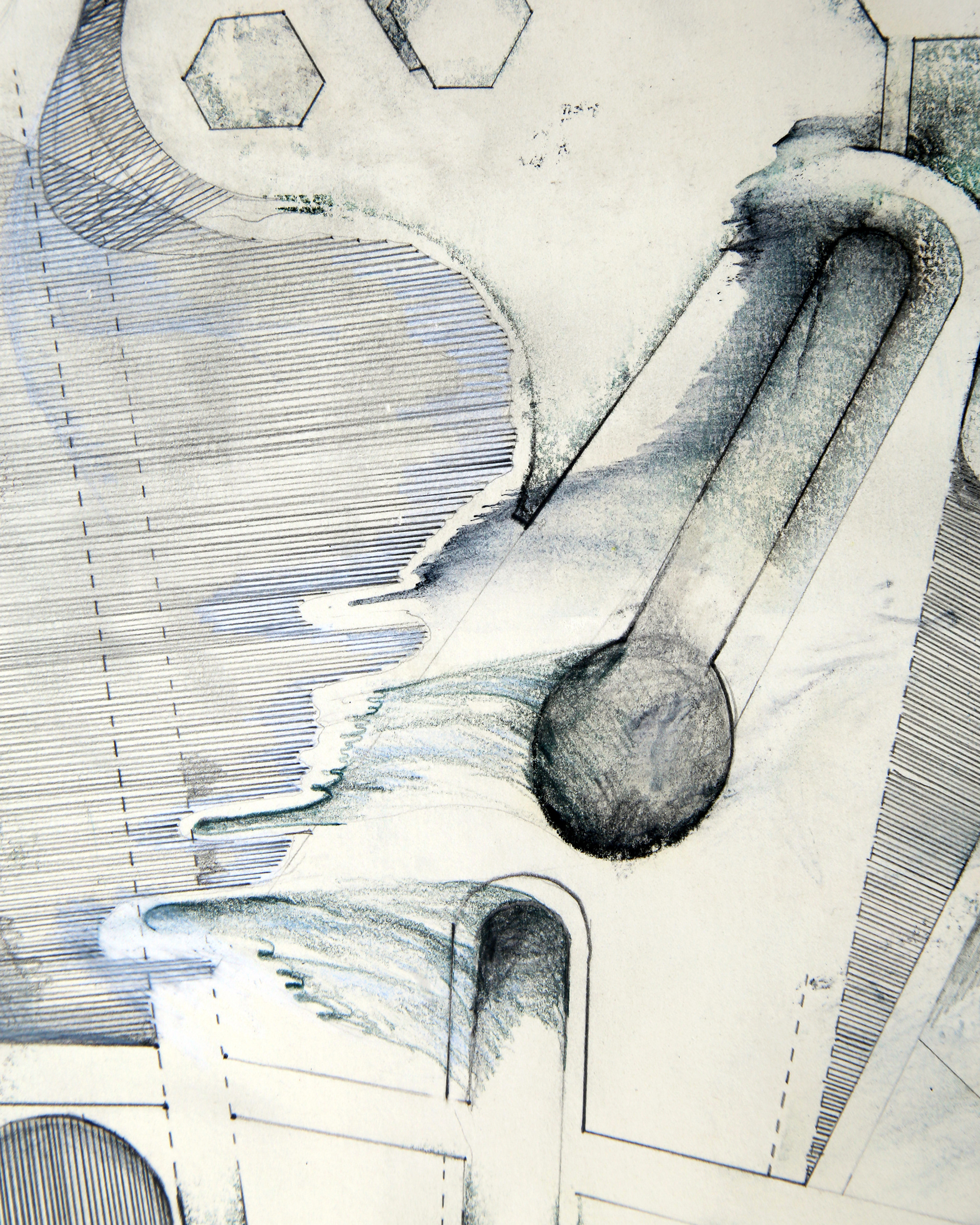
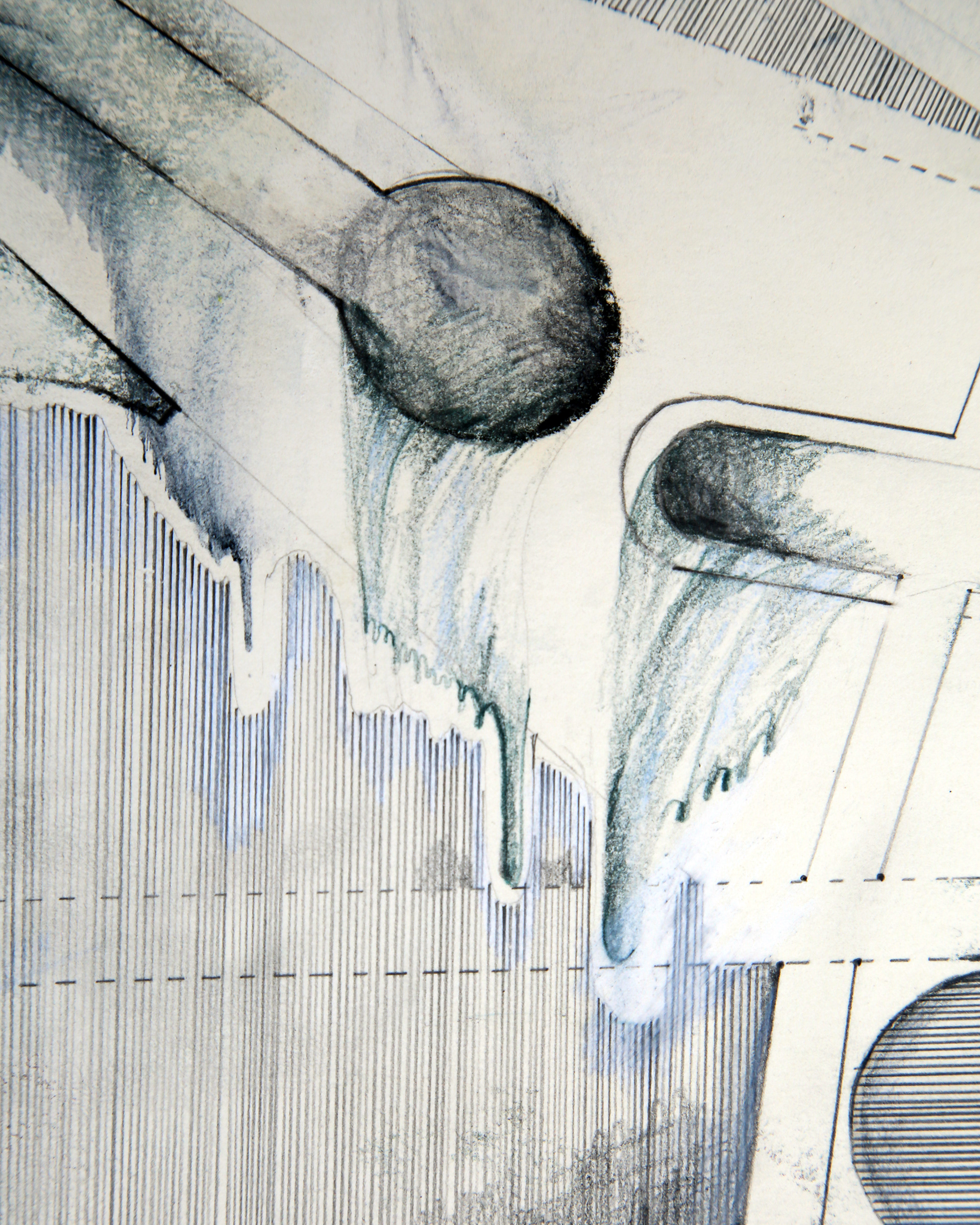
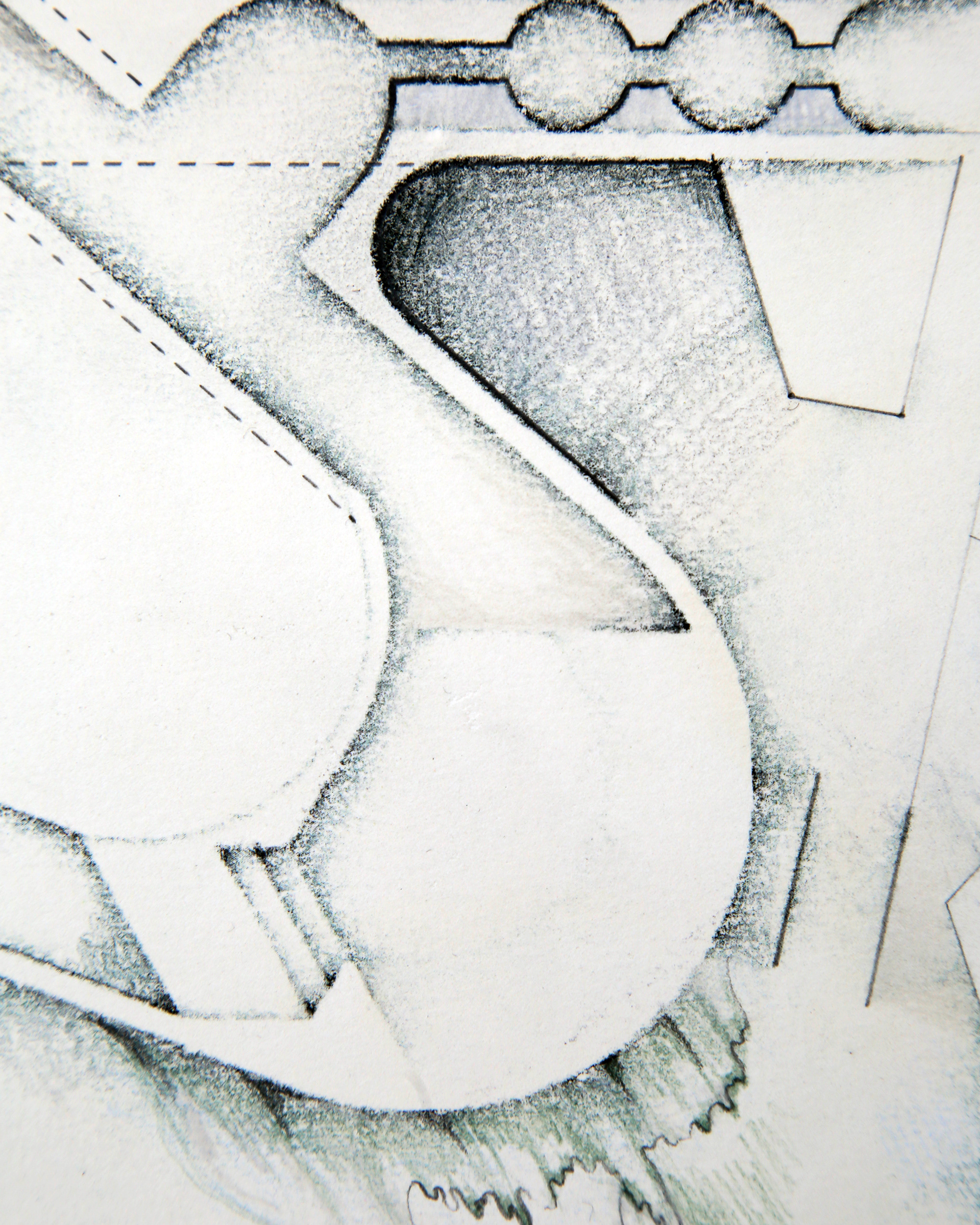
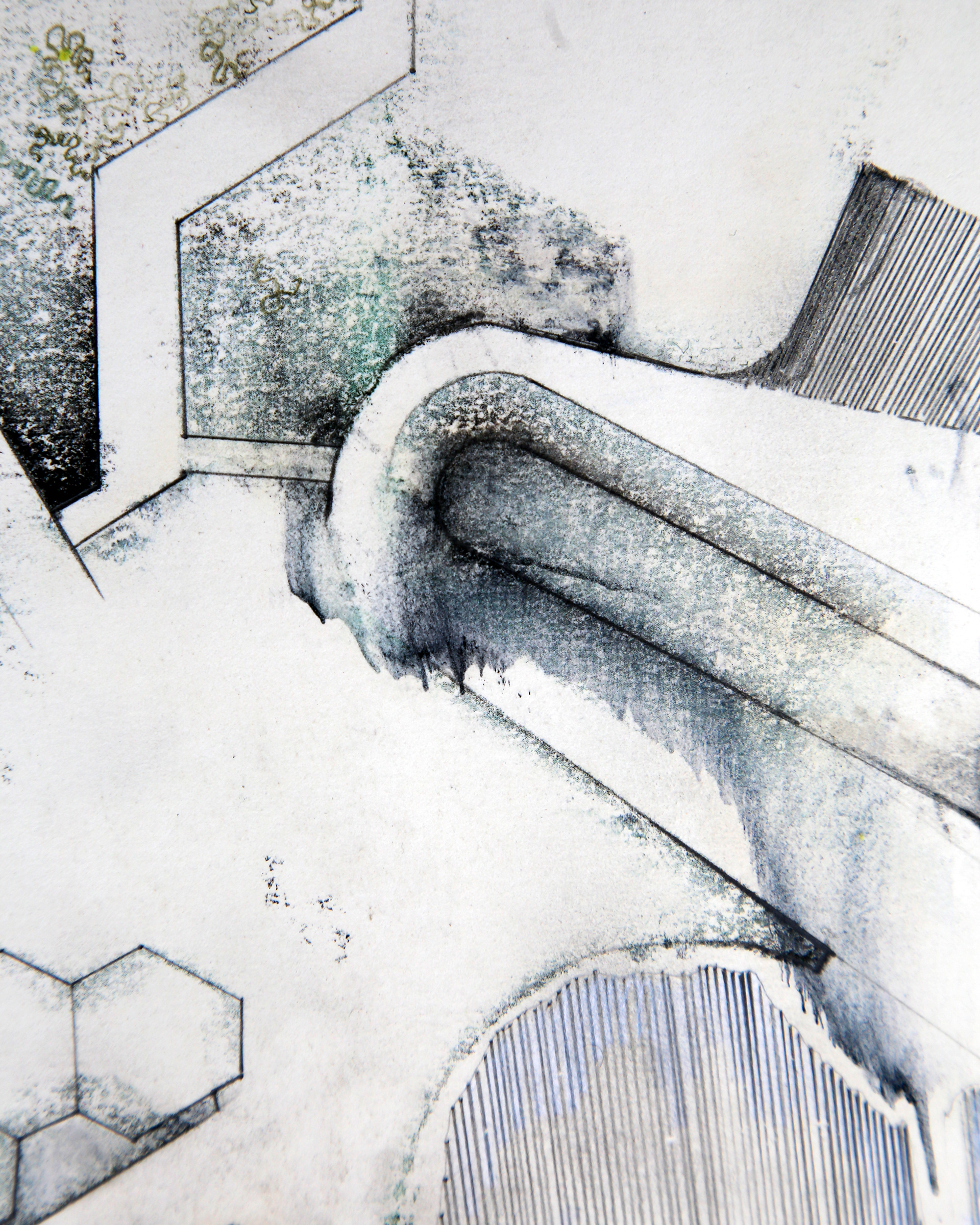
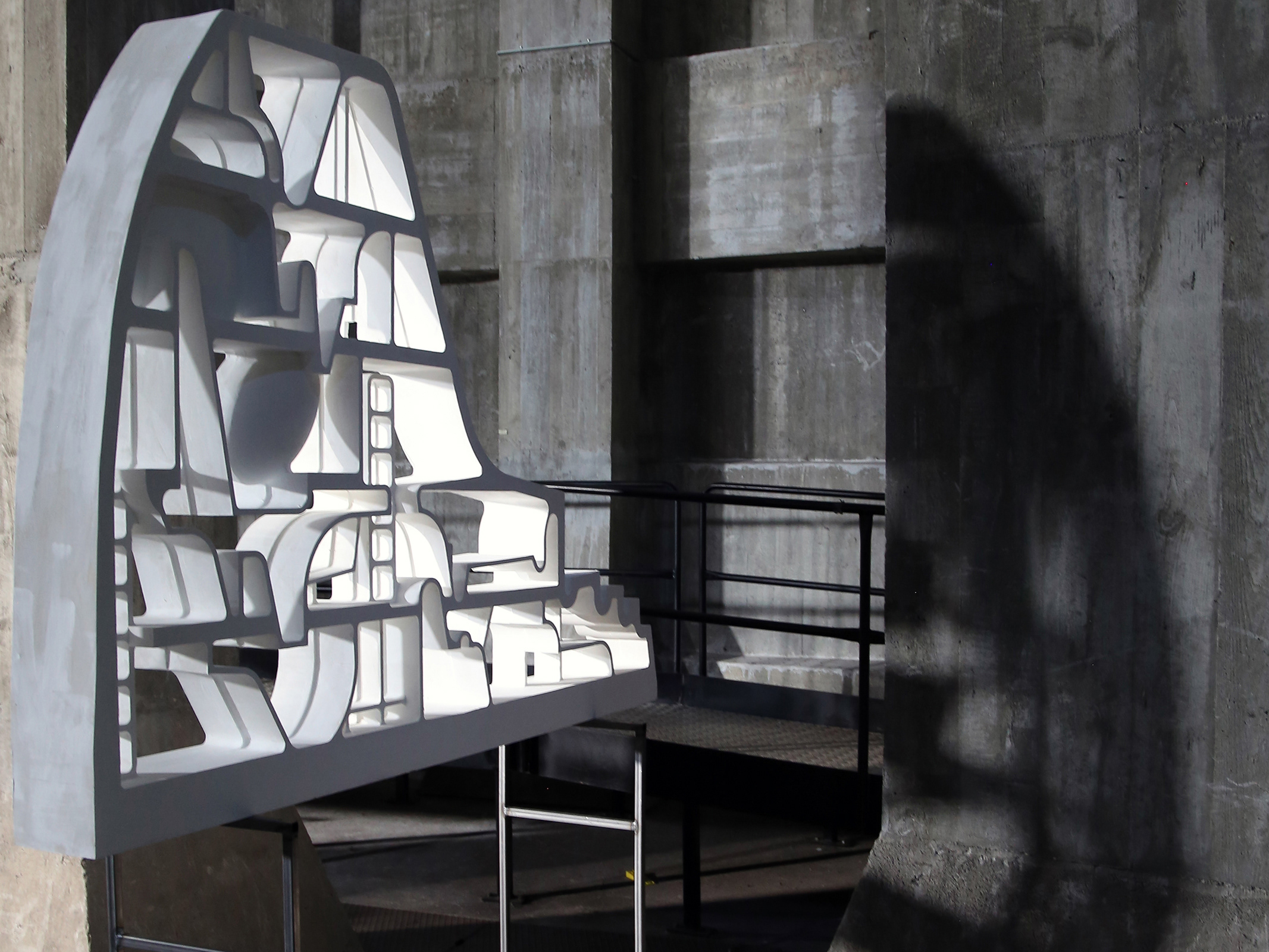
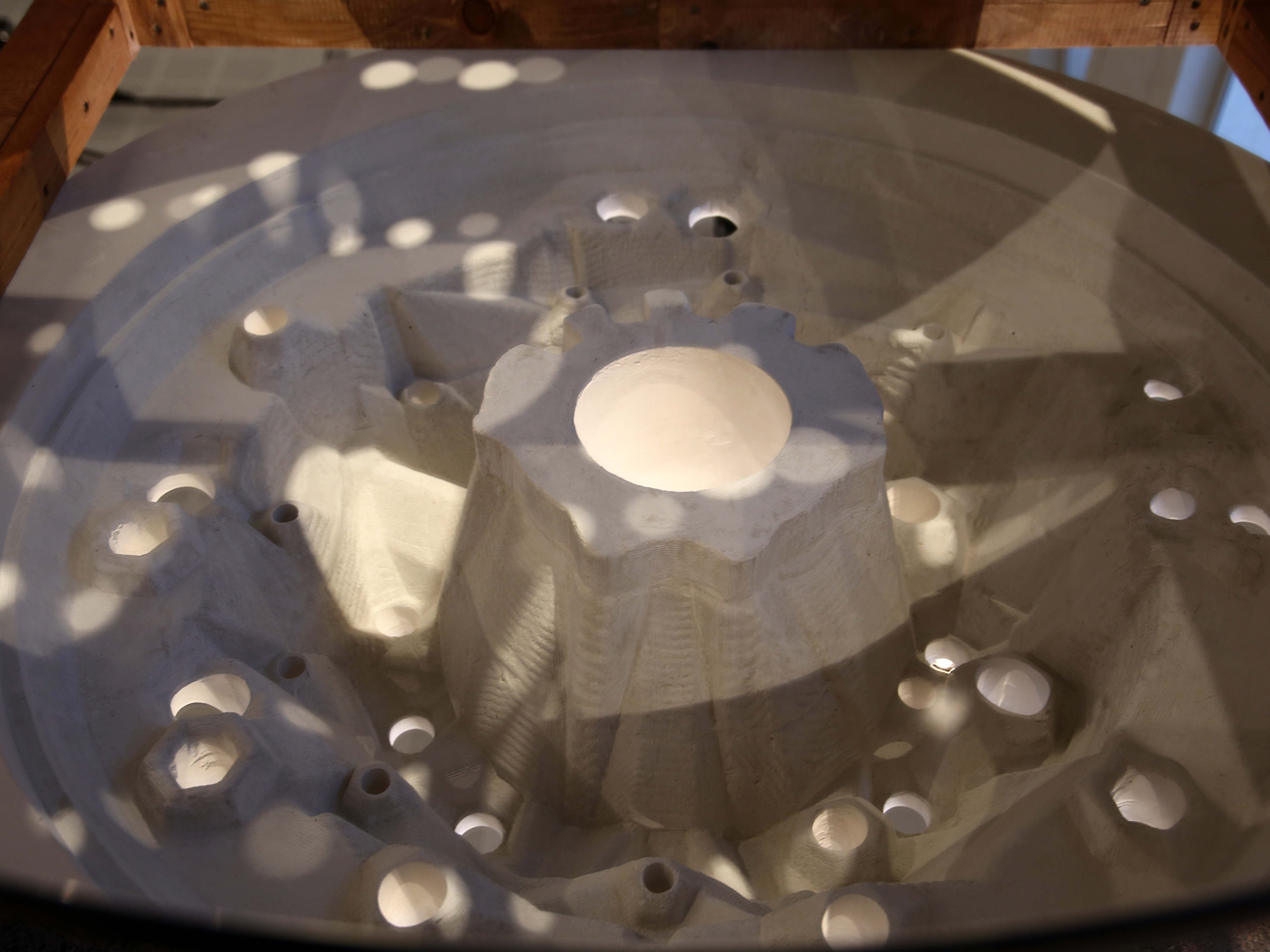
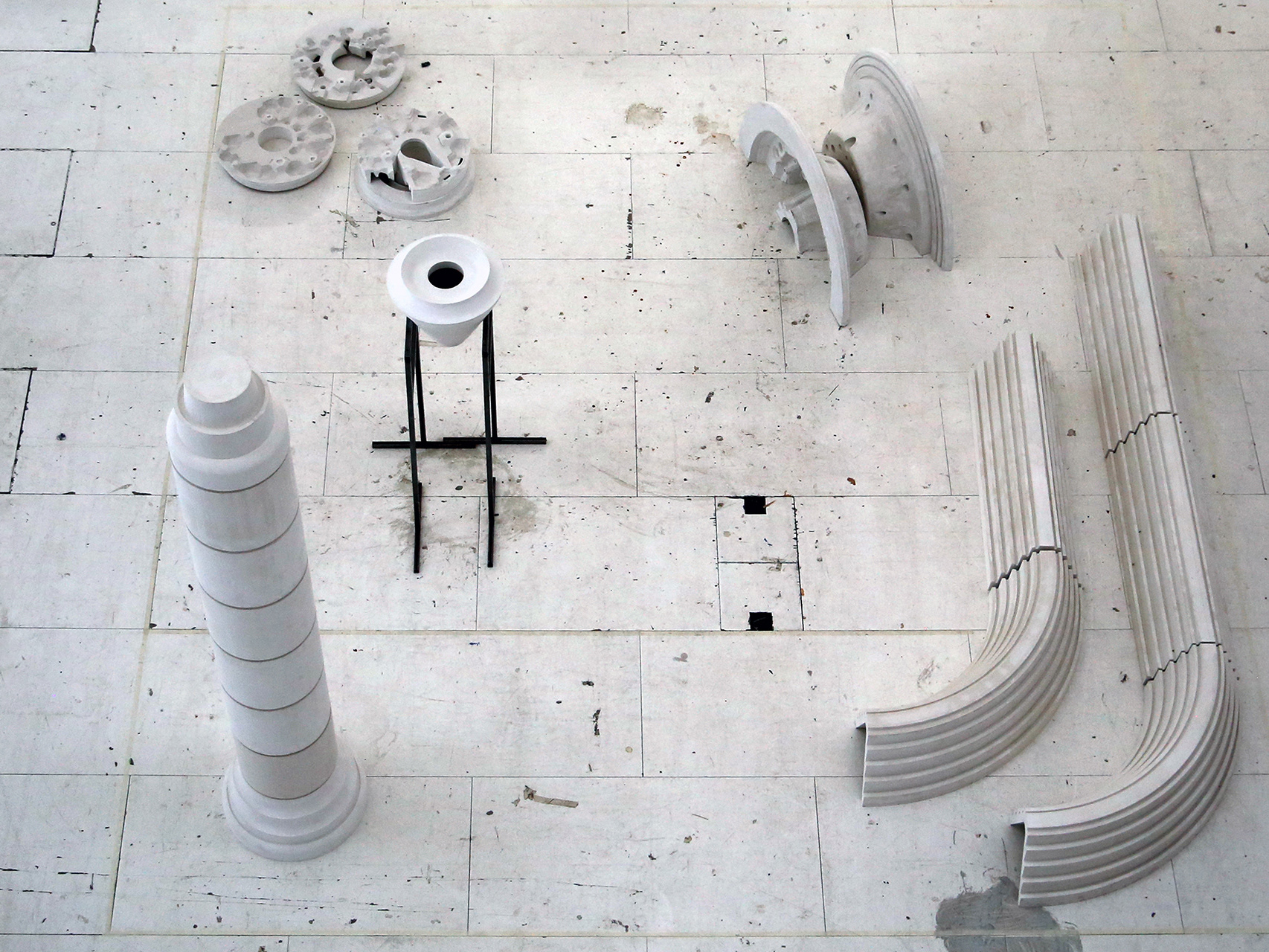
Developed for the space beneath the water tower’s former tank, A Flooded Future imagines a form of water-based inhabitation. The proposal consists of a continuous amphibious housing system whose structures function simultaneously as flood barriers, mooring platforms and dwellings. It is represented at two scales: as a long model of the system and as a large section through it.
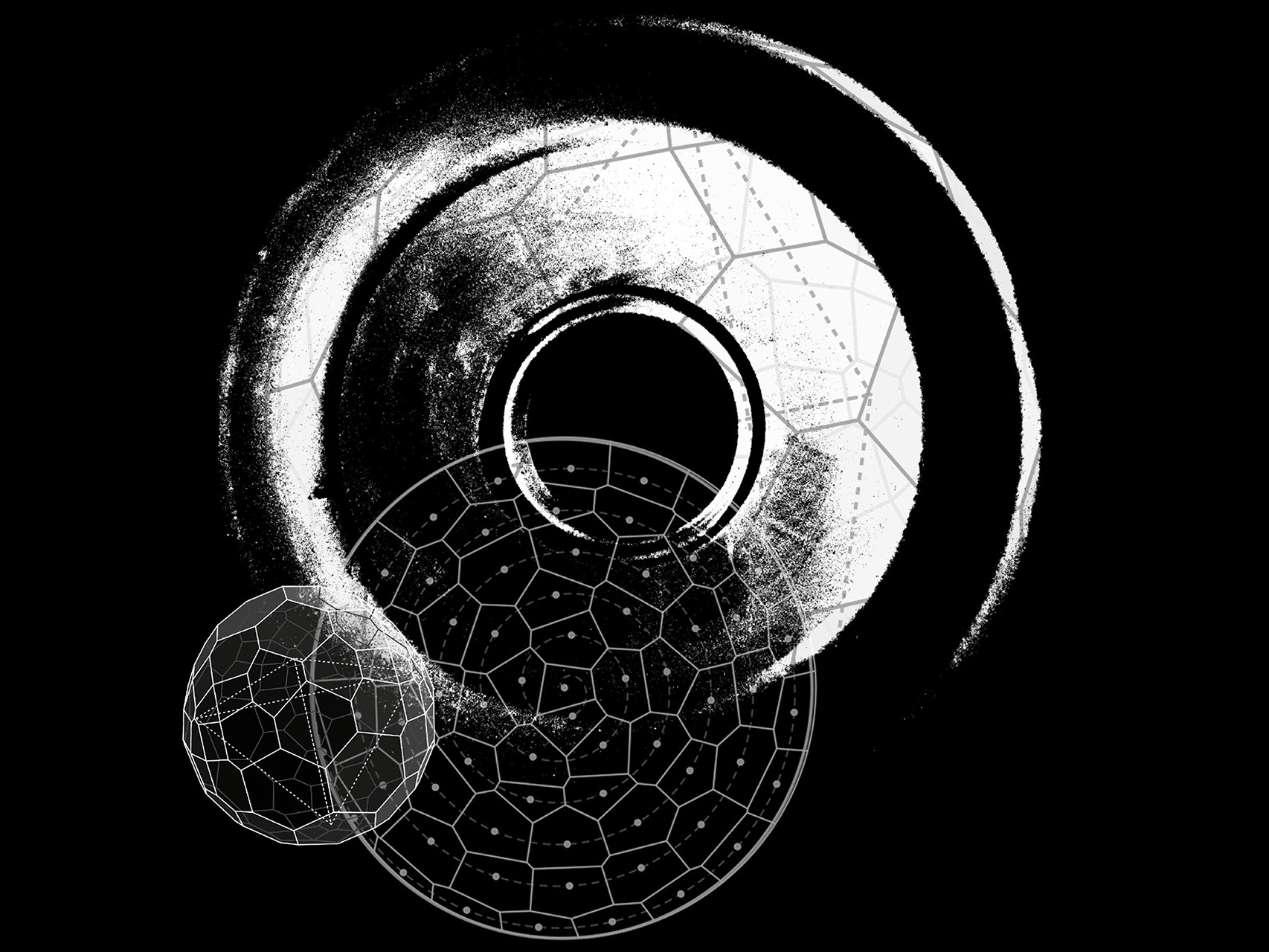
Oceans may be territorialized and divided on maps, but they remain continuous and interconnected bodies of water. The project therefore approaches flooding not as a local or isolated event, but as part of a planetary condition.
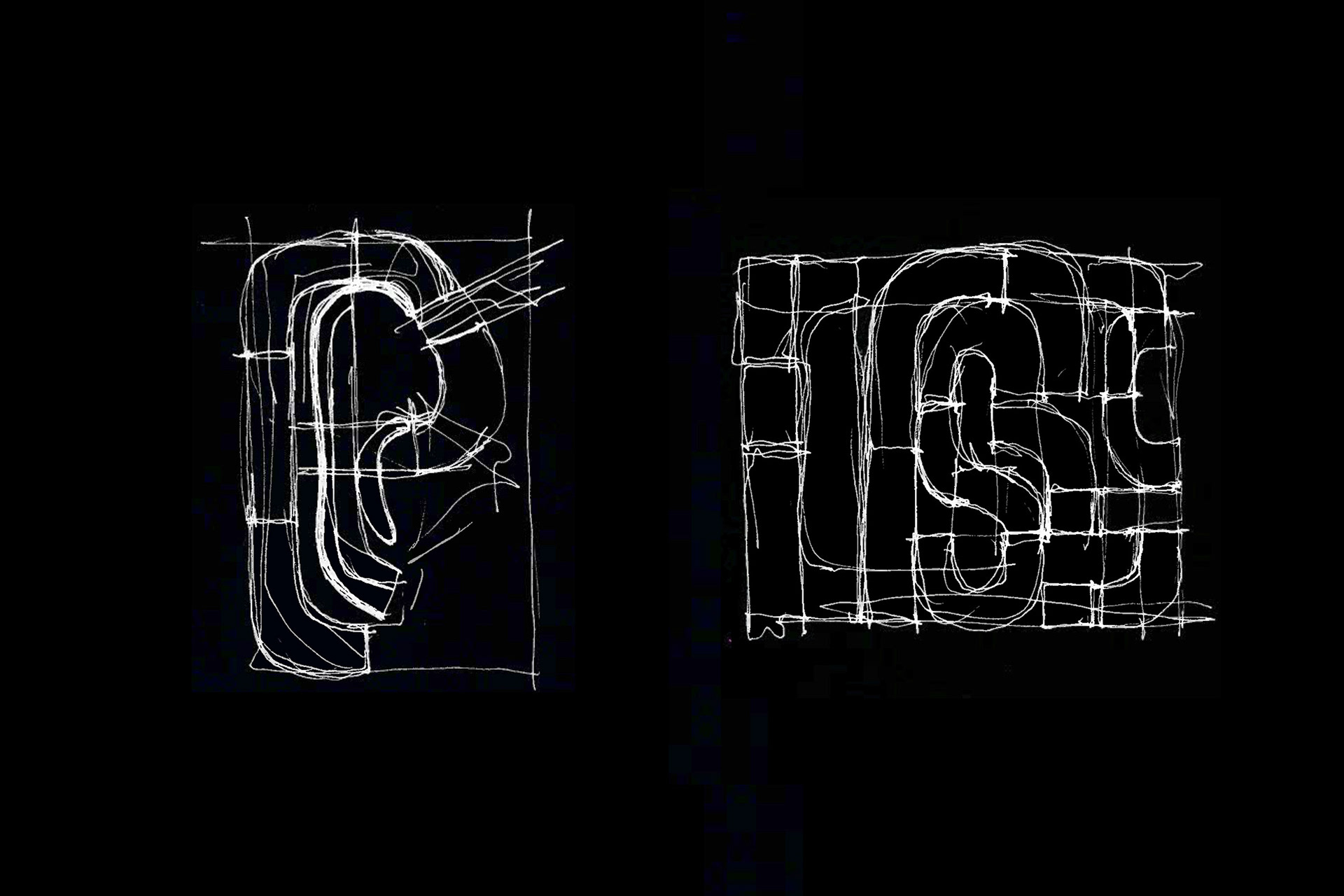
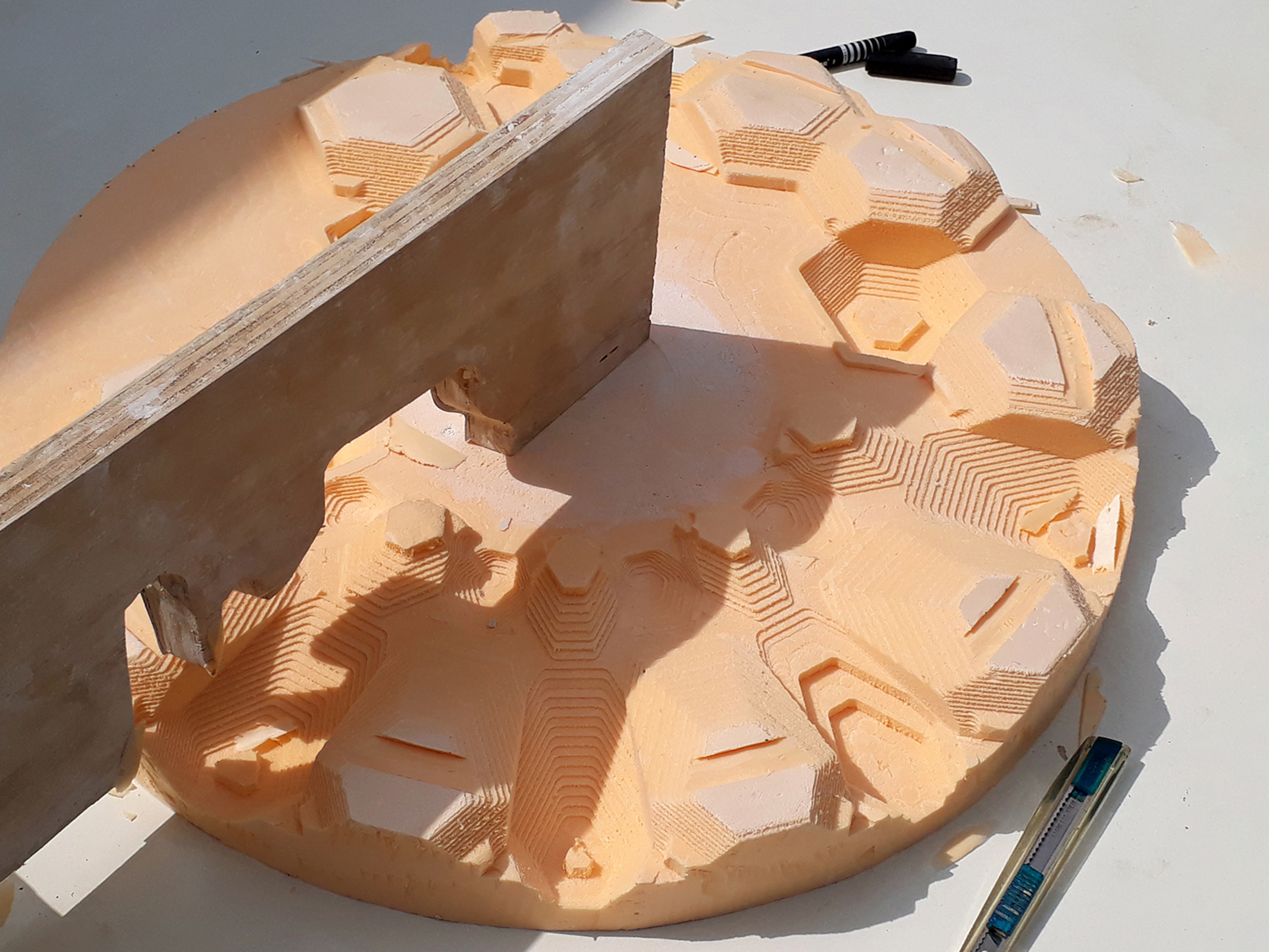
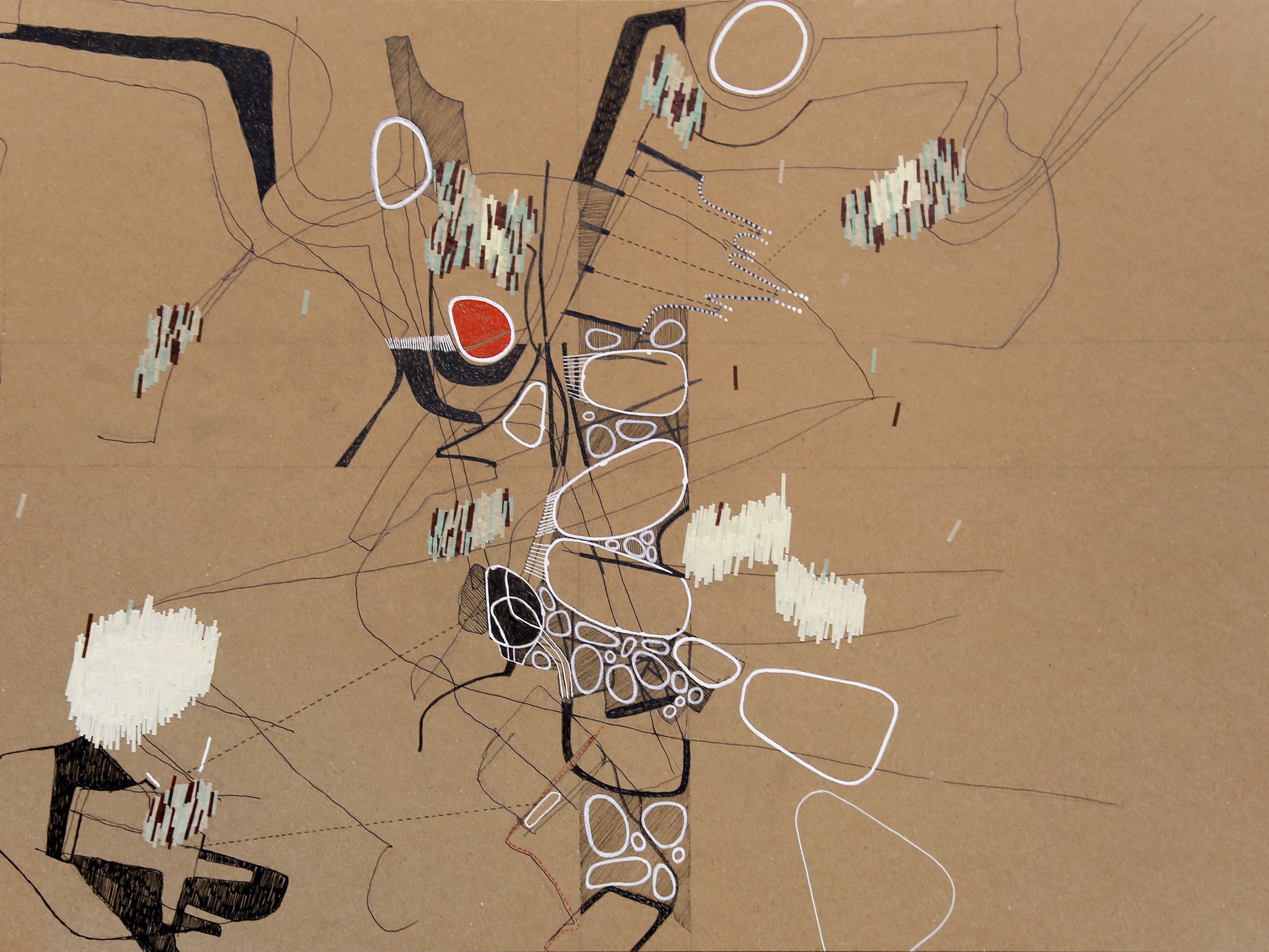
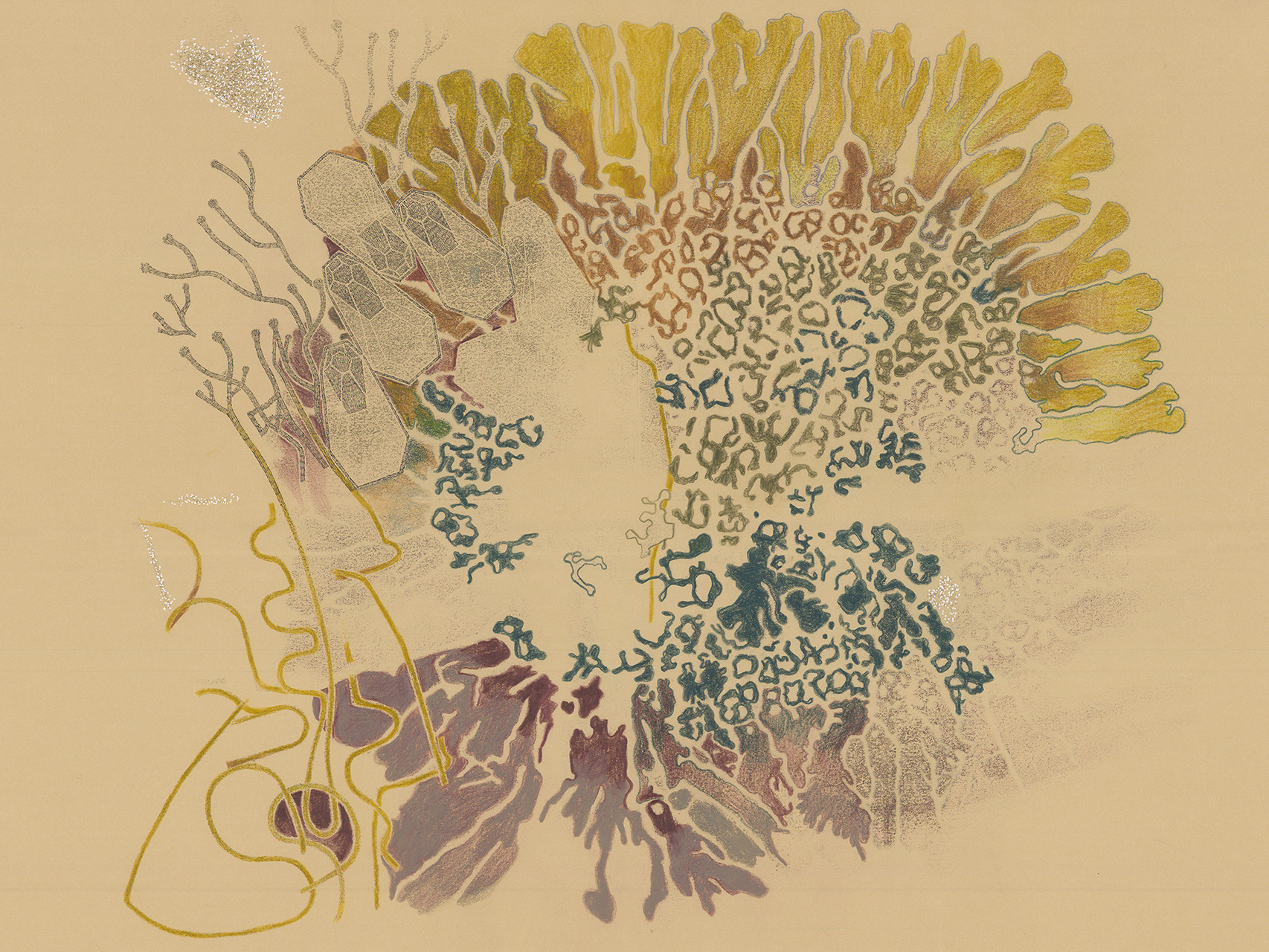
The models emerged through repeated transformations: from earlier drawings to digital models, from digital fabrication to handwork, and from our own workshop to a professional stucco workshop. Traces of these translations remain visible. Glitches, misunderstandings and material failures were allowed to influence the result.
Just as water cannot always be controlled or kept within fixed boundaries, the making of the work incorporates uncertainty and failure as productive forces. A Flooded Future proposes an architecture that does not simply resist water but begins to imagine how we might live with it.