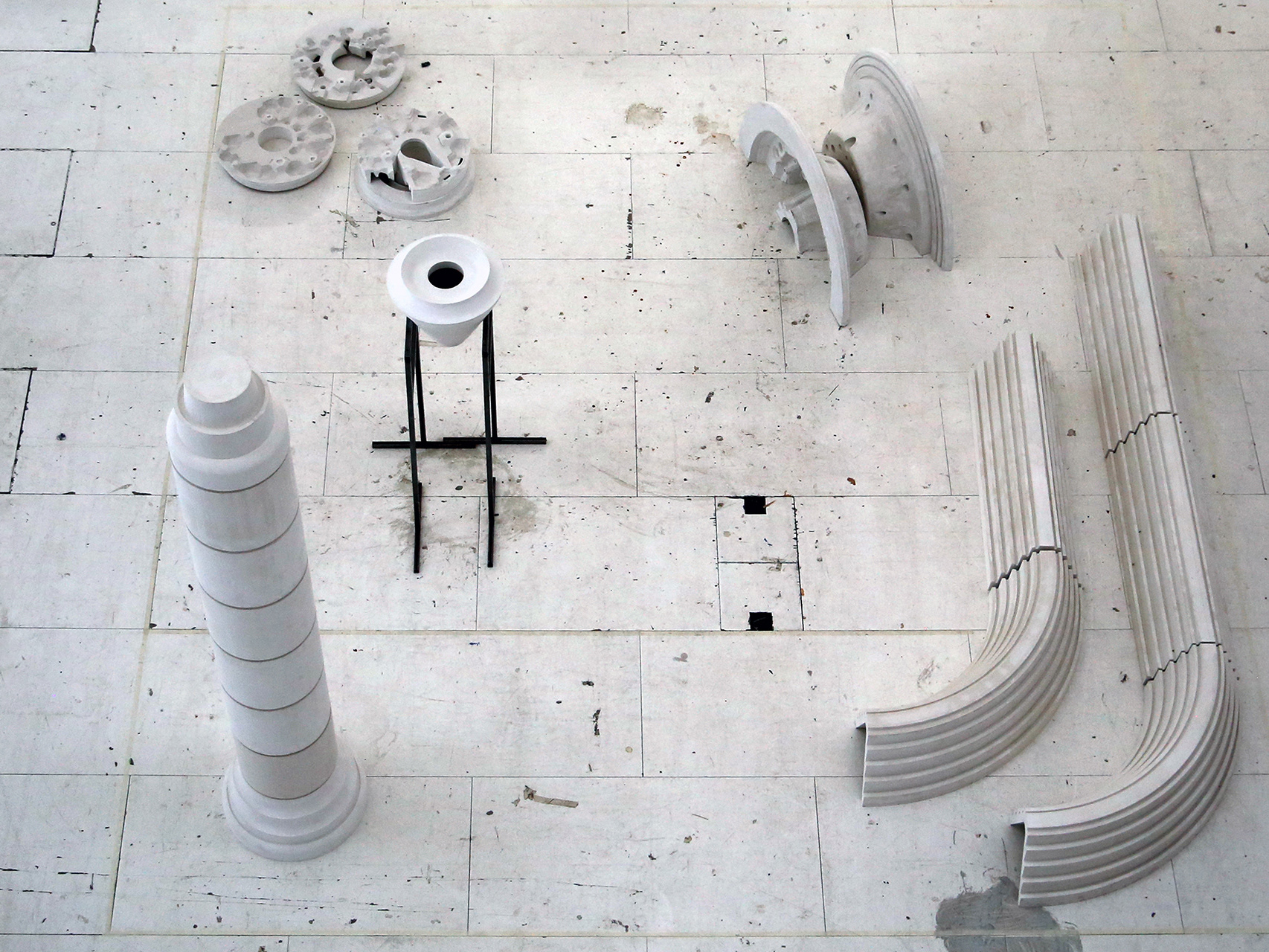
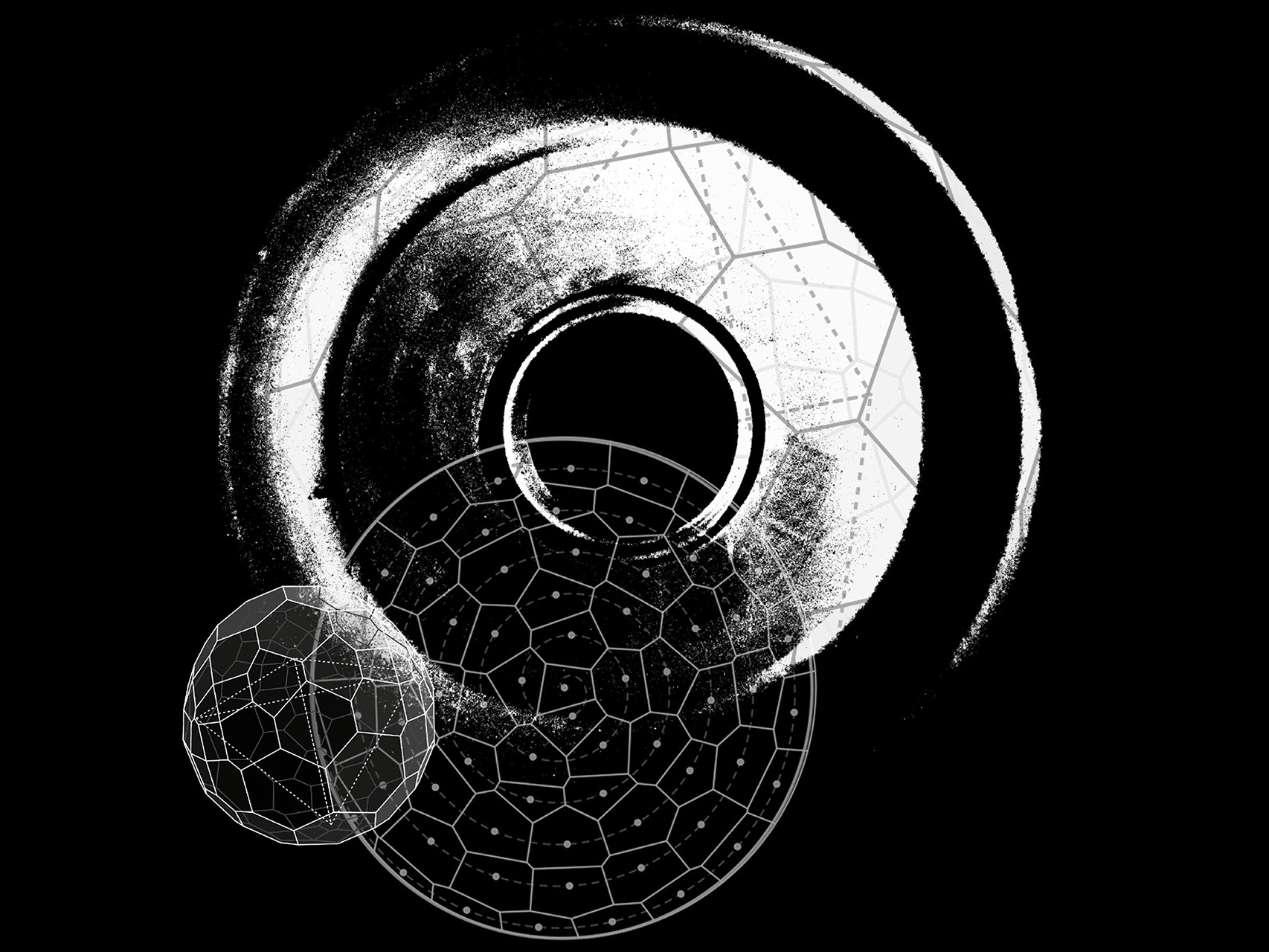
Making an island begins with a section.
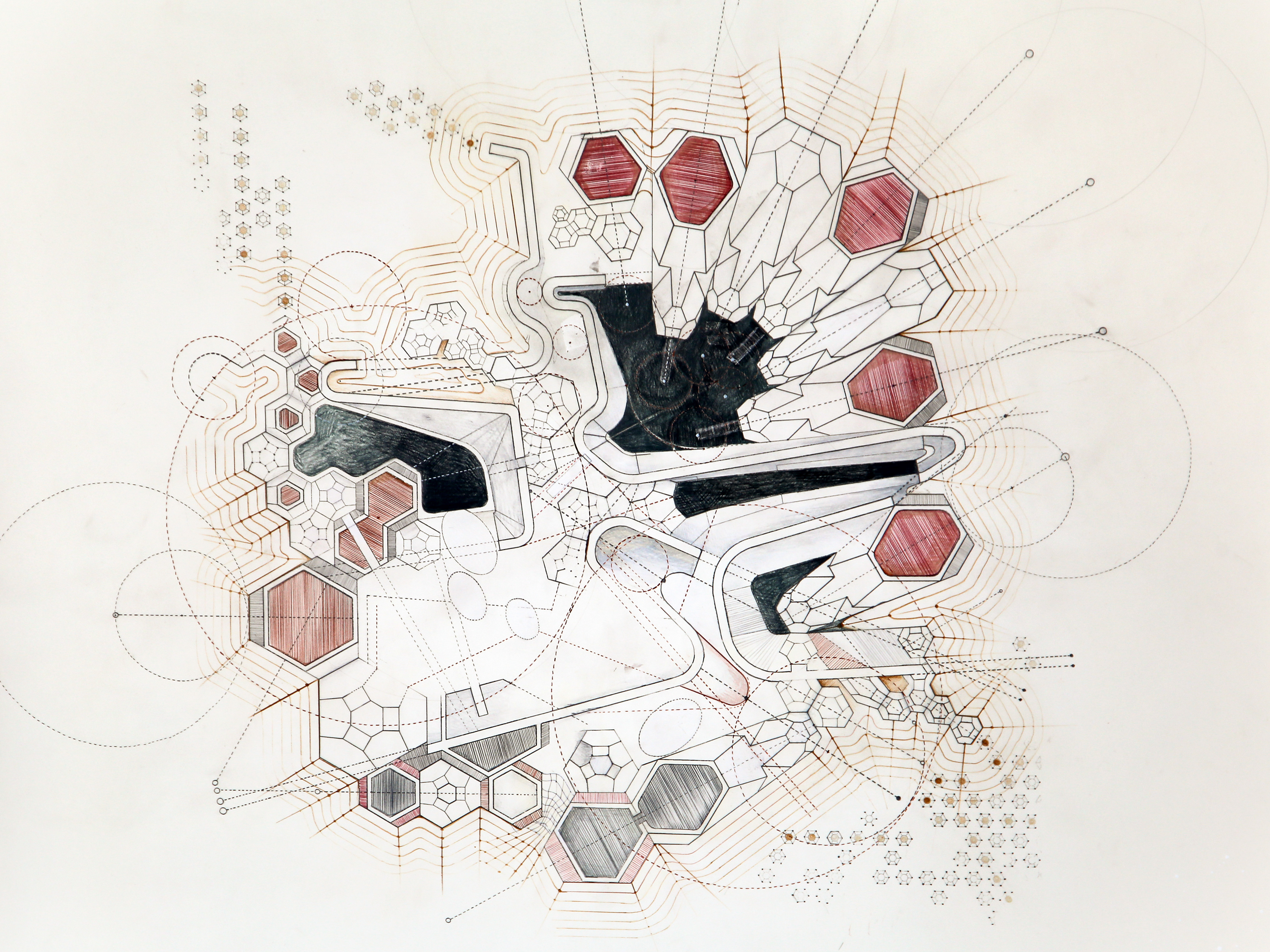
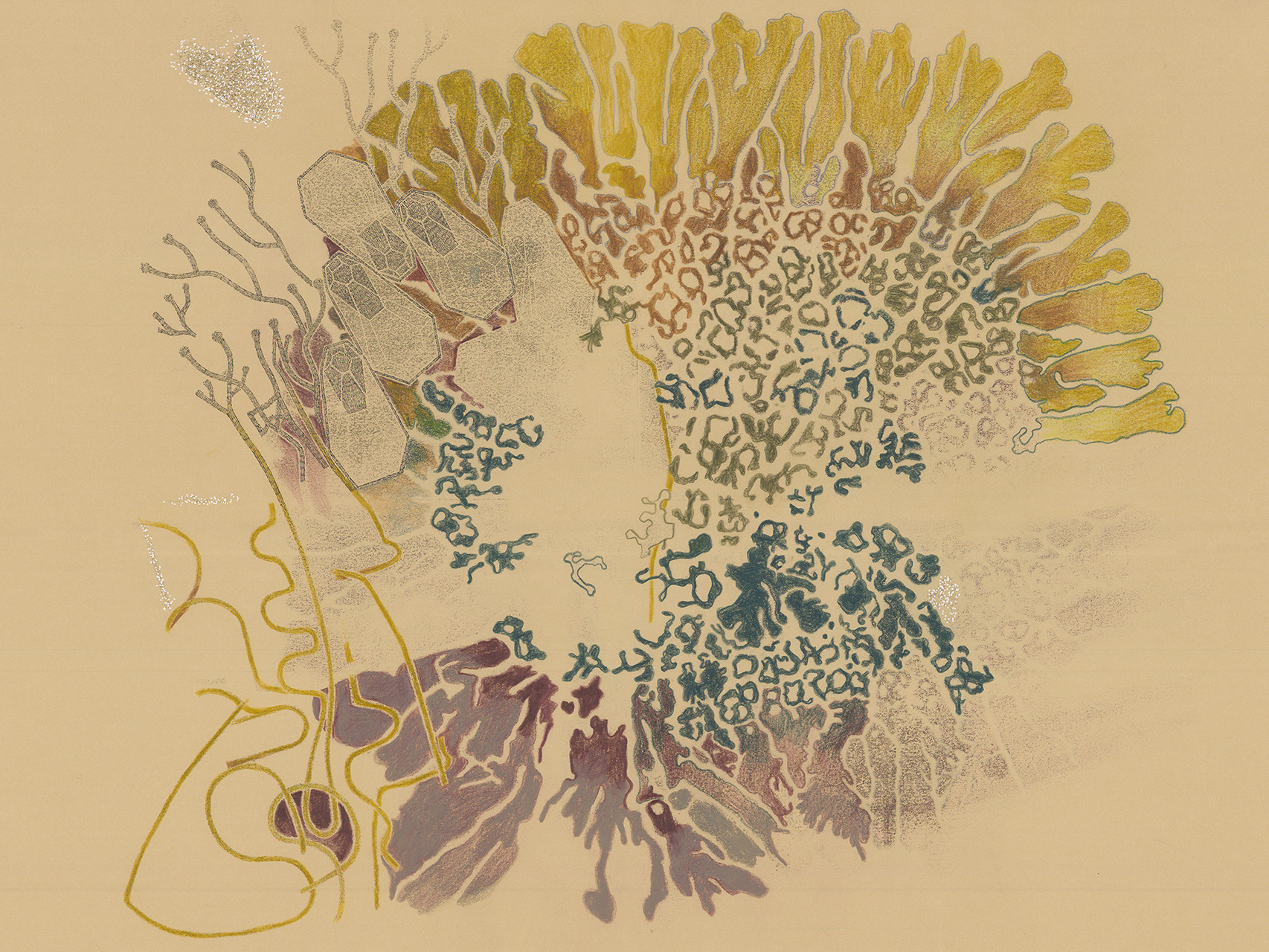
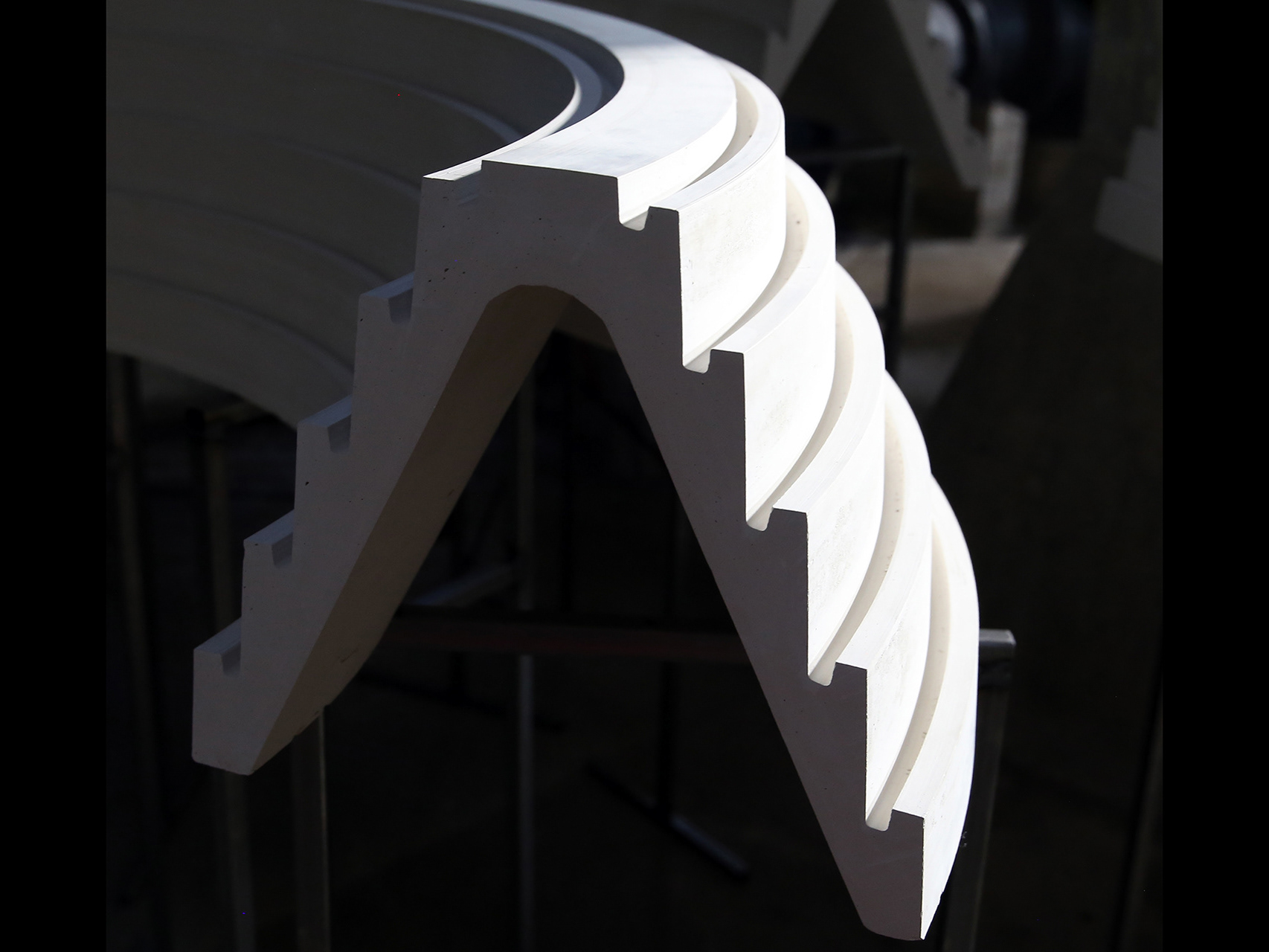
In plan, an island appears as a distinct figure: an object-like outline separating land from water, wet from dry. In section, however, land and water begin to interact. The line describes not only a form, but a changing relationship between surface, depth and material.
In plan, an island appears as a distinct figure: an object-like outline separating land from water, wet from dry. In section, however, land and water begin to interact. The line describes not only a form, but a changing relationship between surface, depth and material.
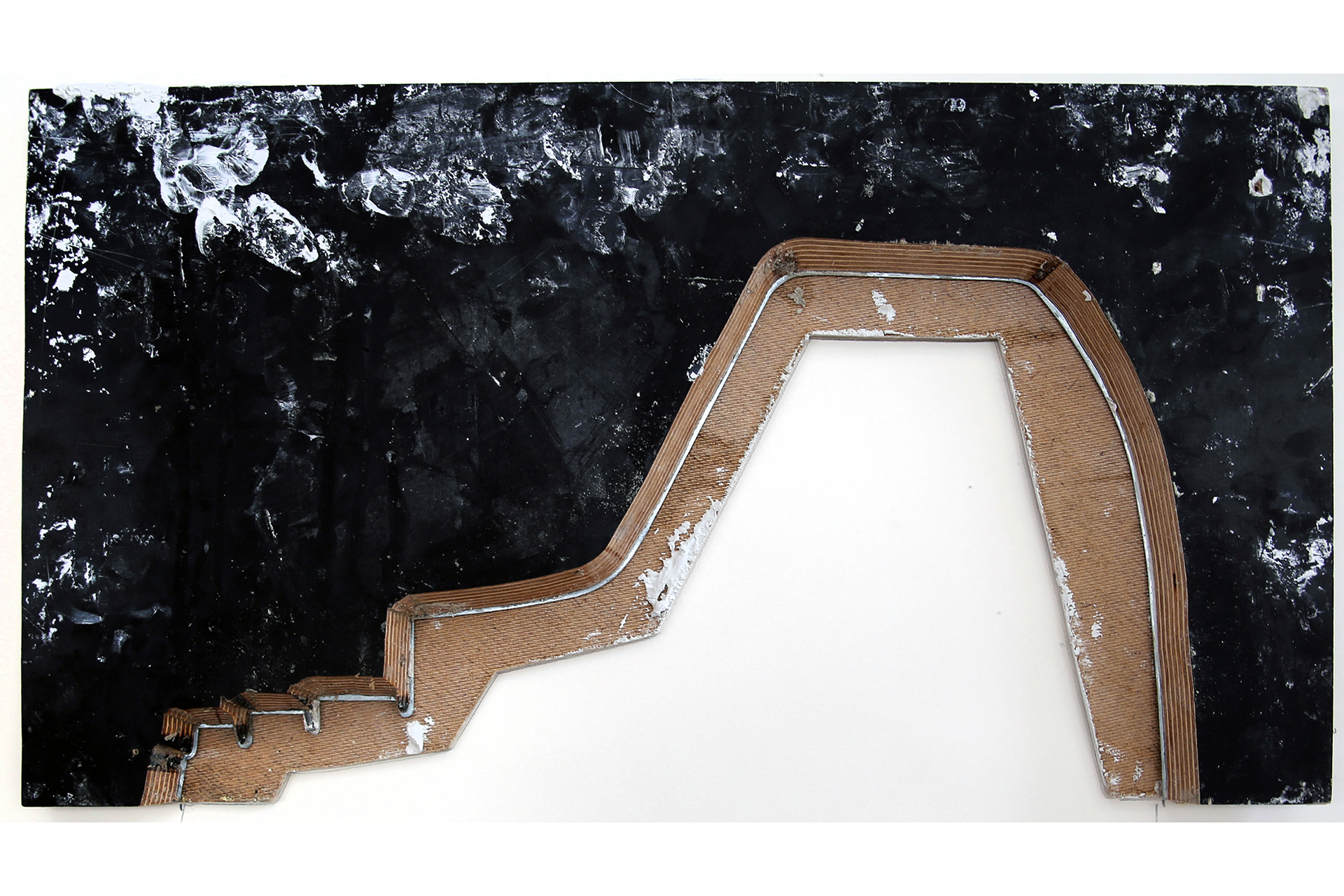
While drawing the section, we already imagine it as a profile for casting. Sharp corners and enclosed pockets are avoided so that the plaster can eventually be released. Thin and fragile details must correspond to the properties of the material. As traditional stucco work demonstrates, a plaster relief needs very little depth to catch the light.
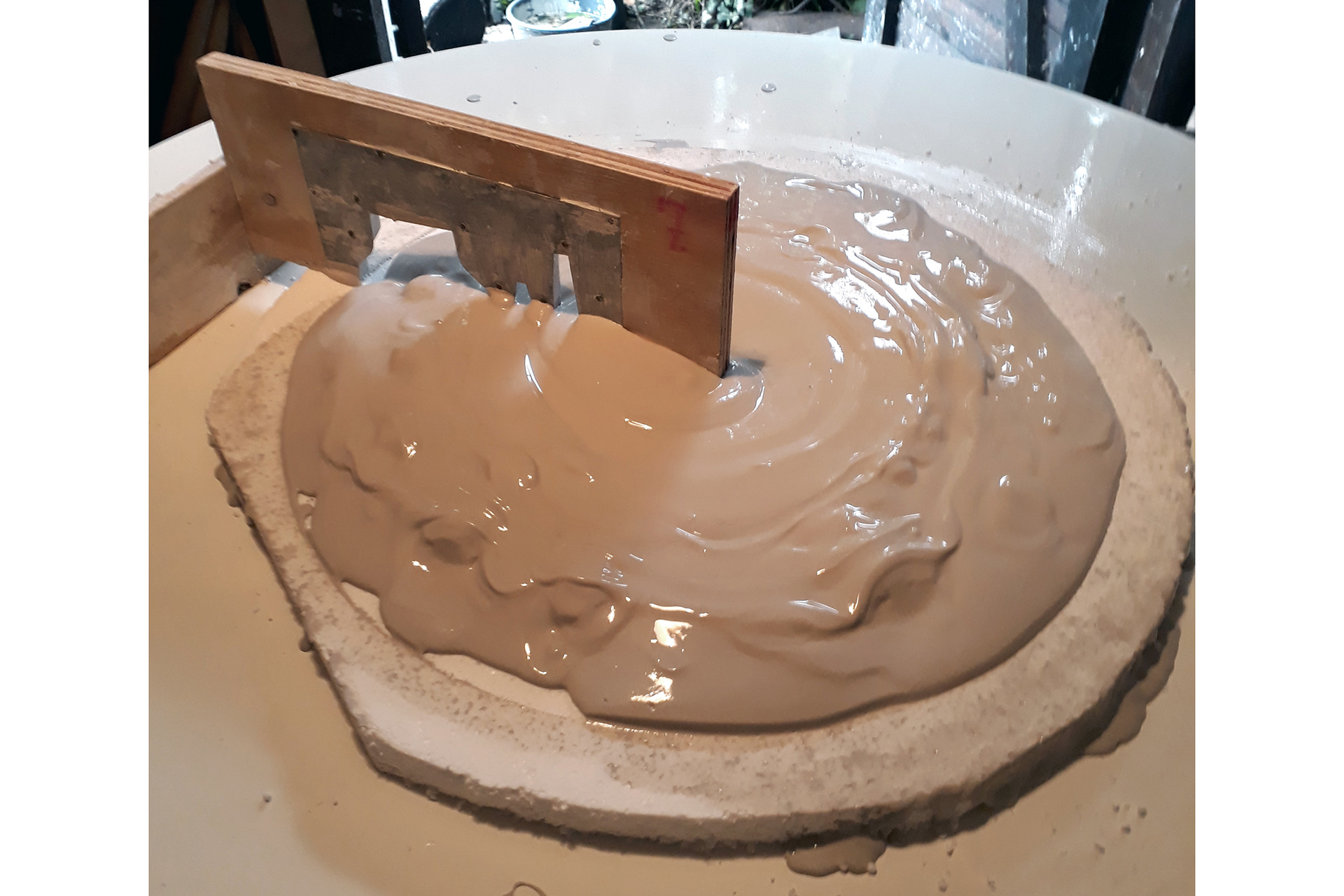
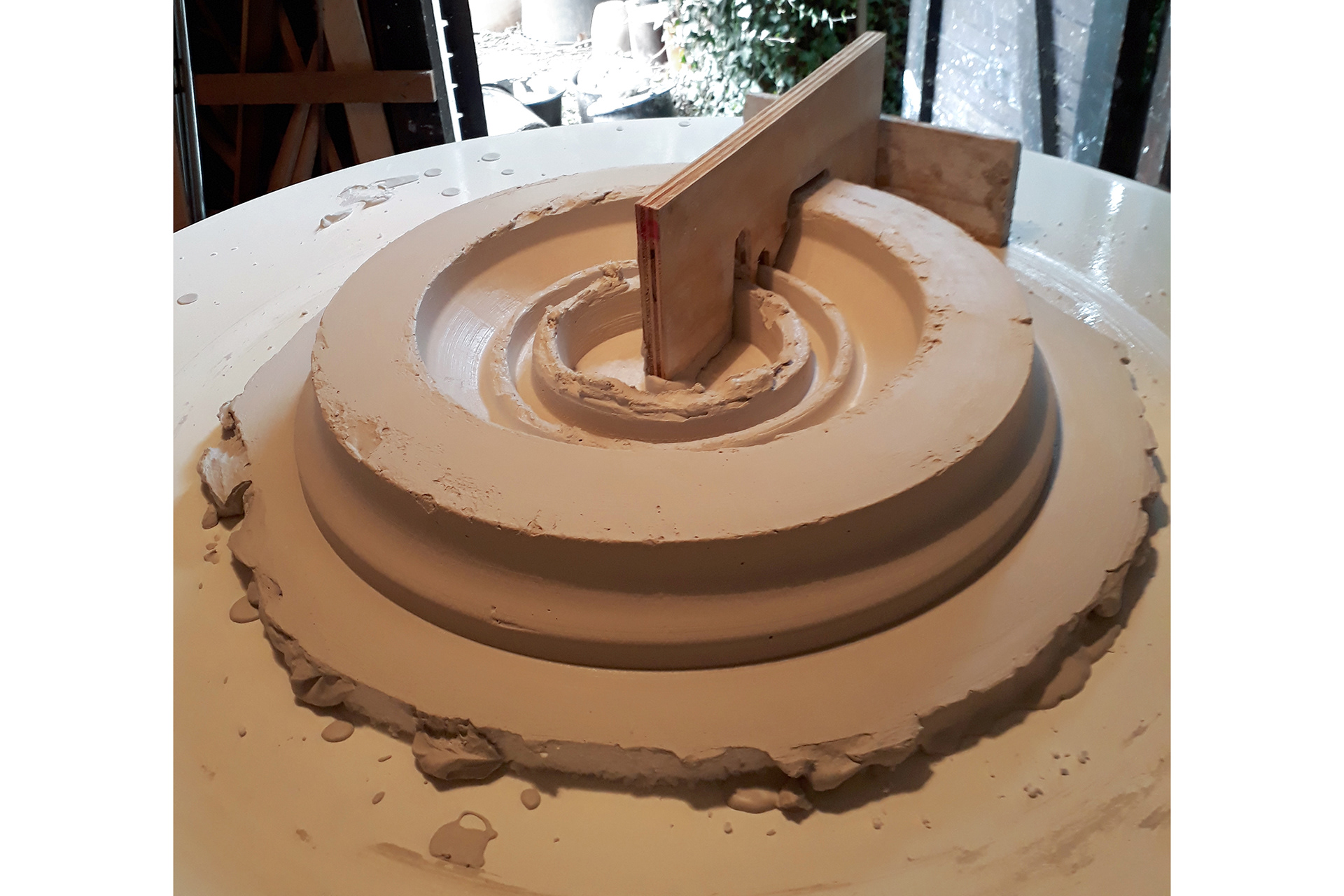
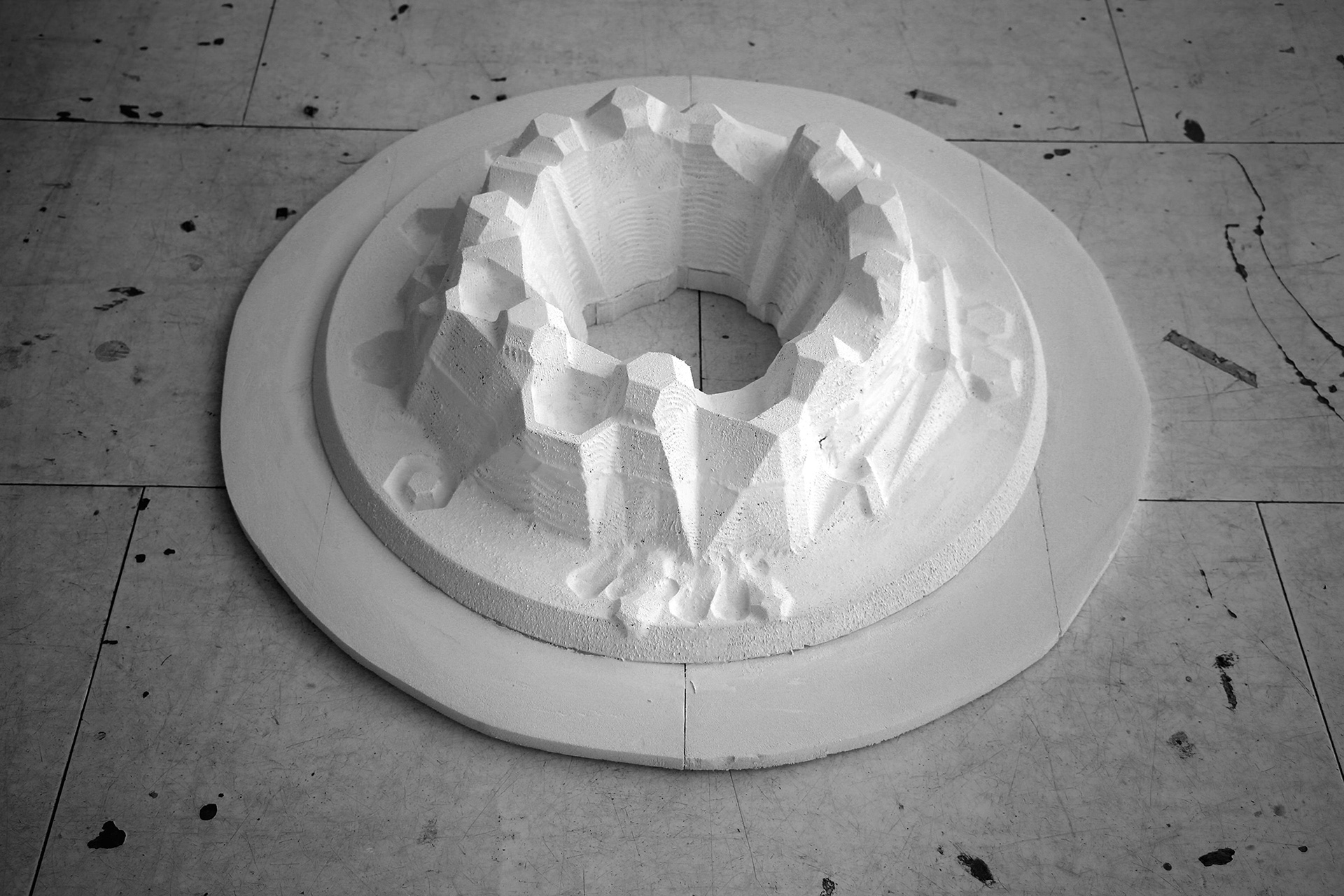
Once the profile has been established, it is transferred to a template made from water-resistant plywood with a zinc edge. The template is fixed at one end to a horizontal surface, creating an axis around which it can rotate. Plaster is applied in successive layers, and the template is repeatedly drawn through it. Gradually, a circular form emerges.
The process is governed by the changing state of the plaster. At first, it is soft and fluid; then it begins to thicken, expand and resist the template. The final rotations must be precise and swift before the plaster sets.
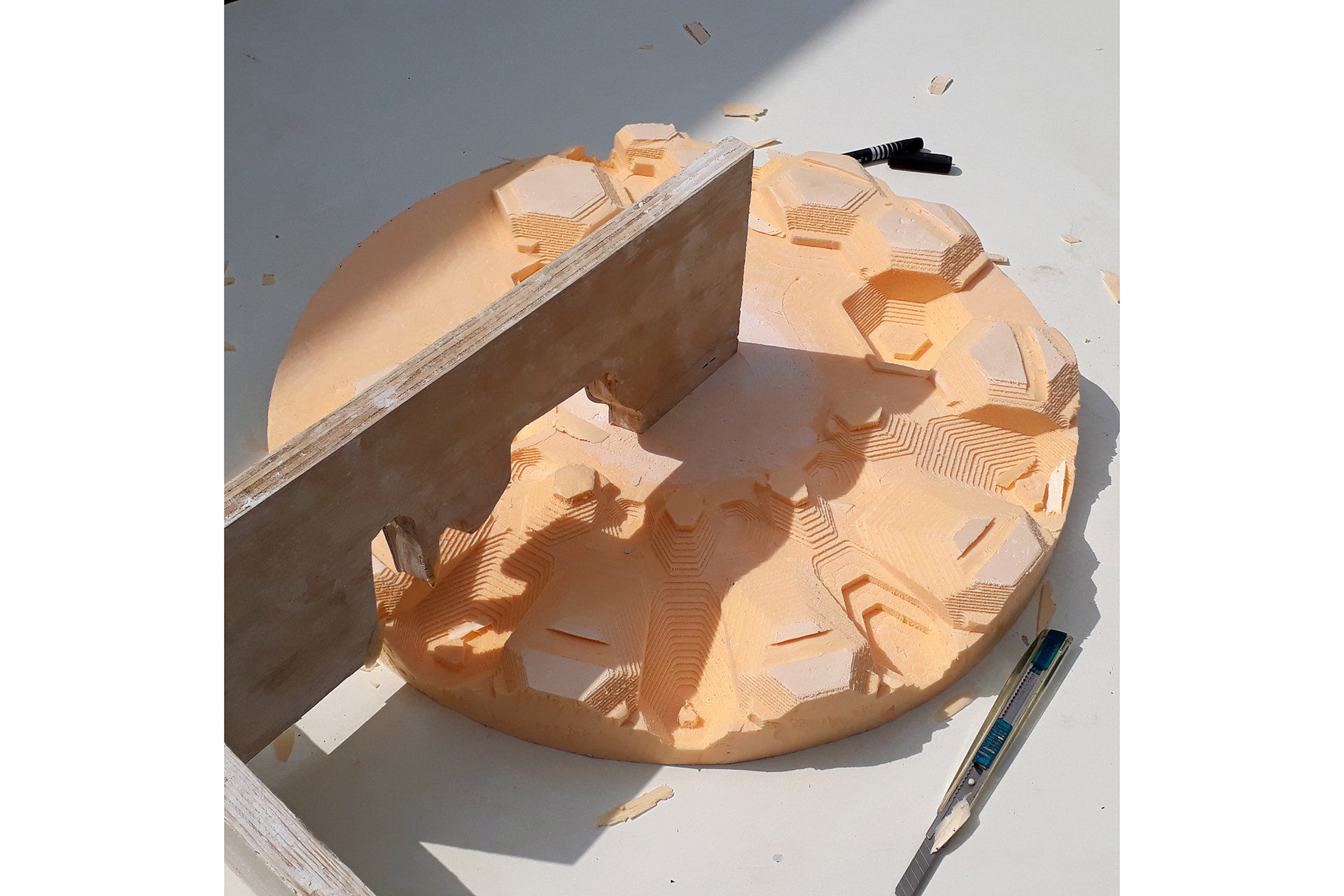
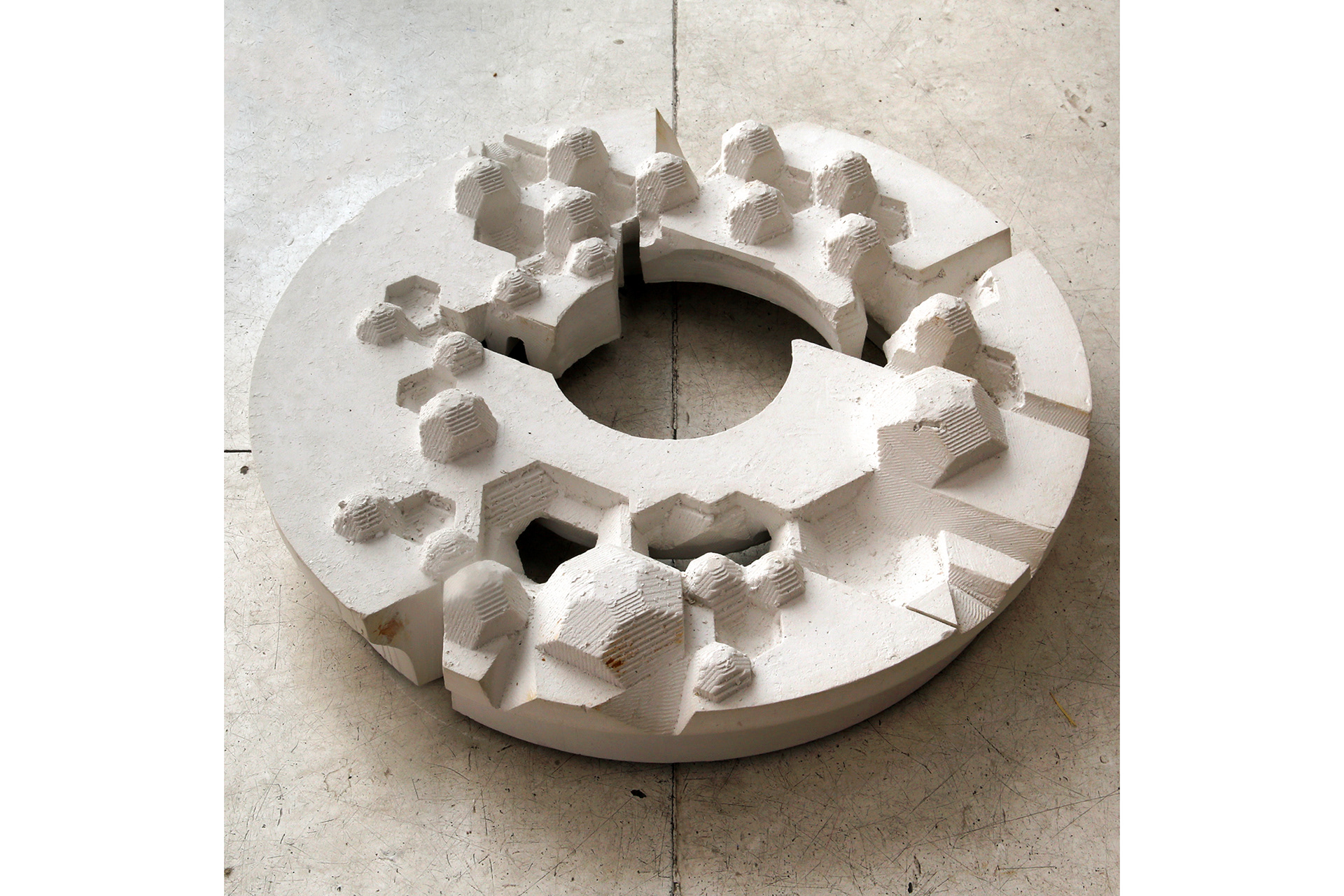
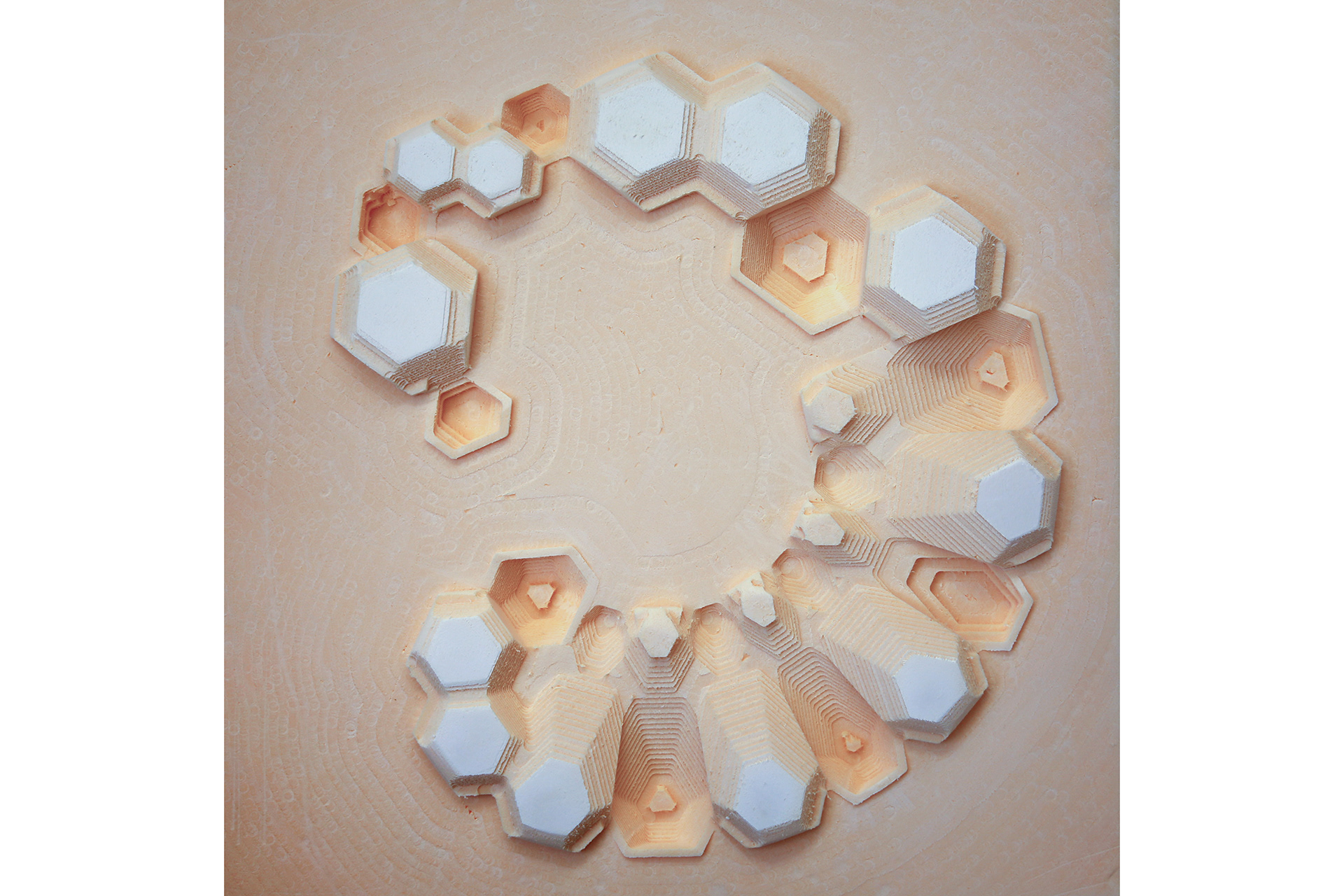
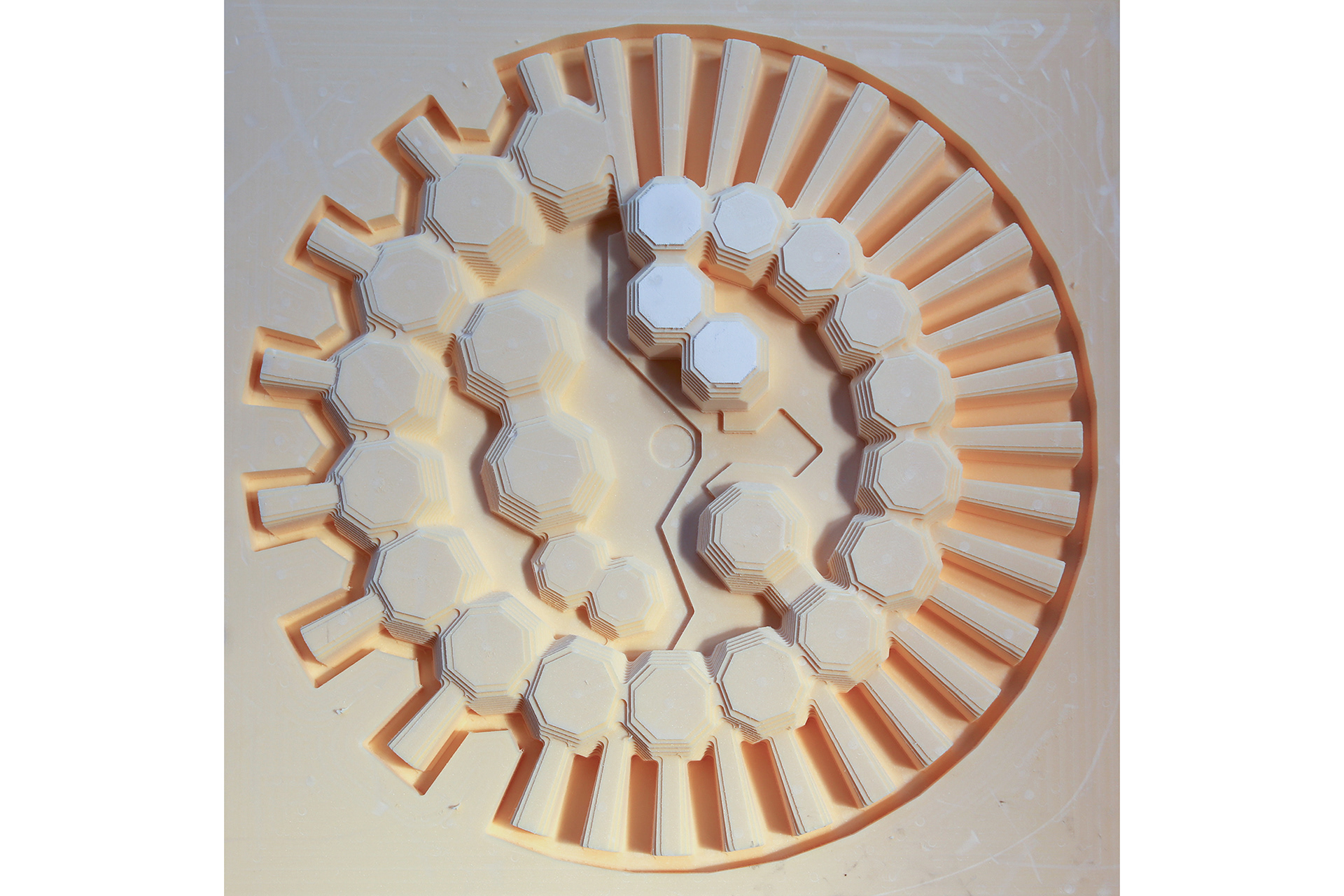
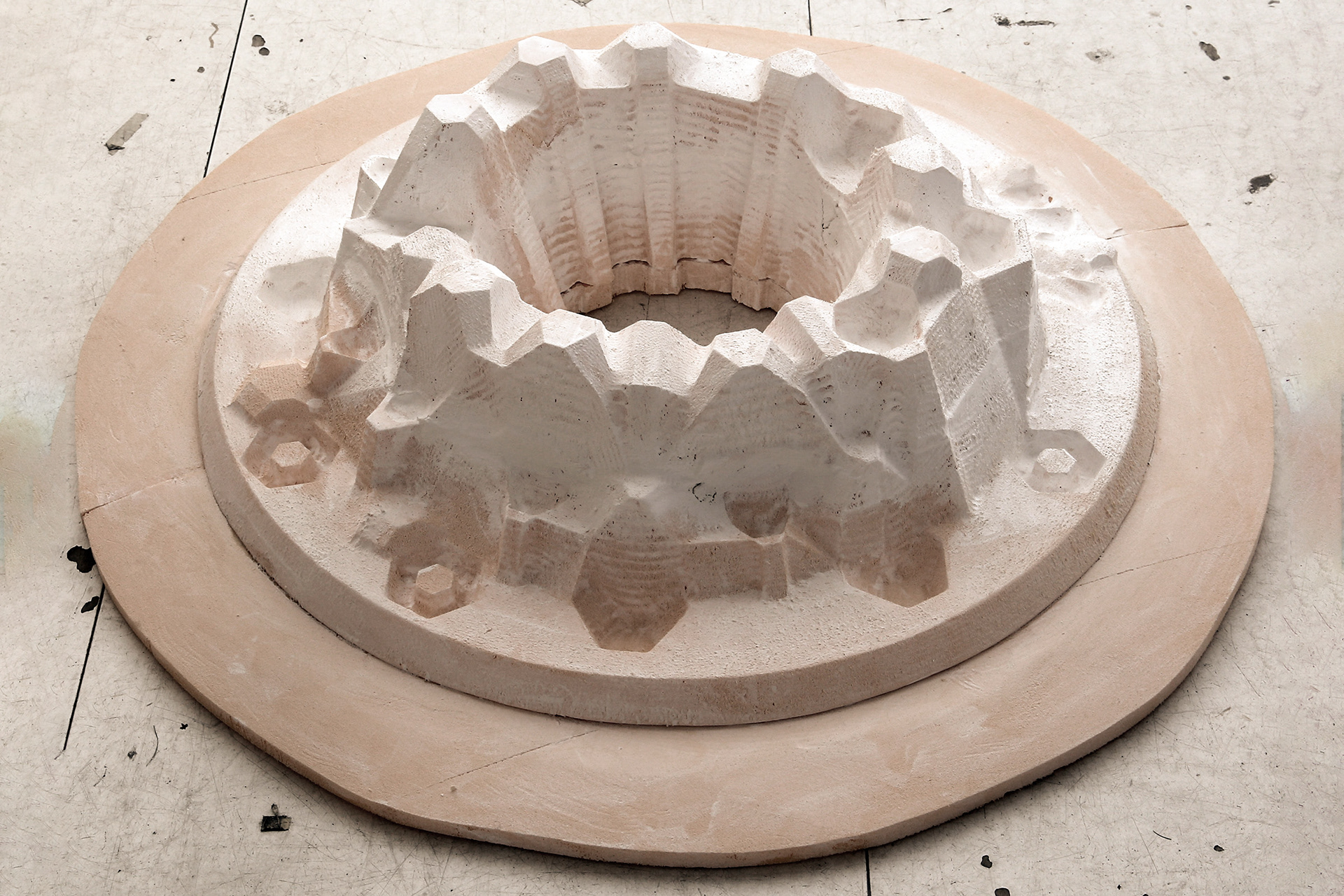
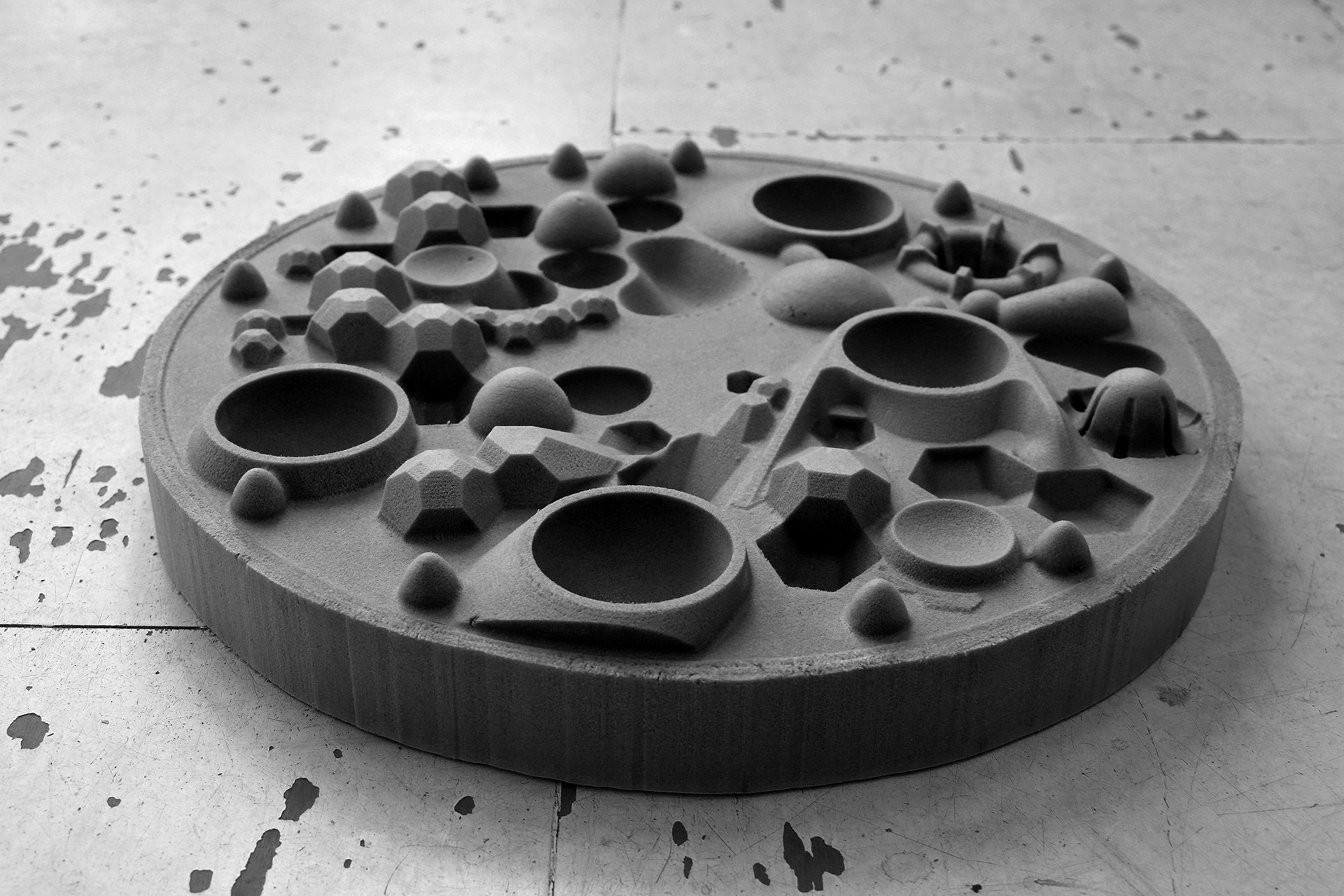
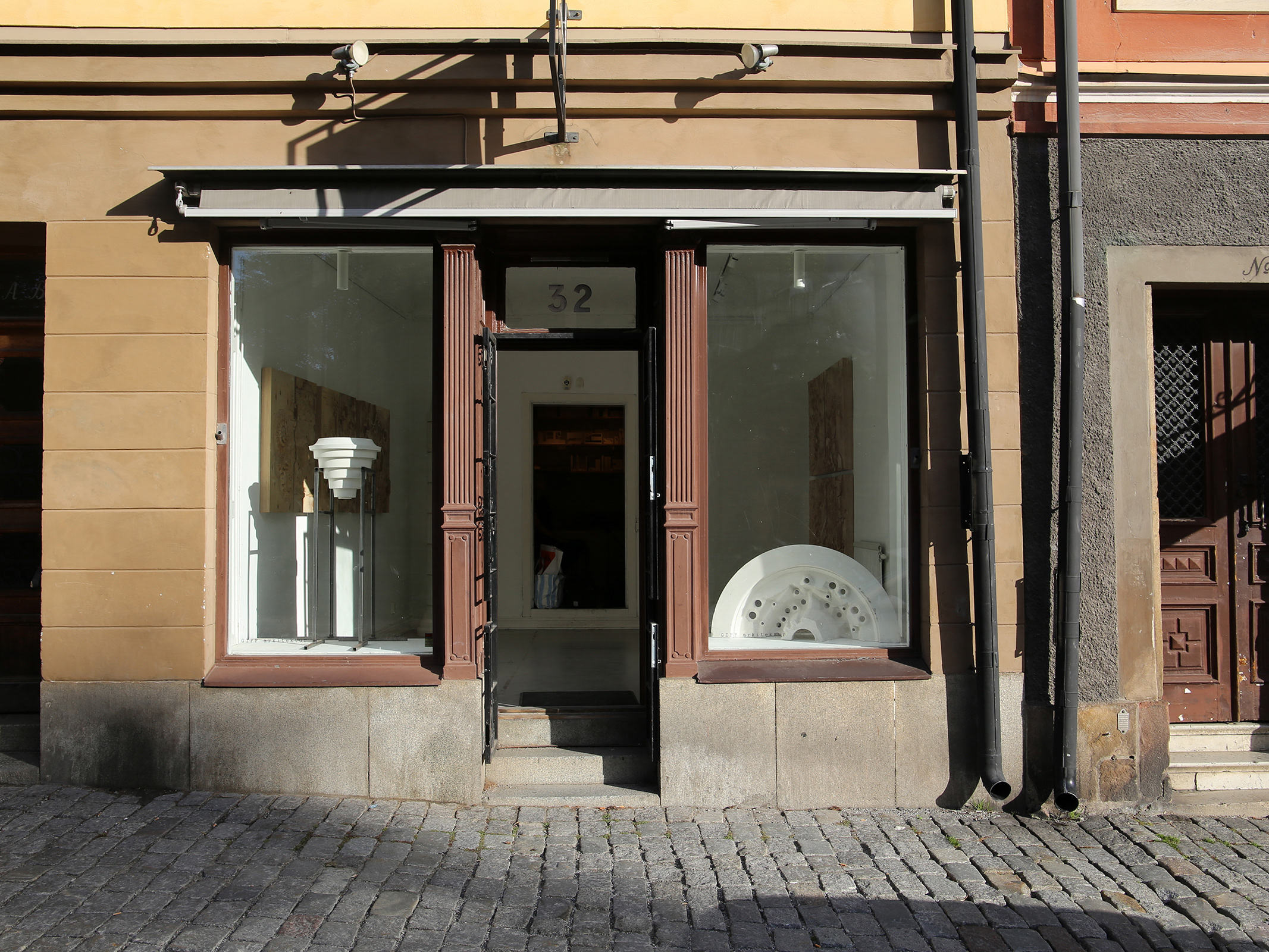
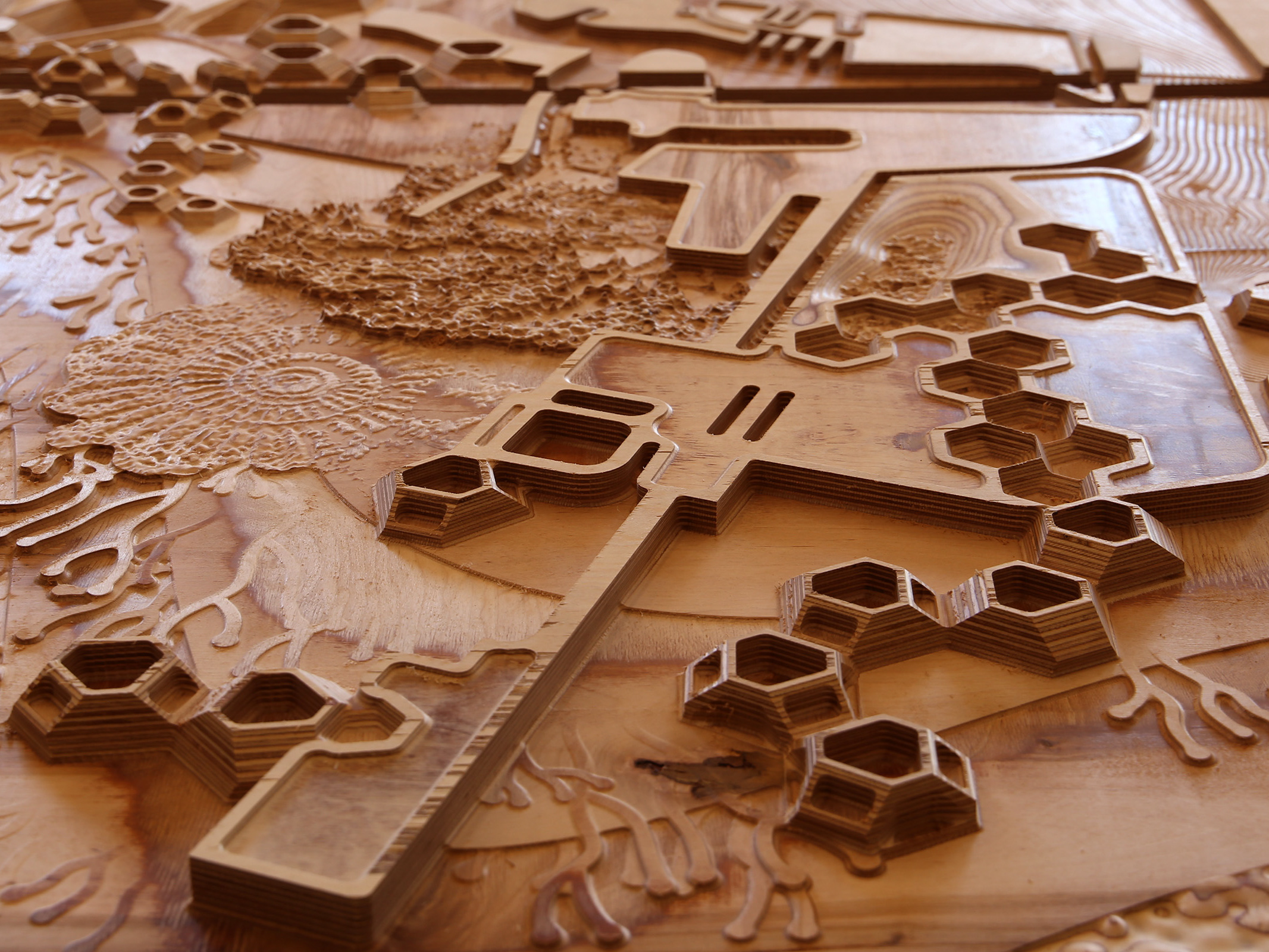
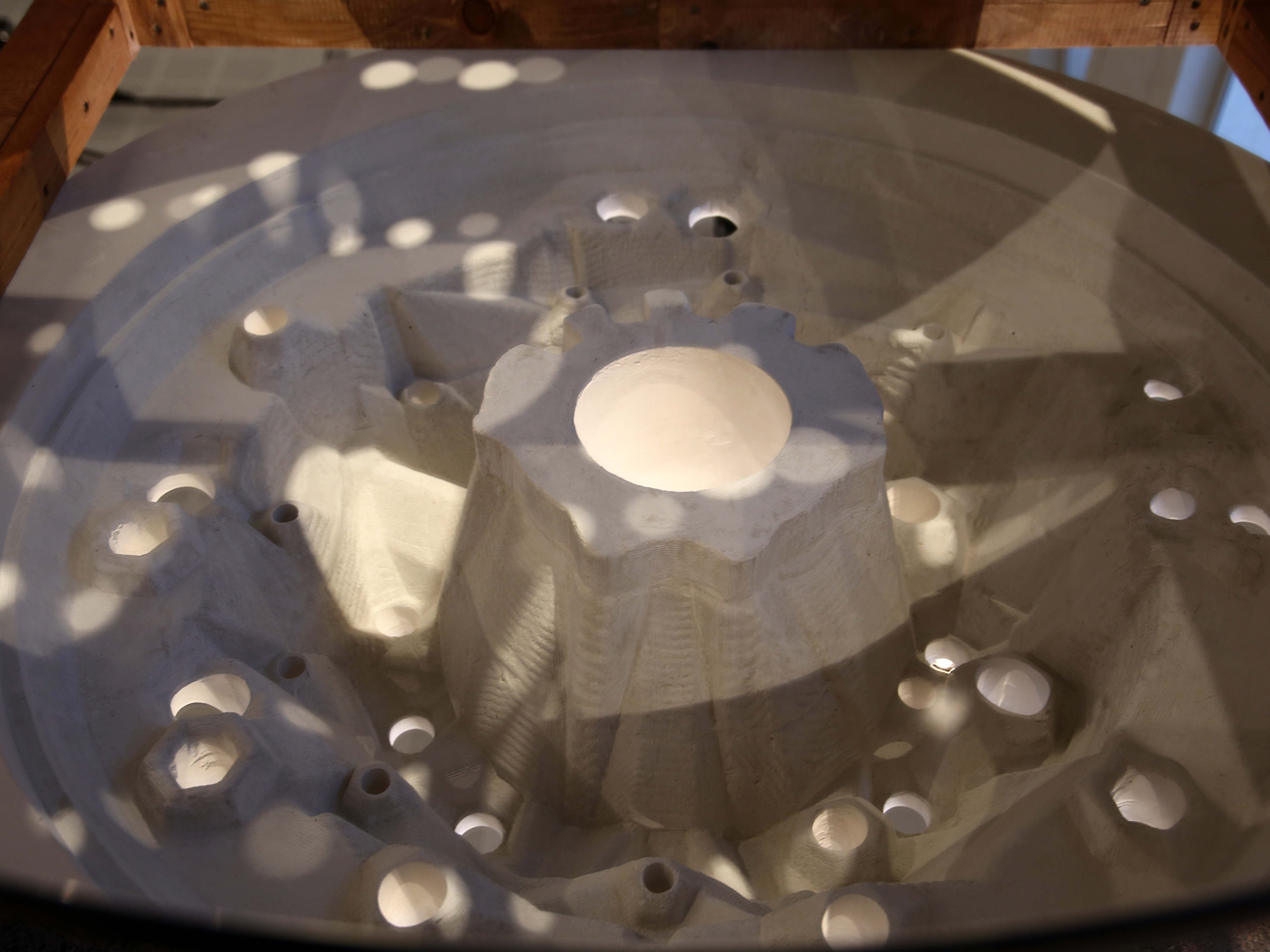
A double-sided island begins differently. Its underside is drawn as a three-dimensional digital model and CNC-routed into foam, producing a negative relief. This is positioned within the circumference of the rotating template, and the plaster island forms in the space between them.
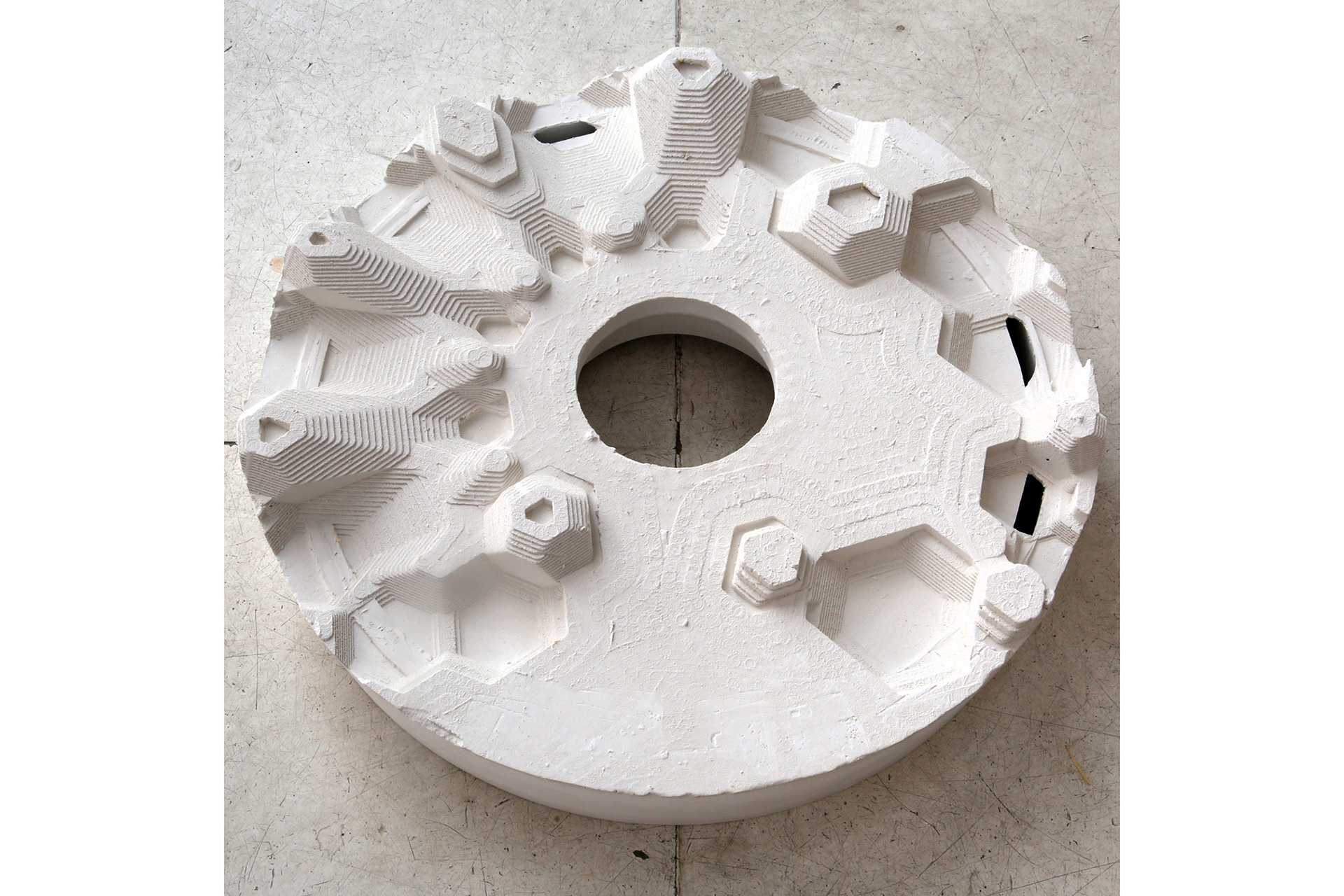
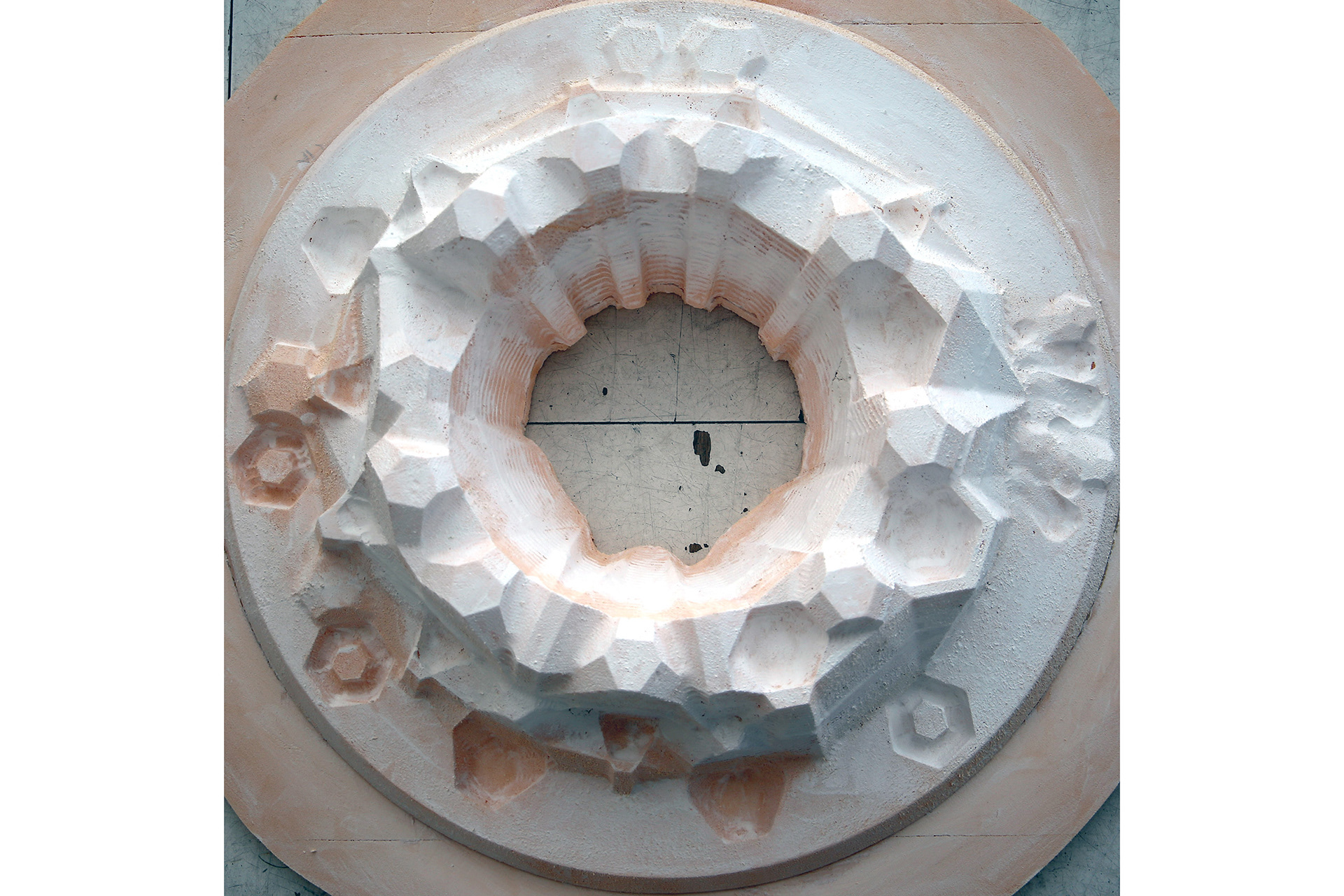
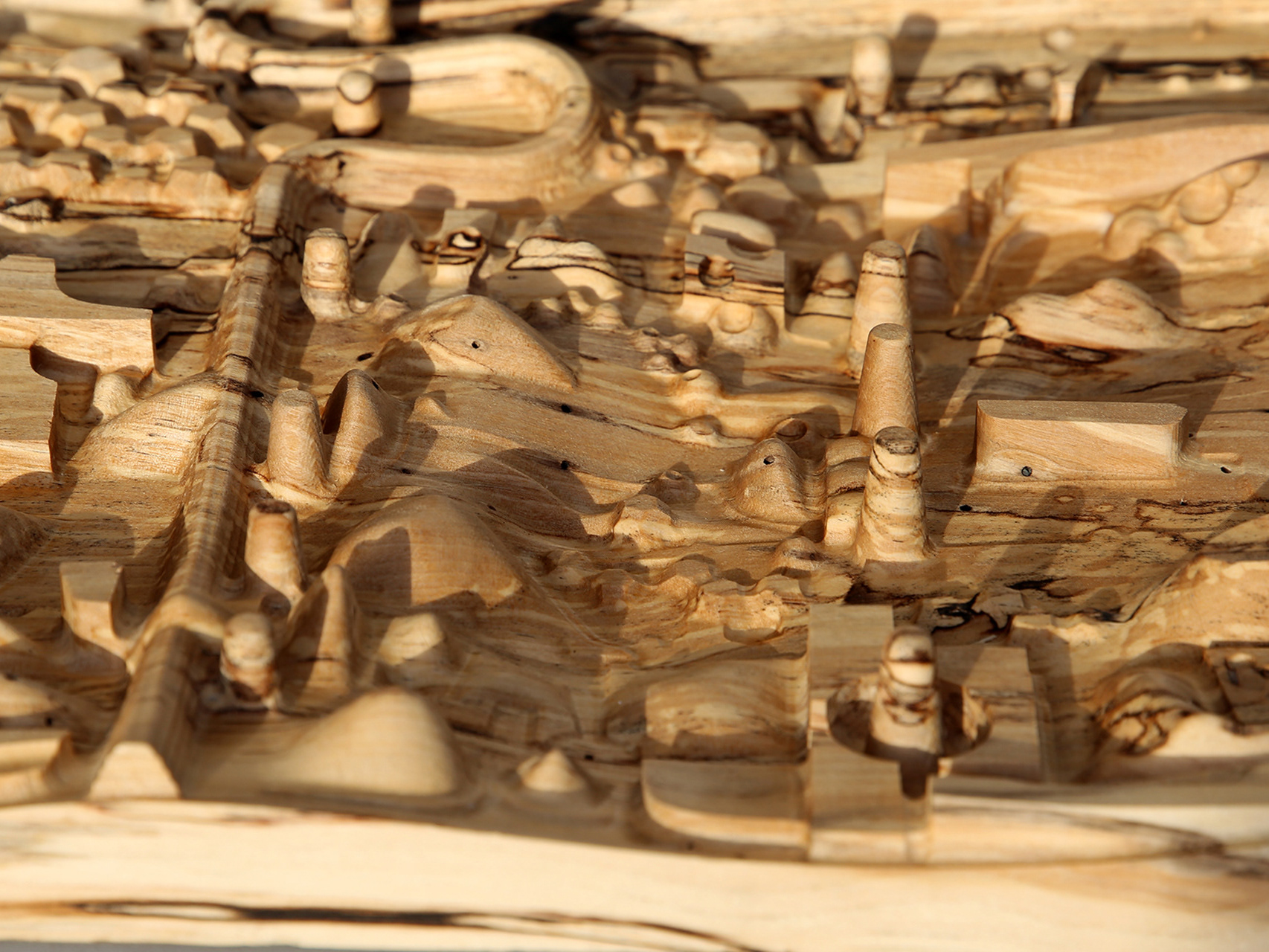
When the plaster has cured, the foam is removed. The upper surface is smooth and bears few traces of its making. The underside resembles a grotto, marked by the movements of the CNC router. We work further into these digital traces with traditional sculptor’s tools and drill openings that connect the surface with the concealed spaces below. In the completed island, drawing, digital fabrication and manual craft can no longer be separated. The form contains the history of its own making.